 Lynden
 Birch Bay Decks Take a Different Kind of Beating
Birch Bay sits right on the water, and that changes what a deck goes through compared to one a few miles inland in Lynden. Salt-laden air corrodes fasteners and hardware faster than plain rain does. Wind off the bay drives moisture sideways into joints and ledger connections that a covered, landward deck rarely sees. And Whatcom County's long, wet moss season means shaded or north-facing decking stays damp for months at a stretch, which is exactly the condition wood decay and slick moss growth need to take hold.
We're a Lynden-based crew, and Birch Bay is a regular stop for us — not a place we visit once and guess at. That matters for deck repair specifically, because the right fix depends on reading how a deck has actually weathered its environment, not just patching whatever looks bad on the surface.
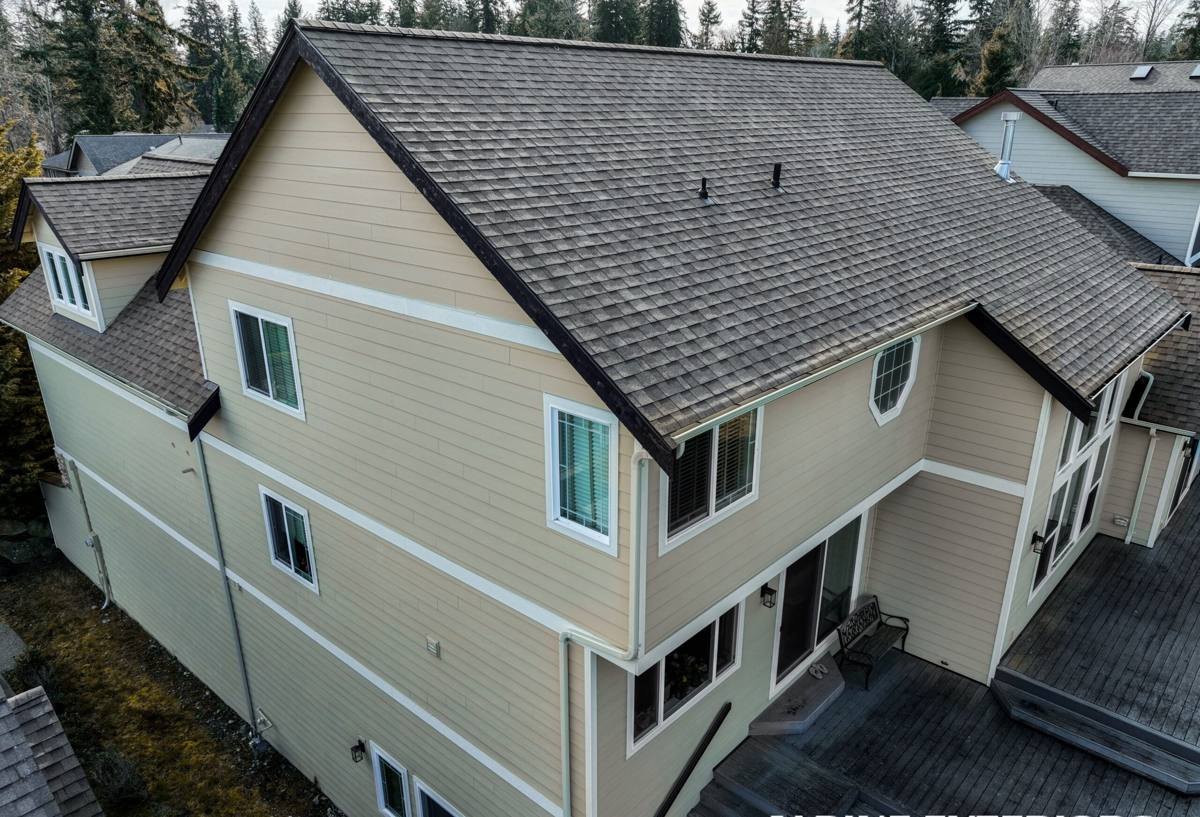
What Salt Air and Coastal Moisture Actually Do to a Deck
It helps to understand the failure pattern before talking about repair, because it changes where we look first.
Fastener and Hardware Corrosion
Standard deck screws, nails, and joist hardware that hold up fine inland can rust, streak, and lose grip years earlier this close to the water. Once a fastener corrodes, it stops clamping the wood tightly, and a board that should be solid starts to work loose, squeak, or lift at the edges.
Hidden Rot at Connection Points
The ledger board (where the deck attaches to the house), stair stringers, and post bases are the spots that fail structurally first, because they trap moisture against wood that can't dry out between rains. A deck can look fine on the surface and still have a soft, decaying ledger board underneath — this is one of the more serious issues we check for on every repair call, coastal or not.
Moss, Algae, and Surface Decay
Whatcom County's moss season runs long, and shaded or low-airflow deck sections near Birch Bay hold moisture even longer than most. Moss isn't just a slip hazard — it holds water against the decking surface, which accelerates rot in wood decking and can stain or degrade composite surfaces over time if it's left to build up season after season.
Repair or Replace? How We Tell the Difference
Not every deck problem calls for a full rebuild, and not every deck is worth patching. We look at a few things to make that call honestly:
- Structural framing — joists, beams, and posts. If these are sound, repair is usually the right call even if the decking surface looks rough.
- The ledger connection — this is a safety item, not a cosmetic one. Any softness, rust staining, or gap here gets addressed regardless of what else is planned.
- Extent of the damage — a few soft boards or a wobbly rail section is a repair. Widespread rot across multiple framing members usually means replacement is more cost-effective than chasing problems board by board.
- Age and material — an older wood deck nearing the end of its practical life may cost more to keep patching than to rebuild once, especially given how coastal exposure shortens that lifespan.
We'll always tell you plainly which category your deck falls into, including when a smaller repair now is the more sensible choice than a bigger project you don't need yet.
What a Correct Deck Repair Actually Involves
A repair that just swaps out the obviously rotten board and stops there tends to fail again within a season or two near the water. A repair done right addresses the cause, not just the symptom.
Inspection Before Anything Gets Replaced
We check the framing underneath, the ledger flashing, post bases, and stair connections — not just the decking surface — because that's where the coastal climate does the most damage and where a missed problem turns into a safety issue.
Flashing and Water Management
Where the deck meets the house, proper flashing keeps water from getting behind the siding and into the ledger connection. This is one of the most common weak points we find on older decks, coastal or not, and it's a detail worth getting right rather than covering over.
Fastener Upgrades
On a home this close to the bay, we typically use corrosion-resistant fasteners and hardware rated for coastal or treated-lumber exposure, rather than standard fasteners that will just corrode again in a few years.
Structural Repairs First, Cosmetic Fixes Second
Any soft or damaged framing gets sistered, reinforced, or replaced before we touch the decking surface. A new deck board over a weak joist just hides the problem.
Decking Material Options for Repairs
When we're replacing sections of decking during a repair, the material choice affects how the deck holds up to salt air and moisture going forward.
| Material | How It Handles Coastal Moisture | Maintenance | Best Fit |
|---|---|---|---|
| Pressure-treated wood | Good if properly sealed and maintained; needs re-sealing regularly in salt air | Annual cleaning and re-sealing recommended | Matching existing wood decking, budget-conscious repairs |
| Cedar | Naturally decay-resistant but still needs sealing near the water | Periodic sealing to maintain appearance and protection | Homeowners who want a natural wood look and are willing to maintain it |
| Composite decking | Handles moisture and moss growth well; doesn't rot | Occasional washing; no sealing or staining needed | Long-term, lower-maintenance repairs or partial rebuilds |
| PVC/capped composite | Best resistance to moisture, salt exposure, and staining | Lowest maintenance of the group | Waterfront or near-waterfront decks with heavy exposure |
We're happy to match existing wood decking for a seamless repair, or talk through switching a repaired section to composite or capped material if you're tired of maintaining that part of the deck. Either is a legitimate choice — it comes down to how much upkeep you want going forward.
Our Repair Process
Every deck repair we handle in Birch Bay follows the same basic sequence, adjusted for what we find:
- On-site inspection. We check framing, ledger, posts, stairs, and railing, not just the decking surface.
- Honest assessment. We tell you what's structural, what's cosmetic, and what can reasonably wait.
- Written estimate. Clear scope, no surprise add-ons once work starts.
- Structural repairs first. Framing, ledger, and hardware issues get fixed before any surface work.
- Decking, rail, and stair repairs. Matched materials or an upgrade, your call.
- Final check and cleanup. We confirm everything is solid and secure before we call it done.
What Deck Repairs Typically Cost
Deck repair costs vary a lot based on scope, so we'll only give broad ranges here — your written estimate will reflect your actual deck.
| Repair Type | Typical Scope | Rough Cost Factor |
|---|---|---|
| Board replacement | A handful of damaged decking boards | Lower end — priced per board/section |
| Railing repair | Loose posts, damaged balusters or top rail | Moderate — depends on linear footage and hardware needed |
| Ledger/flashing repair | Addressing the house-to-deck connection | Moderate to higher — safety-critical work |
| Stair rebuild | Stringer, tread, and rail replacement | Moderate to higher — depends on rise and material |
| Framing repair | Sistered or replaced joists/beams | Higher — labor-intensive, often uncovers related issues |
The honest answer on cost is that it depends on how much of the deck is affected and whether we find additional issues once we open things up. We'll walk you through exactly what's driving the price before any work starts.
Keeping a Coastal Deck in Good Shape Between Repairs
A few habits go a long way toward stretching the life of a Birch Bay deck between professional check-ins:
- Sweep off standing debris and leaves regularly — trapped debris holds moisture against the decking.
- Clean moss and algae off shaded areas before it builds up thick, especially during Whatcom County's wetter months.
- Rinse salt residue off decking and hardware periodically if you're close to the water.
- Check railings and stair connections for looseness once or twice a year — early wobble is easier to fix than a failed connection.
- Reseal wood decking on the schedule the product calls for; don't wait until it's visibly gray and dry.
- Keep gutters and downspouts clear so roof runoff isn't dumping extra water onto or near the deck.
Why a Local Crew That Already Works Birch Bay Matters
Deck repair isn't a one-size-fits-all trade. A crew that mostly works drier, inland conditions can miss what a coastal deck near the bay actually needs — the corrosion-resistant hardware, the extra attention to ledger flashing, the moss-prone shaded sections that need different handling. We work Birch Bay regularly out of our Lynden base, so we're not guessing at how the local climate treats a deck — we've seen the pattern repeatedly and we repair to match it, not to a generic checklist.
Being local also means we're not driving a long way for a follow-up if something needs a second look, and we're familiar with the kind of homes and deck styles common in this part of Whatcom County.
Ready for an Honest Look at Your Deck?
If your Birch Bay deck has soft spots, loose railings, moss buildup, or you're just not sure whether it needs a repair or a bigger fix, we're glad to take a look. Fill out the form below for a free, no-pressure estimate — we'll tell you straight what we find and what it would take to fix it right.