 Lynden
 Nooksack Decks Take a Different Kind of Beating
A deck in Nooksack doesn't fail the same way a deck in a dry climate fails. Whatcom County sits under a long, wet season that stretches from fall through spring, and the moisture doesn't just sit on the surface — it works into every joint, fastener hole, and end-grain cut on the structure. Add in the moss and algae that thrive on shaded decking near tree lines and fence rows, plus the salt-laden air that drifts in off the Strait and Bellingham Bay on a west wind, and you've got a combination that ages wood and hardware faster than most homeowners expect.
We repair decks throughout the Nooksack and Lynden area, and the pattern is consistent: decks that look fine from a distance often have real problems underneath — soft framing, corroded fasteners, or a ledger connection that's been quietly failing for years. This page covers what actually goes wrong with decks out here, what a proper repair involves, and how we approach the job.
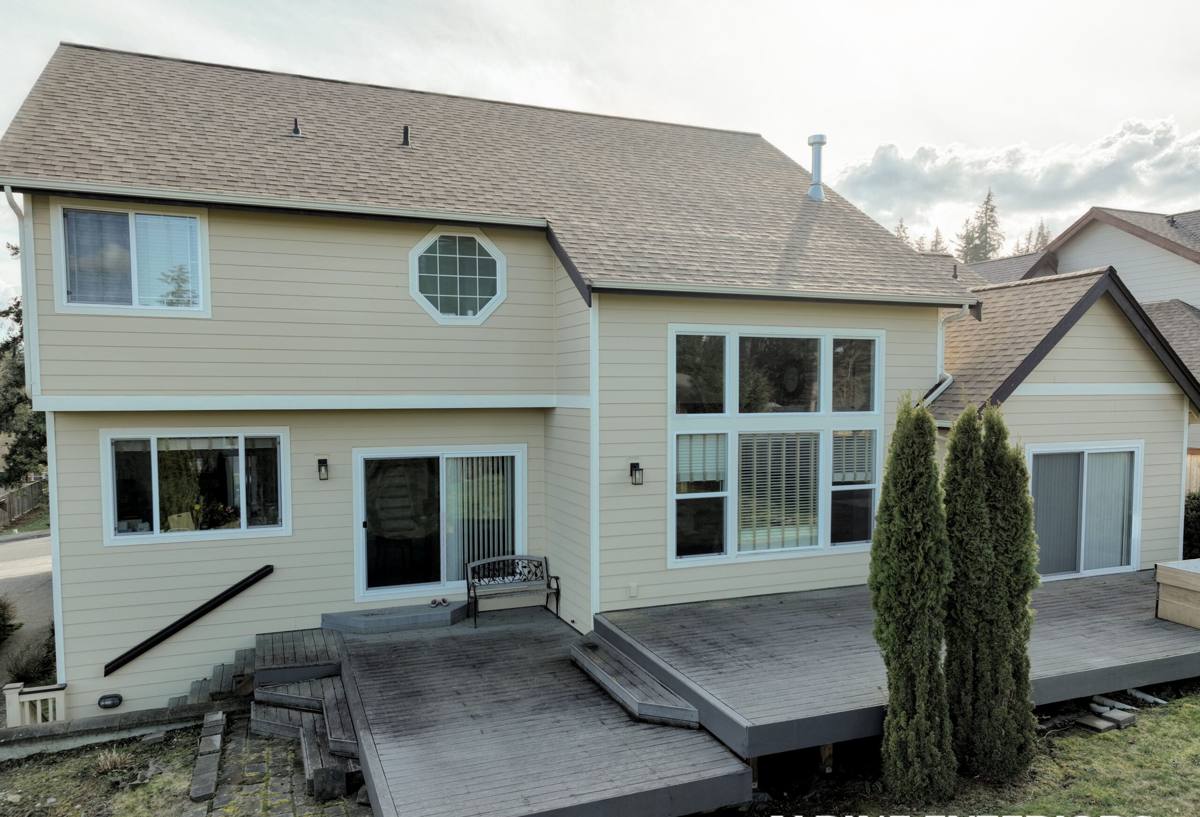
What the Local Climate Does to a Deck
Driving Rain and Standing Moisture
Whatcom County rain doesn't just fall straight down — wind-driven rain pushes water sideways into vertical surfaces like stair stringers, rim joists, and the underside of ledger boards where they meet the house. Water that gets trapped between boards, or behind flashing that was never installed correctly in the first place, doesn't dry out between storms. It just keeps re-wetting the same wood, which is exactly the condition rot needs.
Moss and Algae
Nooksack's tree cover and consistent shade in a lot of yards create ideal conditions for moss and algae growth on horizontal deck surfaces. Beyond making boards slick and dangerous underfoot, moss holds moisture against the wood surface far longer than open air would, accelerating surface decay and breaking down the wood fibers even on boards that were sealed a few years back.
Salt Air and Fastener Corrosion
Salt in the air corrodes metal faster than plain moisture alone. On older decks, that means the nails or screws holding the structure together — especially ones that weren't rated for outdoor or treated-lumber use — can weaken from the inside while the wood around them still looks okay. A deck can look structurally sound and still have fasteners that have lost most of their holding strength.
The Deck Problems We See Most Often
- Soft or spongy decking boards, usually near the house or in shaded corners
- Rot at the ledger board where the deck attaches to the house
- Rusted, popped, or backed-out fasteners
- Loose or wobbly railings and posts
- Stair stringers that have softened or split
- Post bases sitting in standing water or buried in soil/mulch
- Moss buildup making the surface slick, especially on stairs
- Gaps or separation between the deck and the house at the ledger connection
Some of these are cosmetic annoyances. Others — a compromised ledger board or a rotted post base — are structural safety issues that need to be addressed before the deck sees regular use again.
What a Correct Deck Repair Actually Involves
Deck repair gets treated as a cosmetic job more often than it should be. Replacing a few gray boards without checking what's underneath them is a common shortcut, and it's why we see decks that were "repaired" a few years ago already failing again. A repair done right starts below the surface, not above it.
Structural Inspection First
Before we touch any decking boards, we check the framing: joists, beams, posts, and — critically — the ledger board connection to the house. This is the single most important structural point on most residential decks, and it's also the point most prone to hidden rot because it sits against the house where moisture collects and rarely gets a chance to dry.
Fastener and Hardware Condition
We check joist hangers, post bases, and structural fasteners for corrosion or failure — not just the visible screws in the decking boards. Corroded hardware gets replaced with fasteners and connectors rated for outdoor and treated-lumber contact, which matters more in this climate than in drier parts of the state.
Drainage and Flashing
A lot of rot problems trace back to water that had nowhere to go. Where flashing at the ledger board is missing, damaged, or was never installed, we correct that as part of the repair — otherwise the same rot comes back in the same spot within a few seasons, and the new boards fail no better than the old ones did.
Selective Replacement vs. Full Rebuild
Not every problem deck needs to come down. If the framing is sound and the damage is limited to surface boards, railings, or stairs, targeted replacement is the honest, cost-effective call. If the ledger connection or the main framing has significant rot, patching around it isn't a real fix — that's when we'll tell you straight that a rebuild is the better long-term move, even though it's the more expensive answer.
Repair or Replace? What Actually Drives the Decision
| Factor | Leans Toward Repair | Leans Toward Replacement |
|---|---|---|
| Ledger board condition | Solid, dry, well-fastened | Soft, water-stained, or separating from house |
| Framing (joists/beams) | Isolated soft spots, otherwise firm | Widespread softness or sagging |
| Posts and footings | Stable, dry at base | Sitting in standing water or visibly rotted |
| Decking surface | Some worn or split boards | Majority of boards soft, splintering, or cupped |
| Age of structure | Under 15–20 years, built to a reasonable standard | Older structure, undersized or outdated framing |
| Fasteners/hardware | Mostly sound, some corrosion | Widespread rust, missing or improper connectors |
Most decks we look at fall somewhere in between — solid framing but a handful of real problem areas. That's the sweet spot for repair: you fix what's actually wrong, leave the sound structure alone, and avoid paying for a full rebuild you don't need.
How We Handle a Deck Repair
- On-site inspection. We walk the full structure — decking, framing, posts, railings, stairs, and the ledger connection — and probe suspect areas rather than just looking at them.
- Honest assessment. You get a clear picture of what's failing, what's still sound, and why. If it's a simple board swap, we'll say so. If it's more, we'll explain what we found and why it matters.
- Written scope and estimate. No vague verbal quotes — you see exactly what's being repaired and what materials we're using.
- Repair work. Rot removed back to solid wood, framing and hardware corrected where needed, flashing addressed at the ledger, new boards and fasteners installed to hold up in this climate.
- Cleanup and walkthrough. We clear debris and walk the finished repair with you before we call it done.
Signs Your Nooksack Deck Needs a Look
- Boards that flex, feel spongy, or sound hollow when you walk on them
- Visible gaps or dark staining where the deck meets the house
- Rust streaks running down from screw or nail heads
- Railings or posts that move when pushed
- Persistent moss or algae that keeps coming back after cleaning
- Stairs that feel less solid than the rest of the deck
- A deck that hasn't been inspected in 5+ years, regardless of appearance
If any of these sound familiar, it's worth getting an actual inspection rather than guessing. A soft board on the surface is easy to see; a compromised ledger board or rotted post base usually isn't, until it's a safety problem.
Materials: What Holds Up Here, and What We Steer Away From
For structural framing repairs, we use pressure-treated lumber rated for ground contact where posts or beams are involved, and outdoor-rated structural connectors and fasteners — not general-purpose hardware that will corrode faster in this climate's moisture and salt air. For decking surfaces, both quality treated wood and composite boards are reasonable choices, and the right one depends on your budget, how much moss and moisture exposure the deck sees, and how much maintenance you want to take on.
Our general standard is to match or upgrade the fastener and hardware quality relative to what's already there, and to never bury a moisture problem under new boards without correcting the drainage or flashing issue that caused it. A repair that looks good for one season but fails again in two years isn't a repair worth doing.
Why Local Experience in Nooksack Matters
A crew that works decks across Whatcom County knows what a Nooksack winter does to a ledger board versus what the same structure would see somewhere drier. We know to check for moss-driven surface decay even on decks that "look fine," and we know the difference between cosmetic wear and a framing problem that needs real attention. That's not something you get from a generic repair checklist — it comes from working on decks in this exact climate, season after season.
If your deck near Nooksack or Lynden has soft spots, wobbly railings, moss you can't keep ahead of, or you just haven't had it looked at in a while, we're happy to come take an honest look. Reach out for a free, no-pressure estimate using the form below.