 Lynden
 Windows Built for the Laurel Stretch Outside Lynden
Homes in the Laurel area sit in that in-between zone north of Lynden proper — close enough to the Nooksack lowlands and the county's marine air to catch the same driving rain and damp winters as the rest of Whatcom County, but often on older lots with original single-pane or early double-pane windows that were never built for the loads they're carrying now. If your windows fog between the panes, feel cold to the touch in January, or you can hear conversations from the sidewalk, the glass and frame are past doing their job. That's not a cosmetic problem out here. It's a moisture and energy problem that gets worse every wet season it's ignored.
We install energy-efficient windows for homeowners in Laurel and the surrounding Lynden area, and we treat window replacement as a building-envelope job, not just a glass swap. The window is only as good as the flashing, sill pan, and sealant details around it — get those wrong in this climate and you'll trade an old drafty window for a new window that leaks water into the wall cavity. That's the failure mode we build our whole process around avoiding.
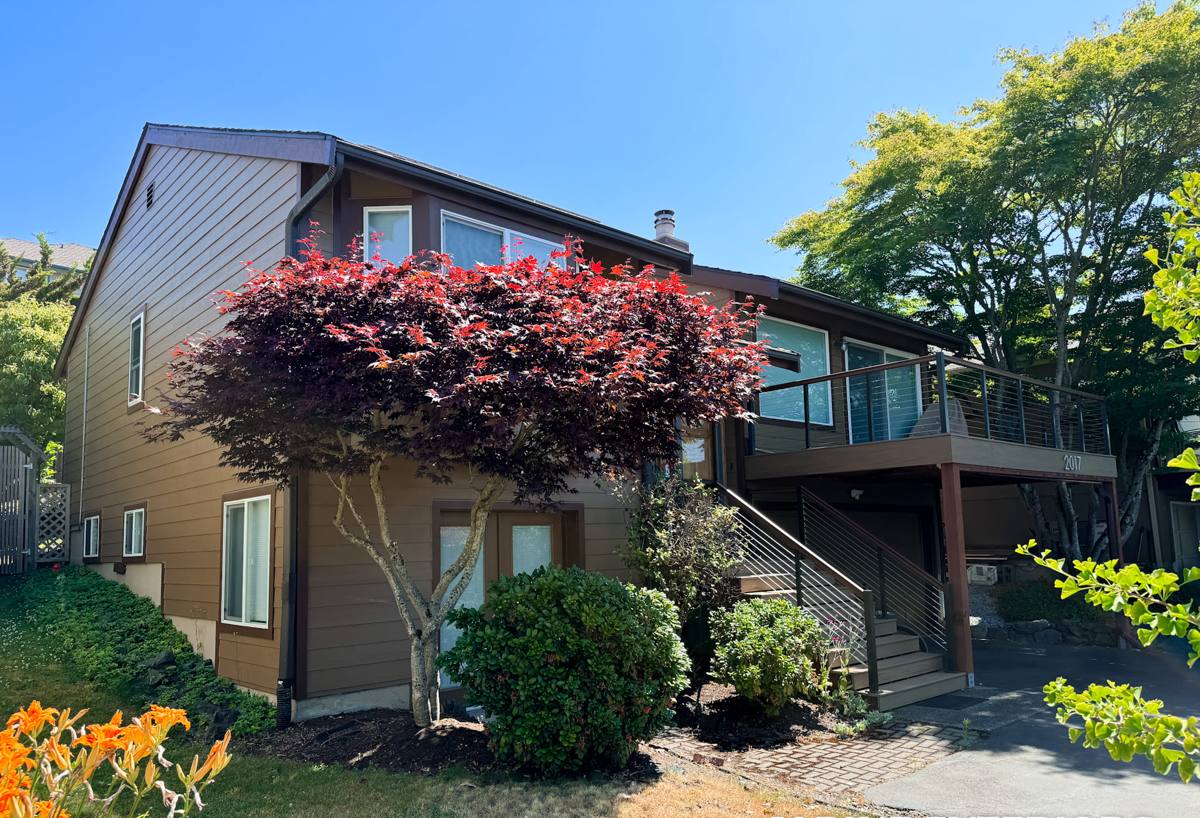
What Whatcom County Weather Does to Windows
Three things drive window wear in this part of Washington, and they compound each other:
- Driving rain: Wind-driven rain off the Strait and the lowland weather systems pushes water sideways into wall assemblies, not just straight down. Flashing and drainage details around a window matter as much as the window unit itself.
- Long moss and mildew season: Extended damp stretches keep wood sills, cladding, and trim wet for days at a time. Any window with failing caulk or a cracked sill becomes a slow entry point for moisture that feeds rot and mold before you ever see a stain indoors.
- Salt-influenced air: Proximity to Puget Sound and Bellingham Bay means fasteners, hinges, and lower-grade hardware corrode faster here than in drier inland climates. Cheap crank mechanisms and thin cladding show it first.
None of this is exotic — it's just steady, patient weather that finds every weak seam over a few winters. Windows installed correctly the first time shrug it off. Windows installed with shortcuts don't.
How This Shows Up in Older Laurel-Area Homes
A lot of the housing stock around Lynden includes older farmhouses, mid-century ranches, and additions built in different decades with different materials. It's common to find a mix of original wood windows, 1980s–90s aluminum-frame replacements, and a newer vinyl unit or two from a partial remodel. Each generation has its own failure pattern — wood sashes swelling and sticking, aluminum frames conducting cold straight through and sweating on the inside, older vinyl seals losing their gas fill and fogging. Whatever the mix on your house, the fix is the same: match the replacement to the opening correctly and flash it properly, rather than forcing a one-size approach across the whole house.
What "Energy-Efficient" Actually Means Here
Energy-efficient isn't a marketing sticker — it's a specific combination of glass, frame, and installation quality working together. For this climate, that means:
| Feature | Why It Matters in Whatcom County |
|---|---|
| Low-E coated, double or triple pane glass | Cuts heat loss through the glass and reduces condensation on cold interior surfaces during long damp stretches |
| Argon or krypton gas fill | Slows heat transfer between panes; a real efficiency gain, not just a spec-sheet number |
| Insulated, multi-chambered vinyl or fiberglass frame | Resists the thermal bridging that aluminum frames are prone to, keeping interior sills warmer and drier |
| Warm-edge spacer system | Reduces cold spots at the glass edge where condensation and seal failure usually start first |
| Proper flashing and sill pan at install | Directs wind-driven rain back out instead of into the wall — the single biggest factor in whether a window lasts |
Notice that only two rows in that table are about the window unit itself. The rest is installation. You can buy the best-rated window on the market and still end up with drafts, fogging, or a wet wall if it goes in without correct flashing and air sealing. We won't sell you a premium window and then rush the install — the install is where the performance is actually won or lost.
Our Installation Process
1. On-Site Assessment
We start by looking at each opening individually — sill condition, existing flashing, any signs of past water intrusion, and how square and level the rough opening actually is. Older homes rarely have perfectly square openings, and that affects how a new window needs to be shimmed and sealed.
2. Removal Without Collateral Damage
We remove the old window and check the framing and sheathing behind it before anything new goes in. If we find soft wood or old water staining, we flag it and address it before sealing anything back up — covering a problem with a new window doesn't make it go away.
3. Sill Pan and Flashing First
This is the step that actually protects the house. A correctly integrated sill pan and flashing sequence — tied into the house wrap or building paper in the right shingle-lap order — is what keeps driving rain out of the wall cavity. This is also the step that gets skipped on rushed jobs, and it's the one that costs homeowners the most when it's done wrong.
4. Set, Shim, and Air Seal
The window gets set plumb, level, and square, shimmed at the manufacturer's specified points, and sealed with the appropriate air-sealing material around the frame — not just caulk smeared over gaps.
5. Exterior and Interior Finish
Exterior trim, casing, and caulking are finished to shed water, and interior stops and trim are reset or replaced so the whole opening looks finished, not patched.
6. Final Walkthrough
We check that every new window operates smoothly, locks properly, and seals tight before we consider the job done.
Choosing the Right Window for Your Home
Not every opening needs the same window. Some practical factors we walk through with homeowners:
- Operating style: Casement windows seal tighter against wind-driven rain than sliders, which matters more on exposed sides of the house.
- Frame material: Vinyl is cost-effective and low-maintenance; fiberglass costs more but resists expansion and contraction better over decades of temperature swings.
- Sun exposure: South- and west-facing openings benefit from different Low-E coatings than shaded north-facing ones — one glass spec doesn't fit every wall of the house.
- Sound and privacy: If road noise or close neighbors are a concern, thicker glass or a wider air gap between panes helps beyond just the energy benefit.
- Matching existing sightlines: On a house with several original windows staying in place, matching sash proportions and grille patterns keeps the exterior looking intentional, not patchworked.
Why We Don't Cut Corners on Frame and Sealant Quality
There's a temptation in this trade to hit a lower price point by using thinner-gauge frame extrusions, minimal-grade sealants, or skipping a proper sill pan because "it's probably fine." In a drier climate, maybe it is fine for a while. In Whatcom County, with the amount of driving rain and sustained damp weather we get, those shortcuts show up as callbacks — fogged glass, soft trim, or water staining on an interior sill within a few years. Our standard is to spec frame and sealant materials rated for sustained moisture exposure and to install every unit with full flashing integration, even when it takes longer than a faster, lower-grade approach. It costs more up front in labor. It costs a lot less over the life of the window.
Signs Your Laurel-Area Windows Need Attention
| Sign | What It Usually Means |
|---|---|
| Fog or moisture between panes | Seal failure — the gas fill has escaped and insulating value is gone |
| Cold drafts near a closed window | Failed weatherstripping or a frame that's no longer sealing against the sash |
| Soft or discolored sill/trim | Water is getting past the exterior seal — check soon before it spreads to framing |
| Difficulty opening, closing, or locking | Frame has shifted or hardware has corroded — common with age and moisture exposure |
| Visible condensation on interior glass in winter | Poor insulating value; single-pane or failed double-pane glass |
A Quick Pre-Estimate Checklist
Before we come out, it helps to walk your own house and note a few things — it speeds up the estimate and helps us plan the visit:
- Which rooms feel drafty or noticeably colder near the windows in winter
- Any windows that are hard to open, close, or lock
- Visible fogging or condensation between panes on any unit
- Soft spots, peeling paint, or staining on interior or exterior sills
- Roughly how many windows you're considering replacing in this phase
- Whether you want to match existing grille patterns or update the look
Cost Factors Worth Understanding
Window project costs vary by home, and we won't quote a number without seeing the openings, but the main cost drivers are consistent: how many windows, frame material chosen, glass package (double vs. triple pane, coatings), whether any rot or framing repair is needed once the old window comes out, and how much trim or siding work is needed to finish the opening cleanly. Homes with older single-pane wood windows often see the largest efficiency improvement, since they're replacing the least-efficient starting point.
Why a Crew That Already Works Laurel Matters
A contractor who regularly works this specific stretch near Lynden already knows what the housing stock looks like, what the typical rough-opening quirks are on homes of a certain age, and how the local weather pattern actually behaves against a west- or south-facing wall versus a sheltered one. That familiarity shows up in fewer surprises during the job and fewer callbacks after it — we're not learning the regional weather behavior on your house for the first time. We're also local enough to come back easily if something needs a look after the fact, which matters more than it sounds like when you're dealing with sealed exterior work.
If your windows are drafty, fogged, or just old enough that you're not sure what condition they're really in, we're happy to take a look. Reach out for a free, no-pressure estimate using the form below — we'll walk the house, answer questions honestly, and give you a straight assessment of what your windows actually need.