 Lynden
 Windows Built for the Deming Valley
Deming sits up the Mount Baker Highway corridor along the Nooksack River, tucked into a wetter, greener, and cooler microclimate than the flatter farmland around Lynden. Homes here deal with more standing moisture in the air for more months of the year, more shade from surrounding timber, and a longer moss season on every north-facing surface — including window trim and sills. Whatcom County's broader marine-influenced weather pattern still reaches this far inland, which means driving rain and long stretches of damp, low-pressure days are normal, not occasional.
Windows take more abuse from this environment than most homeowners realize. It's not dramatic storm damage — it's slow, steady moisture cycling that finds any weak seal, any gap in flashing, or any tired weatherstripping and works it wider every winter. Energy-efficient windows done correctly aren't just about lower heating bills, though that matters. They're about keeping water out of your wall cavities in a place that stays wet for a large part of the year.
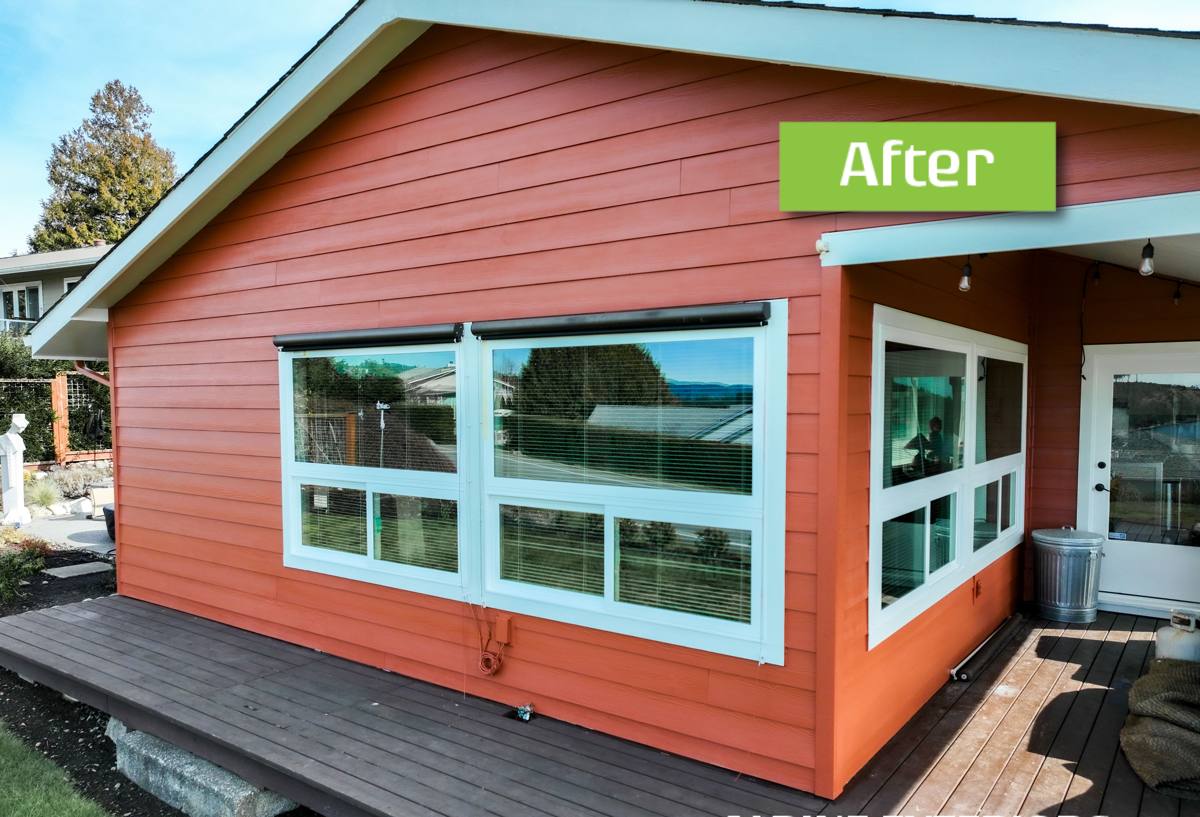
What the Local Climate Actually Does to Windows
Driving Rain and Wind-Driven Moisture
When rain comes in at an angle instead of falling straight down, it pushes against window frames and looks for any horizontal or unsealed joint to exploit. Older aluminum-frame windows and original single-pane units common in older Deming-area homes were never designed with today's flashing standards, and it shows over time as staining, soft trim, or drafts around the frame.
Humidity and Condensation
Persistent moisture in the air, combined with the temperature swing between a heated home and cold outside glass, is a recipe for interior condensation. Fogged glass, water pooling on sills, and mildew on window frames are usually a sign the glass unit or seal has failed — not a cleaning problem.
Moss and Organic Growth
A long moss season means anything holding moisture against wood — trim, sills, sashes — is at risk of rot if it isn't sealed and maintained. Moss itself doesn't damage glass, but the moisture it holds against wood window components accelerates decay in older frames.
Cooler, Shaded Conditions
Being tucked closer to the foothills, Deming tends to run a few degrees cooler and stay shaded longer than open areas closer to town. That keeps heating season longer, which makes window performance a bigger factor in your monthly energy bill than it would be in a sunnier, more exposed location.
What "Energy-Efficient" Actually Means
The term gets used loosely in this industry. What actually determines performance is a small set of measurable ratings, all listed on the National Fenestration Rating Council (NFRC) label that should come with any legitimate replacement window:
- U-Factor — measures how well the window prevents heat from escaping. Lower is better; this is the number that matters most for our climate.
- SHGC (Solar Heat Gain Coefficient) — measures how much solar heat passes through the glass. Less critical here given how shaded and overcast the area is much of the year, but still worth checking on south- and west-facing openings.
- Air Leakage — measures how much air moves through the window assembly itself, separate from the surrounding wall seal.
- Condensation Resistance — a rating that predicts how well the window resists interior fogging in humid conditions, directly relevant to a valley climate like this one.
A window can be marketed as "energy-efficient" and still perform poorly on the number that matters for your home. We walk homeowners through the actual NFRC label on any product we're proposing, rather than relying on marketing language.
Frame Material Comparison
| Frame Material | Moisture Performance | Maintenance | Typical Lifespan |
|---|---|---|---|
| Vinyl | Good — won't rot, minor expansion/contraction in temperature swings | Low | 20-30 years |
| Fiberglass | Very good — dimensionally stable, resists moisture well | Low | 30-40 years |
| Wood-Clad | Good exterior protection, but any failure point exposes wood to rot | Moderate to high | 20-30 years, shorter if seals fail |
| Aluminum | Poor thermal performance, prone to condensation without thermal breaks | Low | 20-30 years |
For a wetter, cooler, shaded property like most in the Deming area, we lean toward vinyl or fiberglass for the majority of installs — both handle sustained moisture without the rot risk that comes with any wood exposure, and both hold their seals well through repeated wet-dry cycling.
Signs Your Current Windows Are Underperforming
- Visible fog or moisture trapped between panes (a failed seal on a double- or triple-pane unit)
- Cold air noticeably moving near the frame on a windy day
- Soft, discolored, or spongy wood trim or sill
- Moss or dark staining collecting in the frame corners or sill track
- Difficulty opening, closing, or latching — often a sign of a warped or swollen frame
- A noticeably higher heating bill compared to similarly sized homes nearby
- Condensation forming on the inside of the glass regularly, even with normal ventilation
What a Correct Installation Actually Involves
Replacing a window is straightforward in concept and easy to do poorly in practice. The window unit itself is only part of the performance equation — how it's integrated into the wall is what determines whether it stays watertight for the next 20 years.
Removal and Opening Prep
We remove the old unit carefully and inspect the rough opening for hidden rot or moisture damage before anything new goes in. In a climate this wet, catching a compromised sill or framing member now is far cheaper than dealing with it after a new window is sealed over it.
Flashing and Water Management
This is the step that separates a window that lasts from one that fails early. Proper flashing — sill pan, side flashing, and head flashing installed in the correct shingled order — directs any water that gets past the exterior finish back out, rather than letting it pool against the framing. Given how much driving rain this area sees, we don't shortcut this step.
Air Sealing and Insulation
The gap between the window frame and the rough opening gets sealed and insulated correctly — not just caulked on the surface. A window with excellent glass but a poorly insulated perimeter will still leak heat and let cold air in.
Interior and Exterior Finish
Trim and finish work is completed to match the home, with attention to sealing any joints that could otherwise become another entry point for moisture.
Our Process
- On-site assessment — we look at your current windows, note any signs of moisture damage or seal failure, and check how each opening is oriented and exposed.
- Product recommendation — based on your home's exposure, budget, and the frame material that fits your maintenance preferences, we recommend specific products with their actual NFRC ratings, not just a general category.
- Written estimate — a clear breakdown of product, labor, and any framing repair identified during the assessment, so there are no surprises mid-project.
- Installation — removal, opening inspection, proper flashing, air sealing, and finish work, done in a sequence that keeps your home protected from weather throughout the job.
- Final walkthrough — we check operation, sealing, and finish with you before calling the job done.
Cost Factors to Understand
| Factor | Why It Matters |
|---|---|
| Number and size of openings | Larger and more numerous windows increase material and labor cost proportionally |
| Frame material chosen | Vinyl is typically the most budget-friendly; fiberglass and wood-clad cost more upfront |
| Condition of the rough opening | Hidden rot or framing damage found during removal adds repair cost, but skipping repair costs far more later |
| Glass package | Double-pane with a low-E coating is standard; triple-pane or specialty coatings add cost but improve performance further |
| Access and site conditions | Second-story or hard-to-access openings can affect labor time |
We'd rather give an honest range up front than a lowball number that grows once work starts. Any framing repair we find gets flagged and priced separately before we proceed, not added as a surprise at the end.
Why Hire a Crew That Already Works This Area
Deming isn't a large market, and it isn't identical to Lynden proper or the open farmland closer to the Canadian border. A crew that regularly works up the Mount Baker Highway corridor already understands how shade, elevation, and moisture behave differently here — which affects everything from how long a window frame stays wet after a storm to how much moss buildup to expect on north-facing trim within a few years of installation.
That familiarity shows up in small decisions: which flashing details actually hold up on a shaded, moisture-heavy property, which frame materials are worth the extra cost for this specific environment, and how to sequence a job so your home isn't left exposed during a stretch of unpredictable Whatcom County weather. It also means a crew that's still local and reachable if a question comes up after the job is done — not a company that did one job in the area and moved on.
Maintenance After Installation
- Rinse frames and tracks periodically to clear pollen, dirt, and moss spores before they take hold
- Check and clear weep holes (small drainage openings along the bottom of the frame) so water can drain out properly
- Inspect exterior caulking annually and touch up any cracked or separated joints
- Wipe down interior sills during humid stretches to prevent condensation from sitting and encouraging mildew
- Operate each window a few times a year, even ones you don't use often, to keep hardware and seals in working condition
None of this is heavy maintenance — it's the kind of five-minute seasonal check that keeps a well-installed window performing for decades instead of just one warranty period.
Get a Straight Answer About Your Windows
If you're dealing with drafts, fogged glass, rising heating bills, or trim that's starting to show wear around your windows, it's worth having someone take an honest look before you decide what to do. We offer free, no-pressure estimates for Deming-area homes — use the form below to get one scheduled.