 Lynden
 Why Everson Homes Need Siding Built for This Climate
Everson sits in the part of Whatcom County where marine air off the Salish Sea, wind-driven rain, and a moss season that can run half the year all combine to work on a home's exterior harder than most siding products were ever designed to handle. Salt-laden moisture gets into seams and fastener points. Rain doesn't just fall here — it drives sideways during winter storms, forcing water into laps and corners that a fair-weather product would never see. And once temperatures cool and the region settles into its long wet stretch, moss and algae find any surface with the right texture and moisture retention to take hold, especially on north-facing walls and anything shaded by trees.
Siding for an Everson home isn't a cosmetic decision. It's a moisture-management system, and every material choice — the panel, the fasteners, the flashing, the finish — either helps that system work or gives water and organic growth a foothold. This page is about one product, installed in one way, for homes in this specific part of Whatcom County: James Hardie fiber cement siding, done to spec for what Everson's weather actually does to a house.
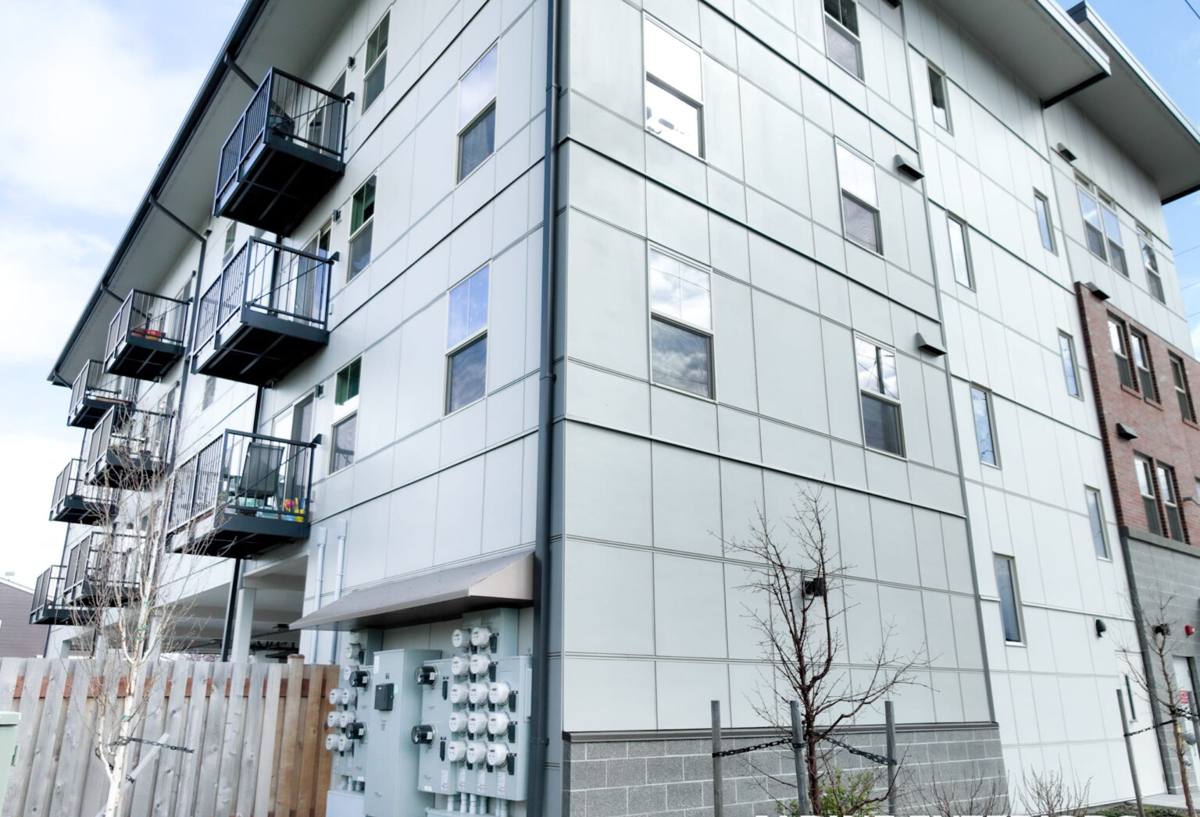
What This Climate Does to the Wrong Siding
We install James Hardie exclusively, and the reasoning is climate-driven, not a sales position. Wood-based and wood-adjacent products — cedar, primed spruce, and engineered wood siding like LP SmartSide — depend on an intact factory coating and perfect field sealing to keep moisture out. In a climate with this much sustained dampness, any gap in that protection (a cut edge, a nail hole, a butt joint that opens up as the material moves) becomes a place where water gets in and stays in, because Everson doesn't get the long dry stretches that let wood-based siding fully dry back out between rain events.
Vinyl siding handles moisture fine on its own, but it isn't rigid, and it expands and contracts more than fiber cement across our seasonal swings. Over time that movement opens gaps at seams and trim, which is exactly where wind-driven rain wants to go. Vinyl also does nothing to slow moss and algae — it's a hospitable surface for organic growth once spores settle into panel overlaps.
Fiber cement made from Portland cement, sand, and cellulose fiber doesn't have that vulnerability. It doesn't swell, rot, or feed fungal growth the way wood-based products can, and it holds up to sustained damp exposure in a way that lines up with what a Whatcom County wall actually experiences most of the year.
James Hardie's HZ5 Engineering for the Pacific Northwest
James Hardie engineers its siding by climate zone, and homes in Everson fall into the HZ5 zone — Hardie's category for the Pacific Northwest and other regions with high moisture exposure, freeze-thaw cycling, and moderate temperature swings. HZ5 products are formulated and tested for sustained wet conditions rather than dry-heat climates, which matters because a generic fiber cement product engineered for the Southwest handles moisture very differently than one engineered for a marine climate.
The practical difference shows up in how the material performs over years of exposure: resistance to moisture absorption at cut edges, stability through repeated wet-dry cycling, and a factory finish designed to hold color and integrity through the kind of overcast, damp stretches Whatcom County sees for months at a time. This is the product line we install on Everson homes — not because it's the only Hardie option, but because it's the one actually engineered for this weather.
ColorPlus Finish and Moss Resistance
Moss and algae need a few things to establish: moisture, organic debris, and a surface texture they can grip. Hardie's ColorPlus factory-applied finish is baked on under controlled conditions and cures harder and more uniformly than a field-applied paint job. That smoother, more consistent surface gives moss less to hold onto and sheds rain more effectively than site-painted siding, which helps on the shaded, slow-drying elevations that are common on wooded Everson lots.
ColorPlus also means less field painting overall — fewer seams where a brush or sprayer has to build a full coat by hand, and fewer weak points where coverage gets thin around trim and fastener heads. That matters here specifically because inconsistent coverage is where moss gets its first foothold.
What a Correct Installation Actually Involves
Fiber cement siding is only as good as the installation behind it. A panel that's engineered correctly but hung wrong will still let water in, and in a climate that stays wet as long as Whatcom County's does, installation mistakes show up faster and cause more damage than they would in a drier region.
- Water-resistive barrier and flashing first: the drainage plane behind the siding — house wrap, flashing at every window, door, and penetration — has to be continuous before a single panel goes up. This is what actually keeps water out; the siding is the second line of defense, not the first.
- Rainscreen gap where called for: a small air gap between the siding and the wall assembly lets any moisture that does get behind the panel drain and dry, instead of sitting against the sheathing. On a wet-climate home, this is what prevents slow, hidden rot.
- Correct fastener placement and spacing: Hardie specifies fastener type, spacing, and how close to panel edges they can go. Get this wrong and you create stress points where panels crack or edges lift, which is where wind-driven rain gets a path in.
- Proper clearance at grade and hard surfaces: siding held too close to soil, decking, or a driveway wicks moisture up from below no matter how good the panel is. Minimum clearances aren't optional in this climate.
- Sealed and caulked correctly at trim, not everywhere: Hardie's lap siding is engineered to shed water without caulk at every joint — over-caulking traps moisture instead of releasing it. Knowing where to seal and where to leave a joint open is a detail a lot of crews get backward.
- Factory-cut edges wherever possible: field-cut edges expose raw fiber cement that hasn't been through the ColorPlus finishing process. Minimizing field cuts, and sealing the ones that are unavoidable with Hardie's touch-up products, keeps the moisture protection intact.
Our Process for Everson Homes
Every Everson project starts with a walk of the exterior looking specifically at what this property's microclimate does — which walls stay shaded and damp longest, where moss is already established, how water currently drains off the roof and around the foundation, and where the existing siding is failing. That inspection drives the plan, not a standard package.
- Assessment: we look at the current siding, the wall assembly behind it where accessible, drainage and grading around the home, and any moss or moisture staining that points to a chronic problem area.
- Tear-off and wall prep: old siding comes off, sheathing gets inspected and repaired if there's damage, and the water-resistive barrier and flashing get installed or corrected before anything new goes up.
- Rainscreen and drainage plane: we build in the drainage gap and flashing details the HZ5 climate calls for, particularly at windows, doors, and roof intersections where most leaks actually originate.
- Hardie panel installation: panels, fasteners, and trim installed to Hardie's published specifications for spacing, clearance, and fastening — not shortcuts that speed up the job but weaken the moisture management.
- Final detailing: touch-up on any field cuts, correct caulking only where specified, and a walk-through so you know what was done and why.
Why a Crew That Already Works Everson Matters
Installation quality isn't the only variable — familiarity with the specific conditions on this side of Whatcom County matters too. A crew that's worked Everson properties already knows which elevations tend to run damp longest, how local lot grading and tree cover affect a wall's drying time, and what wind-driven rain patterns look like on this stretch of the county through fall and winter storms. That's not something you get from a spec sheet; it's pattern recognition from having done the work here repeatedly.
It also means straight answers about scheduling. Siding work has to work around this region's wet season — installing in the wrong window can mean working over damp sheathing or fighting weather that undoes prep work. A crew based in the area knows how to plan around that instead of learning it on your project.
Cost Factors for an Everson Hardie Siding Project
Every home is different, and we don't quote sight-unseen, but these are the factors that actually move the price on a project like this:
| Factor | Why It Matters |
|---|---|
| Home size and wall complexity | More corners, dormers, and roof intersections mean more flashing detail and labor, not just more panels |
| Condition of the existing wall assembly | Rot or damage found once old siding comes off adds repair scope before new siding can go on |
| Siding profile and finish selection | Lap width, shingle-style panels, and trim details vary in material and labor cost |
| Access and site conditions | Tree cover, tight lot lines, and grading affect scaffolding and staging time |
| Tear-off scope | Full removal of old siding versus a simpler re-side affects labor hours significantly |
Signs Your Everson Home's Siding Needs Attention
- Moss or dark streaking that keeps returning on the same wall no matter how often it's cleaned
- Soft or spongy spots when you press on the siding, especially near the bottom courses
- Paint that's peeling, bubbling, or chalking well before you'd expect a repaint
- Visible gaps or warping at panel seams and corners
- Rising energy bills that point to a wall assembly no longer doing its job
Any one of these is worth a look before it becomes a bigger repair. In this climate, moisture problems behind siding tend to get worse quietly, then show up as a much bigger job than a straightforward re-side would have been.
If you're weighing a siding project on an Everson property, we're glad to come take a look and give you a straight, no-pressure estimate — what condition your current siding is really in, what a correct James Hardie installation would involve for your home, and what it would cost. Use the form below to get started.