 Lynden
 Metal Roofing Built for Everson's Climate
A metal roof is one of the few upgrades a homeowner in Everson makes once and mostly stops thinking about — if it's put on correctly. That "if" matters more here than in a lot of places. Salt-tinged marine air moving inland works on fasteners, cut edges, and panel seams over years, not months, which means problems from a rushed install often don't show up until long after the crew has moved on. Rain in this part of Whatcom County doesn't just fall straight down; it gets driven sideways under laps and up against flashing during the wetter stretches of the year. And on shaded slopes, a long moss season settles in every fall and doesn't fully let go until well into summer, holding moisture against the roof surface for months at a stretch.
None of that makes metal roofing a poor fit for Everson — quite the opposite, it's one of the better-performing options against exactly these conditions when it's specified and installed right. This page covers what a correct metal roof install actually looks like on a home in this area, what separates a roof that holds up for decades from one that develops problems early, and how we run the job from first inspection to final walkthrough.
Why Metal Holds Up Well Here — When It's Done Right
Metal roofing has real advantages for this part of the county. A properly installed panel roof sheds wind-driven rain far more effectively than a lapped shingle surface, resists moss growth better than most other roofing materials, and can run 40-plus years without the granule loss or curling that eventually catches up to asphalt shingles. It also handles the region's rainfall volume well, since a continuous panel with correctly formed seams gives water fewer places to work its way in.
What metal roofing doesn't forgive is a sloppy install. The panels themselves are rarely the point of failure on a metal roof — problems trace back almost every time to fastener choice, seam and lap detailing, flashing at penetrations, and how the panel system handles thermal movement. A metal roof put on quickly by a crew unfamiliar with the material can fail years earlier than one installed with real attention to those details, even though both used the same panels off the same truck.
What Local Conditions Actually Demand
- Corrosion-resistant fasteners and trim: Salt-laden air accelerates corrosion at exposed screw heads and cut panel edges, so fastener grade and proper edge treatment matter more here than in an inland climate.
- Correctly lapped and sealed seams: Wind-driven rain finds gaps that would never leak under calm, straight-down rainfall, which makes seam spacing and sealant placement a real performance issue, not a cosmetic one.
- Flashing built for wind-driven moisture: Valleys, wall transitions, and any roof penetration need flashing that's integrated with the underlayment rather than relying on exposed sealant to do the work alone over time.
- Allowance for thermal expansion: Metal panels expand and contract with temperature swings, and fastening systems that don't account for that movement eventually work screws loose or distort panels at the seams.
- Ventilation that keeps the deck dry: Moisture trapped under the roof deck feeds moss and wood rot from underneath at the same time weather is working on the roof from above, especially on shaded slopes that hold dampness longest.
What a Correct Metal Roof Install Involves
A metal roof is a system, not just a set of panels laid across the deck. Each layer underneath the visible surface is doing specific work, and skipping or shortcutting any one of them is where most early failures start.
Deck Inspection and Prep
Before any panel goes down, the existing deck needs a real inspection for rot, soft spots, or moisture damage that's built up quietly under old roofing. Metal panels are unforgiving of an uneven or damaged substrate — problems that were invisible under the old roof surface telegraph straight through a metal panel once it's fastened down.
Underlayment
A synthetic or self-adhered underlayment gives the roof a genuine secondary water barrier underneath the metal, which matters directly when rain is being pushed under laps rather than simply running off. High-temperature underlayment rated for use under metal is worth the modest upcharge over standard felt, since metal panels can get considerably hotter in direct sun than a shingle surface.
Panel Fastening and Seam Method
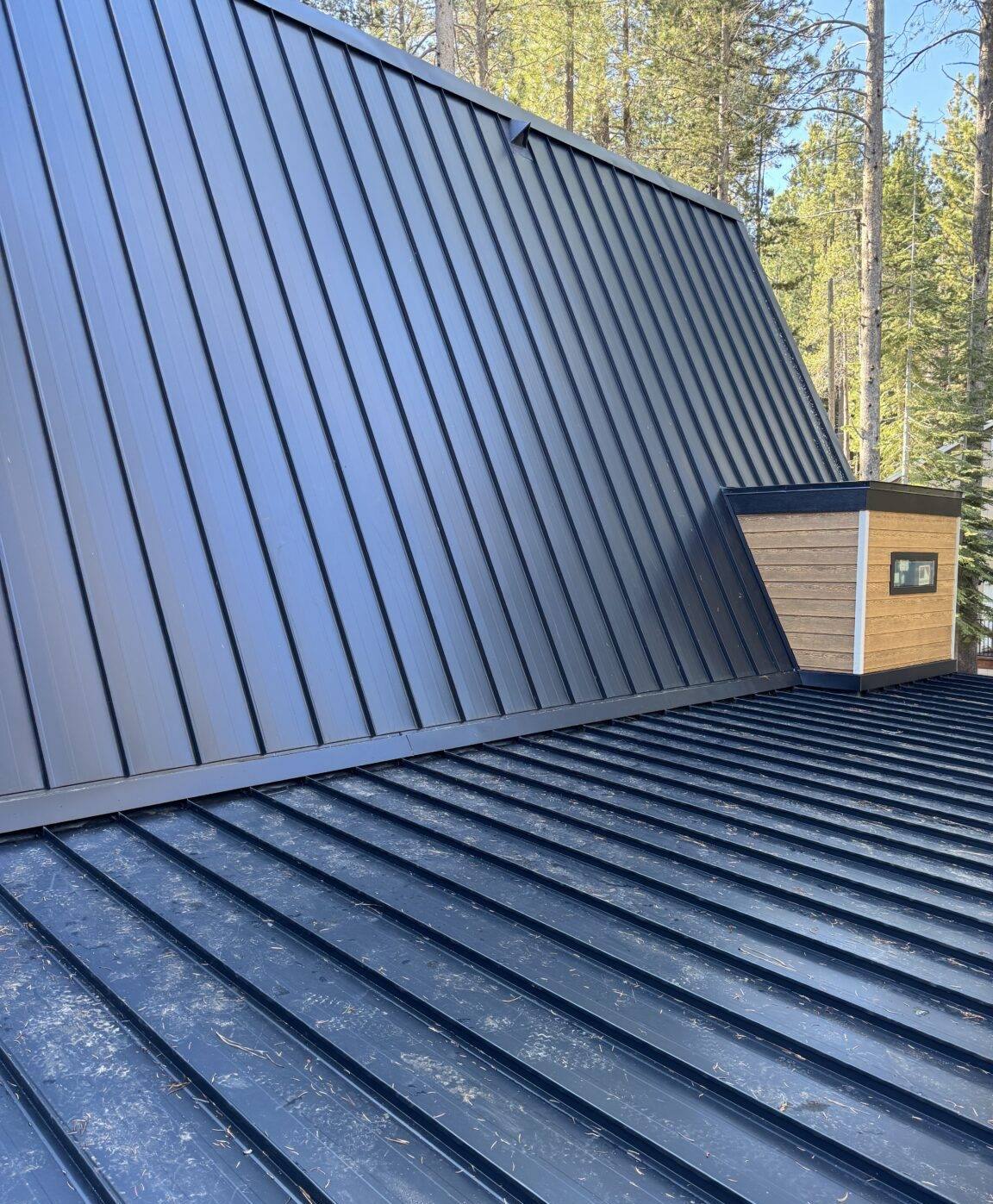
How panels attach to the deck — and to each other — is the single biggest factor in long-term performance. Exposed-fastener panels rely on screws driven through the panel face, each one a potential leak point as washers age and shrink. Standing seam systems use concealed clips that let the panel expand and contract with temperature changes without punching new holes through the metal, which is a meaningful advantage in a climate with real seasonal temperature swings and constant moisture exposure.
Flashing at Valleys, Walls, and Penetrations
Nearly every leak we've traced on a metal roof in this area started at a flashing detail, not in the open panel field. Valleys, chimney and vent penetrations, and wall transitions all need flashing that's formed to fit and integrated with the underlayment as part of the system — not caulked as an afterthought once the panels are already fastened down.
Ventilation
Balanced intake and exhaust ventilation keeps the underside of the deck dry through Everson's wetter months, which protects both the roof structure and the underlayment from the inside out. It's an easy detail to overlook because it's invisible from the ground, but it has a direct effect on how long the whole system lasts.
Comparing Metal Roofing Systems for an Everson Home
| System Type | Typical Lifespan | Fit for Everson Conditions |
|---|---|---|
| Exposed-Fastener Panel | 25-35 years | Lower upfront cost, but exposed screws need periodic re-torquing or replacement as washers age in this climate |
| Standing Seam (Concealed Fastener) | 40-60 years | Higher upfront cost, but handles thermal movement and wind-driven rain better with no exposed penetrations in the panel field |
| Stone-Coated Steel | 40-50 years | Adds a textured, shingle-like profile with strong wind resistance; a reasonable option where appearance matters as much as performance |
For most Everson homes, standing seam is the stronger long-term choice given the combination of salt-influenced air, wind-driven rain, and a moss season that rewards a roof with fewer places for moisture to sit. Exposed-fastener systems still have a place on outbuildings, shops, or budget-driven projects, provided the homeowner understands the added maintenance that comes with exposed screws over time.
Cost Factors Worth Understanding
Metal roofing bids can vary widely for what looks like the same job on paper, and the gap almost always comes down to real differences in scope rather than one contractor simply undercutting another.
| Factor | What It Affects |
|---|---|
| Panel system (exposed-fastener vs. standing seam) | Long-term maintenance needs and expected lifespan |
| Gauge and coating quality | Resistance to denting, corrosion, and fading over decades of exposure |
| Underlayment grade | Secondary protection against wind-driven rain getting under the panels |
| Flashing scope | How thoroughly valleys, penetrations, and wall transitions are addressed |
| Tear-off vs. install over existing roof | Whether hidden deck damage gets found and repaired before panels go down |
| Roof complexity and access | Labor time, staging, and the amount of custom flashing work required |
An estimate that breaks these items out individually gives you far more useful information than a single bottom-line number. It's reasonable to ask any contractor to walk through what panel system, underlayment, and flashing scope they've actually priced before comparing bids side by side.
How Our Process Works
We keep the process straightforward because a roof this size on your home deserves clear communication at every step, not surprises once the work has started.
- In-person inspection: We walk the roof and attic ourselves rather than pricing off a photo, and note what we actually find.
- Written estimate: You get an itemized bid covering deck prep, underlayment, panel system, flashing, and ventilation — not one vague line item covering "new roof."
- Scheduling around weather: We build reasonable flexibility into the timeline, since wet-season delays are a normal part of roofing work in this region, not an excuse we lean on after the fact.
- Deck prep and repair: Any rot or soft spots found during tear-off get addressed before panels go down, not covered over.
- Underlayment, flashing, and panel installation: Each layer goes on to manufacturer specification, with extra attention at valleys, penetrations, and wall transitions.
- Final walkthrough: We review the finished roof with you in person before we consider the job complete.
Why Hiring a Crew That Already Works in Everson Matters
A crew that's put metal roofs on homes throughout Everson has already seen how salt-influenced air corrodes an undersized fastener, how wind-driven rain finds its way past a poorly lapped seam, and which slopes hold moss longest through the wet months. That's practical, earned knowledge that shapes dozens of small decisions over the course of a job — decisions a crew unfamiliar with this specific stretch of Whatcom County might never think to make.
It also matters once the job is finished. A workmanship warranty is only as good as the company standing behind it years down the road, and a contractor with an ongoing, established presence in the area is one you can actually reach if a question comes up later, not a name that's already moved on somewhere else.
A Practical Checklist Before You Choose a Metal Roofing Contractor
- Do they specify the exact panel system (exposed-fastener, standing seam, or stone-coated) rather than just "metal roof"?
- Does the estimate call out gauge, coating type, and underlayment grade separately?
- Is flashing work at valleys, penetrations, and wall transitions explicitly written into the bid?
- Do they carry current WA contractor licensing, liability insurance, and workers' compensation?
- Can they point to recent, real metal roofing work in or near Everson?
- Does the bid clearly separate the manufacturer's material warranty from the contractor's own workmanship warranty?
Signs Your Everson Roof May Be Due for a Look
Metal roofs tend to fail slowly and locally rather than all at once, which means early warning signs are often easy to miss from ground level.
- Rust streaking or discoloration at fastener heads or cut panel edges
- Loose or backed-out screws on exposed-fastener panels, especially after a stretch of temperature swings
- Moss or dark staining building up on shaded or north-facing slopes
- Visible gaps or lifting at seams, valleys, or flashing transitions
- Water staining in the attic or on interior ceilings, particularly near penetrations or roof-to-wall junctions
Catching any of these early is usually the difference between a straightforward repair and a much bigger fix once water has had time to work its way into the deck.
If you'd like an honest, no-pressure look at your Everson roof and a written estimate you can actually compare against anything else you've received, we're glad to come take a look. Use the form below to request a free estimate.