 Lynden
 Roof Repair Built for Everson's Weather, Not a Generic Climate
Everson sits close enough to Lynden and the Nooksack River valley that its roofs face the same combination of problems: long stretches of driving rain off the Pacific, cool damp air that never fully dries a north-facing slope, and a moss season that can run from October through April in a wet year. A roof repair here has to account for all three, not just patch the spot where water is showing up inside the house. We work on homes throughout this part of Whatcom County, and the failure patterns repeat often enough that we can usually tell what's underneath before we ever get on the ladder.
This page covers roof repair specifically — not full tear-offs or new installs. If your roof still has usable life left in it, a correctly done repair is the honest, cost-effective move. The trick is doing it in a way that actually holds up through another wet season instead of buying you six dry months and a repeat call.
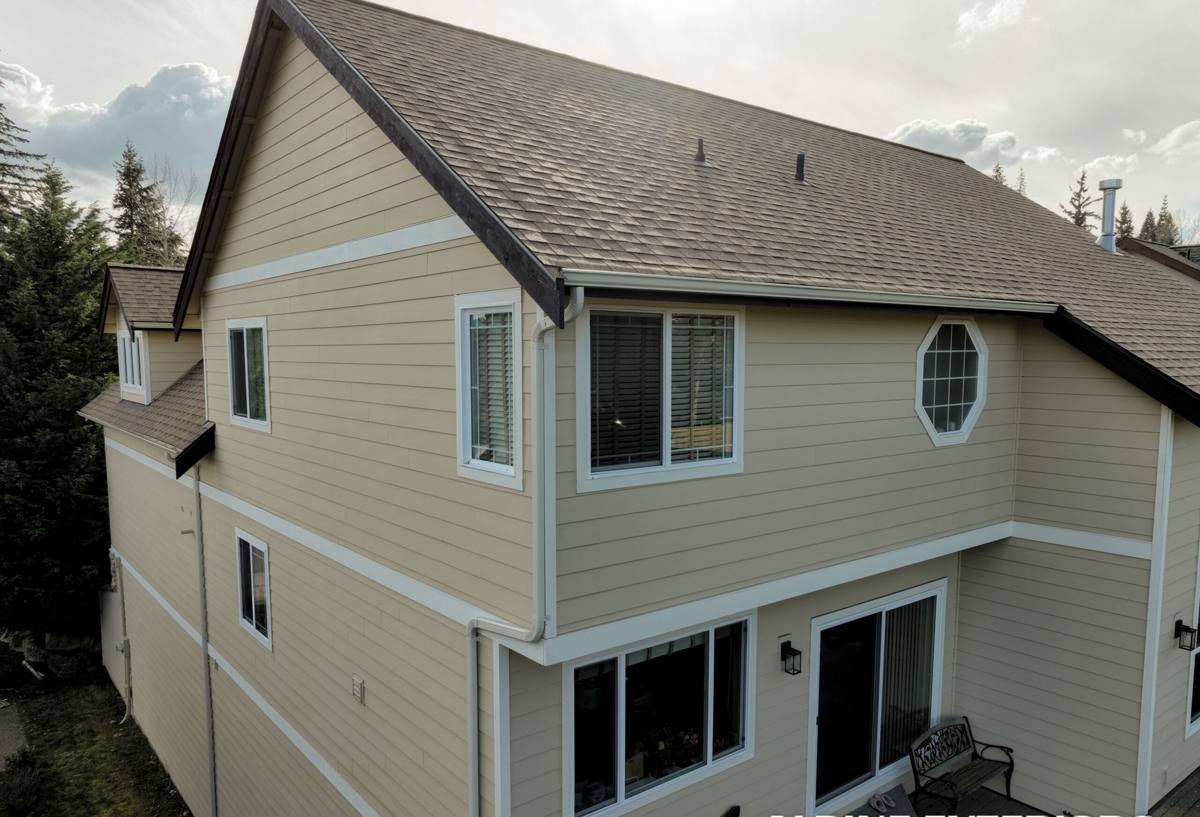
Why Everson Roofs Fail the Way They Do
Moisture that lingers
Whatcom County doesn't get the heaviest rainfall totals in the state, but it gets a lot of low-intensity, long-duration rain, plus fog and dew that keep roof surfaces damp for hours after the rain itself stops. Shaded sides of a roof — under trees, behind chimneys, on north slopes — can stay wet for days at a time in winter. That constant dampness is what drives moss growth and slowly breaks down shingle mat and underlayment faster than sun exposure alone would.
Moss and organic growth
Moss doesn't just look bad — it holds water against the roofing material, lifts shingle edges as it grows, and works its way under flashing and into fastener lines. On older roofs around Everson we regularly find moss root systems that have physically separated shingle tabs from the roof deck, which turns a simple cleaning job into a repair job.
Wind-driven rain and salt-tinged air
Storms moving through this corridor often bring rain sideways rather than straight down, which pushes water into laps, valleys, and flashing details that were never designed to handle it. Combined with the salt air that reaches inland from the Strait of Georgia and Bellingham Bay, metal flashing, fasteners, and vent components corrode faster here than they would in a drier, inland climate — another reason a repair needs the right materials, not just the closest match.
The Roof Repair Problems We See Most Around Everson
- Moss-lifted shingle tabs along ridge lines and shaded north slopes, often mistaken for wind damage
- Failed valley flashing where two roof planes meet and heavy runoff concentrates
- Nail pops and cracked shingles from age combined with repeated wet-dry cycling
- Chimney and skylight flashing leaks, usually where sealant has dried out rather than the flashing itself failing
- Gutter-line rot at the fascia and drip edge where overflow or moss debris keeps wood wet for months
- Ridge vent and pipe boot deterioration, especially on rubber boots that crack after several freeze-thaw cycles
Most of these show up first as a small stain on a ceiling or a damp smell in an attic — by the time it's visible inside, the moisture has usually been getting in for a while.
What a Correct Repair Actually Involves
A repair that's done right starts with finding the actual entry point, not just the spot where the leak shows up indoors. Water travels along rafters, sheathing seams, and underlayment before it drips somewhere visible, so the stain on your ceiling is rarely directly below the failure. We walk the roof, check the attic side where accessible, and trace the path before touching anything.
Steps in a proper repair
- Inspect the roof surface, flashing, penetrations, and — where accessible — the attic or underside of the deck for water staining or soft spots
- Identify the actual point (or points) of entry, not just the visible symptom
- Remove and replace any compromised shingles, underlayment, or sheathing rather than sealing over damaged material
- Reset or replace flashing at valleys, chimneys, skylights, and vent penetrations with corrosion-resistant material suited to coastal-adjacent air
- Clear moss and debris from the surrounding area so the repair isn't immediately undermined by the same growth that caused the original failure
- Check and, if needed, correct attic ventilation contributing to trapped moisture
Skipping straight to caulk or roof cement over a problem area is the fastest way to end up back on the same roof within a year. It's not a repair — it's a delay.
Our Process, Start to Finish
We keep the process straightforward because most homeowners just want to know their roof is dry and not have to think about it again for a while.
- Assessment: We look at the whole roof, not just the reported problem area — a single leak is often a symptom of a broader moss or flashing issue
- Written scope: You get a clear explanation of what's failing, why, and what the repair will involve, before any work starts
- Repair: We match materials to what's already on the roof where possible, and upgrade flashing or underlayment where the original spec is clearly the reason it failed
- Cleanup: Moss, granules, and old material are cleared off — leaving debris behind just restarts the cycle
- Follow-up notes: If we see other spots trending toward trouble — thinning granule coverage, early moss, a gutter that's undersized for the roof's runoff — we tell you, even if it's not part of this repair
Repair vs. Replacement: How to Tell Which You Need
| Situation | Repair usually makes sense | Replacement is the honest call |
|---|---|---|
| Age of roof | Under 15–18 years, asphalt shingle | Nearing or past manufacturer's expected service life |
| Extent of damage | Isolated to one section, valley, or penetration | Multiple areas failing, or moss/rot spread across large sections |
| Deck condition | Sheathing solid under the damaged shingles | Soft, delaminating, or repeatedly wet sheathing found in more than one spot |
| Granule loss | Localized wear | Widespread, roof-wide granule loss visible in gutters |
| Cost pattern | Single repair, reasonable and durable | You've already paid for two or more repairs in recent years on the same roof |
As a rough, honest range: a small, contained repair (a valley, a section of flashing, a handful of shingles) commonly runs a few hundred to around a thousand dollars depending on access and material match. Larger repairs involving deck replacement or multiple problem areas can run higher. Exact pricing depends on what we find once we're up there — we'll never quote blind.
Materials and Standards We Hold To
Because of how much moisture and moss pressure Everson-area roofs deal with, we're particular about a few things:
- Flashing and fasteners chosen for resistance to the salt-tinged, damp air common in this part of Whatcom County — not just whatever's cheapest at the supply house
- Underlayment that performs under prolonged dampness, not just a single hard rain
- Shingle products with reasonable algae/moss resistance where a full section is being replaced, since bare replacement shingles in a moss-prone spot just restart the same problem
- Sealants used sparingly and correctly — as a supplement to good flashing work, never as the primary fix
We're honest that no shingle or coating makes moss impossible here — the climate is the climate. What proper materials and detailing do is slow regrowth and keep water out even when moss does return, which is the realistic goal in this region.
Why It Matters That We Already Work in Everson
A crew that only sees a roof once doesn't have a baseline for how fast moss regrows in this specific microclimate, or which flashing details tend to fail first on homes built in a given era in this part of the county. Working repeatedly in and around Everson and Lynden means we know which roof ages and styles are due for flashing upgrades, how local tree cover affects moss timing on shaded slopes, and what a "normal" amount of moss looks like here versus what signals a roof that's actually behind on maintenance. That local pattern recognition shortens the inspection and keeps the repair scope honest — we're not guessing at what Whatcom County weather does to a roof, we're seeing it week to week.
Signs You Should Get a Roof Checked
- A ceiling stain that appears or grows after a heavy rain, even if it dries out between storms
- Visible moss buildup thicker than a light green haze, especially in valleys or along ridge lines
- Shingle granules collecting in gutters or at downspout outlets
- Curling, cracked, or missing shingle tabs visible from the ground
- Daylight visible through the roof deck from inside the attic
- A musty smell in an upstairs room or attic space during or after wet weather
- Gutters pulling away from the fascia, which often points to fascia rot from long-term overflow
Any one of these on its own might be minor. Two or more together usually means it's worth a look before winter's wet season, not after.
Timing Matters More Here Than in Drier Climates
In a dry region, a small roof issue can sit for a season without much consequence. In this part of Washington, the same small issue tends to compound — moss keeps growing, moisture keeps working under flashing, and a repair that would've taken half a day in August can turn into a deck-replacement job by the following spring. Late summer and early fall, before the wet season sets in, is genuinely the best window to get repairs done. That said, we do repair work through the wet months too when a leak can't wait for better weather.
If you're seeing signs of a problem on your Everson or Lynden-area roof, we're happy to come take a look and give you a straight answer — repair, monitor, or replace — with no pressure either way. The form below gets you a free estimate.