 Lynden
 Asphalt Shingle Roofing for Ferndale Homes
Ferndale sits close enough to the water that salt air is a real factor in how a roof ages, and far enough into Whatcom County's wet-season pattern that moss, moisture, and wind-driven rain do most of the damage over time. An asphalt shingle roof installed here needs to be built for that combination, not just installed to a generic spec sheet. We work on homes throughout the Ferndale and Lynden area, and the roofs that hold up longest are the ones where ventilation, underlayment, and flashing details were treated as seriously as the shingles themselves.
This page covers what we look at specifically for asphalt shingle roofing jobs in this area — new installs, tear-offs and replacements, and the smaller repair work that keeps a roof going between full replacements.
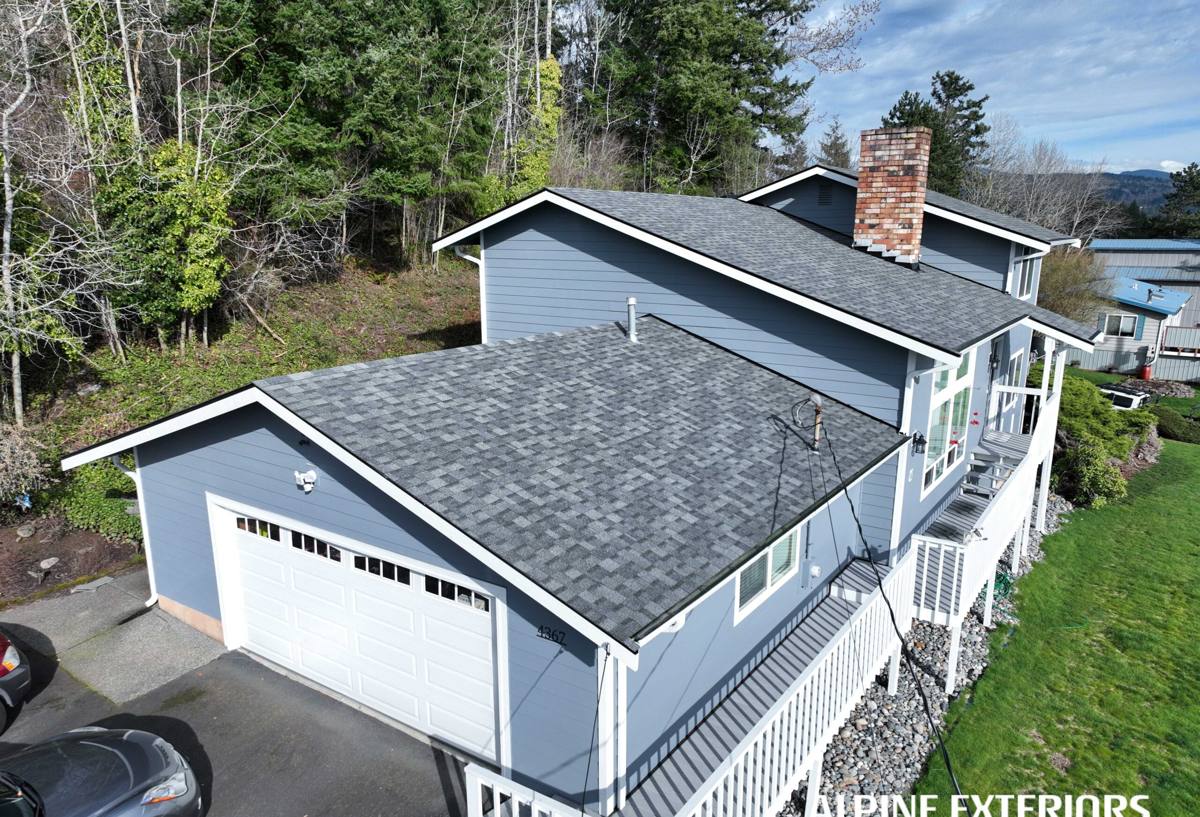
Why Ferndale's Climate Is Harder on Shingles Than People Expect
Asphalt shingles are a solid, proven roofing product almost anywhere in the country, but they perform differently depending on local conditions. In Ferndale and the surrounding Whatcom County lowlands, three things combine to shorten roof life if the install isn't done right:
Salt Air
Proximity to the Strait of Georgia and Bellingham Bay means airborne salt reaches roofs here more than it would inland. Salt exposure doesn't dissolve asphalt shingles, but it accelerates corrosion on exposed metal — nails, flashing, vent caps, and gutter hardware. A roof with cheap or under-protected metal components will show rust streaks and failing fasteners years before the shingles themselves are due for replacement.
Driving Rain
Storms coming off the water often bring rain sideways, not straight down. That matters for roofing because wind-driven rain finds its way under shingle edges, around vent boots, and behind poorly lapped step flashing in ways a calm, vertical rain never would. Standard nailing patterns and minimal underlayment coverage that would be fine in a drier climate leave real gaps here.
The Long Moss Season
Whatcom County's moss season runs long — shaded, north-facing slopes and anything under tree cover can stay damp for months at a stretch. Moss holds moisture directly against the shingle surface, works its way under shingle tabs as it grows, and lifts edges enough to let water in behind the shingle line. Left unchecked, it shortens the functional life of a roof well before the shingles have worn out on their own.
What a Correctly Installed Shingle Roof Includes
A roof that's built for these conditions isn't a different product line — it's the same asphalt shingle roofing done with attention to the details that matter most locally.
- Ice-and-water shield or high-quality synthetic underlayment at eaves, valleys, and around every penetration — not just the code minimum
- Corrosion-resistant flashing and fasteners, given the salt-air exposure
- Proper step flashing and counter-flashing at every wall intersection, chimney, and dormer — not caulk substituting for metal
- Balanced intake and exhaust ventilation, so moisture from inside the attic doesn't add to what's coming from outside
- Sealed and correctly lapped vent boots, since these are one of the most common sources of slow leaks
- Drip edge at eaves and rakes to direct water away from the fascia and into the gutters
- Manufacturer-specified nailing pattern and exposure — under-nailing is a common cause of premature wind damage in coastal storms
Choosing the Right Shingle for This Area
Not every asphalt shingle product is built the same way, and the differences matter more in a wet, salt-exposed climate than they do in milder conditions. We steer homeowners toward shingles with strong wind ratings and algae-resistant granules, because both directly address the two biggest local stressors: driving rain/wind events and moss and algae growth.
| Factor | Standard 3-Tab | Architectural / Laminate |
|---|---|---|
| Wind resistance | Lower rating, more prone to lifting in gusts | Higher rating, better suited to coastal wind exposure |
| Algae/moss resistance | Available on some lines, less common | Widely available with copper- or zinc-infused granules |
| Expected lifespan | Shorter, typically 20-25 years rated | Longer, typically 30 years or more rated |
| Upfront cost | Lower | Moderate increase over 3-tab |
| Appearance | Flat, uniform look | Dimensional, shadow-line look |
We don't push one tier of shingle as the only acceptable option — a well-installed 3-tab roof with proper flashing and ventilation will still outperform a poorly installed premium shingle. But for most Ferndale homes, the wind and algae resistance built into architectural shingles is worth the modest price difference over the life of the roof.
Our Process for a Shingle Roof Job
Inspection and Estimate
We start by getting on the roof, not just looking at it from the ground. That means checking decking condition, existing ventilation, flashing at every penetration and wall intersection, and how much moss or moisture damage is already present. We give a written estimate that reflects what we actually find, not a generic per-square number.
Tear-Off and Deck Inspection
For replacements, we remove the old roofing down to the deck rather than layering over it. This lets us check for soft or rotted sheathing — common under areas with long-term moss coverage — and replace only what needs it.
Underlayment and Flashing First
Before a single shingle goes down, underlayment and all flashing details are set. This is the part of the job that determines whether a roof leaks in year three or lasts the full warranty period, and it's the part that's easiest to shortcut if a crew is moving fast.
Shingle Installation
Shingles go on to manufacturer spec — nailing pattern, exposure, and sealing — so the wind and product warranty stay valid. We check that ridge and hip caps, vents, and edge details are finished cleanly, since these are the spots most likely to fail first if rushed.
Final Walkthrough
We walk the finished roof with the homeowner, cover what was done, and go over basic moss-prevention and gutter maintenance specific to the property's exposure and tree cover.
Repair, Maintenance, or Full Replacement?
Not every roofing problem in Ferndale needs a full tear-off. The right call depends on the shingles' remaining life, how widespread the damage is, and what's causing it.
- Isolated moss patches on an otherwise sound roof: cleaning and preventive treatment, not replacement
- A handful of cracked or missing shingles after a windstorm: targeted repair matching existing shingles
- Recurring leaks at one flashing point: flashing repair or replacement at that location
- Widespread granule loss, curling, or shingles past their rated lifespan: full replacement is usually the more cost-effective long-term choice
- Soft decking or visible sagging: replacement, since the structural issue needs to be addressed before new shingles go on regardless
We'll tell you honestly which category a roof falls into. A roof with a few good years left doesn't need to be replaced just because it has some moss or a couple of damaged shingles.
Cost Factors for a Ferndale Shingle Roof
Every roof is priced based on its own specifics, but the main variables that move the cost on a local job are consistent:
| Factor | Effect on Cost |
|---|---|
| Roof size and number of stories | More area and harder access increase labor and material cost |
| Roof pitch and complexity | Steep or highly cut-up rooflines (valleys, dormers, multiple planes) add labor time |
| Existing layers to remove | Tear-off of multiple old layers adds disposal and labor cost |
| Deck condition | Rotted or soft sheathing found during tear-off adds repair cost |
| Shingle tier chosen | Architectural shingles cost more upfront than standard 3-tab |
| Ventilation upgrades needed | Adding intake or exhaust vents where the attic is currently underventilated |
We break these out in the estimate so you can see exactly what's driving the number, rather than getting a single lump-sum figure with no explanation.
Why a Crew That Already Works This Area Matters
A roofing crew that regularly works Ferndale and the greater Lynden area already knows which details get skipped by out-of-area contractors moving through on volume — usually flashing, ventilation, and the extra underlayment coverage that a drier climate wouldn't require. Local familiarity also means realistic scheduling around the wetter months, since some tear-off and install work genuinely can't happen safely or correctly during heavy rain, and a crew unfamiliar with the area's weather patterns is more likely to rush a job to beat weather instead of sequencing it properly.
We're a Whatcom County-based crew, and we stand behind the work because we're not moving on to the next region next month — we're the ones a homeowner calls back if something needs attention.
If you're dealing with an aging shingle roof, storm damage, or persistent moss in Ferndale, we're happy to take a look and give you a straightforward, no-pressure estimate. There's a form below — fill it out and we'll get back to you.