 Lynden
 Why Ferndale Roofs Wear Differently Than Roofs Inland
Ferndale sits close enough to the water that salt-laden air is a real factor in how a roof ages, not just a talking point. Add Whatcom County's long, wet fall-through-spring stretch and the moss season that comes with it, and you've got a climate that's harder on a roof than most manufacturers' warranty language accounts for. A roof that would hold up fine in a drier part of the state can start showing granule loss, algae streaking, and moss colonization here years ahead of schedule if it wasn't installed with this specific climate in mind.
New roof installation in Ferndale isn't a different trade than roofing anywhere else — it's the same trade with a shorter margin for error. The underlayment, ventilation, flashing, and fastening choices that are "nice to have" in a dry climate are the parts of the job that actually determine whether a Ferndale roof looks and performs well at year ten versus year twenty-five.
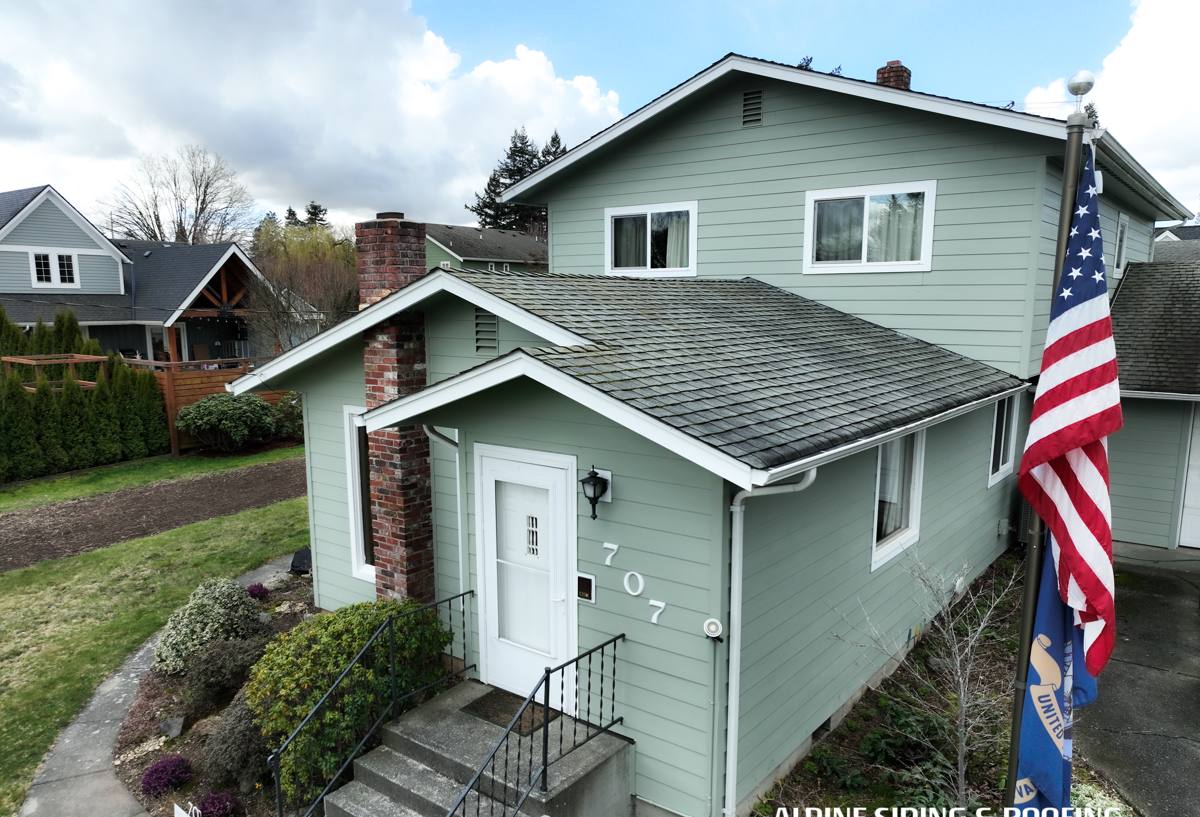
What Driving Rain and Salt Air Actually Do to a Roof
Driving Rain and Wind-Driven Water
Storms coming off the water don't just drop rain straight down — wind pushes it sideways and up under shingle edges, at valleys, and around anything penetrating the roof (vents, chimneys, skylights). A roof built for calmer weather relies on shingles alone to shed water. A roof built for this area needs a second line of defense underneath, because at some point wind-driven rain is going to get past the surface layer, and what's underneath decides whether that turns into a stain on the ceiling or nothing at all.
Salt Air and Material Fatigue
Airborne salt accelerates corrosion on exposed metal — flashing, fasteners, vent stacks, and any hardware left unprotected. It also speeds up the breakdown of asphalt shingle granules over time. None of this means roofing materials "fail" near the coast; it means the fastener grade, flashing metal, and coating choices matter more here than they would forty miles inland, and cutting corners on those details shows up faster in a place like Ferndale than it would elsewhere.
The Long Moss Season
Moss needs shade, moisture, and time — and Whatcom County provides all three for a good part of the year. Moss isn't just cosmetic. It holds moisture against the roof surface, works its way under shingle tabs as it grows, and can lift edges enough to let water in. A roof that never gets a chance to fully dry out between rain events needs to be installed and detailed in a way that limits where moss can get a foothold in the first place.
What a Correct New Roof Installation Involves Here
Underlayment and Water-Entry Protection
We install a synthetic underlayment as the primary water barrier under the shingles, with self-adhered ice-and-water membrane at the vulnerable spots — eaves, valleys, around chimneys and skylights, and low-slope transitions. This is the layer that's still doing its job long after the shingles above it have been rained on for a decade. Skipping or shorting this step is one of the most common ways a "good-looking" roof turns into a leaking one within a few years near the coast.
Ventilation That Matches the Climate
Balanced intake (soffit) and exhaust (ridge) ventilation keeps the attic space at outdoor temperature and humidity instead of trapping moisture underneath the deck. In a climate this wet, poor ventilation doesn't just waste energy — it condenses moisture on the underside of the roof deck, which rots sheathing from the inside where nobody sees it until it's expensive. We size and balance ventilation as part of every new roof, not as an upsell.
Flashing Details
Flashing around chimneys, skylights, sidewalls, and valleys is where the vast majority of roof leaks actually originate — not in the open field of shingles. We use corrosion-resistant flashing metal and step/counter-flash every penetration and wall intersection correctly, because a shortcut here is invisible on installation day and obvious the first hard storm afterward.
Fastening for Wind
Coastal wind gusts call for correct nail placement, nail count, and nail penetration into the deck — not staples, not high-nailing, not relying on adhesive strips alone. We follow manufacturer specs for fastener pattern and pressure-test our own work against them, because a shingle that's fastened right doesn't lift in the first windstorm that comes through.
Material Options for Ferndale Homes
There's no single "right" roofing material for every house — it depends on your roof's slope, your budget, how long you plan to stay in the home, and how much moss and moisture resistance you want to pay for up front versus manage over time.
| Material | Moss Resistance | Salt Air Durability | Typical Lifespan Here |
|---|---|---|---|
| Architectural asphalt shingle | Good with algae-resistant granules; needs periodic cleaning | Good with quality fasteners and flashing | 20-25 years |
| Standing seam metal | Very good — little for moss to grip | Very good with coated, marine-grade fasteners | 40-50+ years |
| Synthetic composite shingle | Good; sheds moisture well | Good | 30-40 years |
| Cedar shake | Poor without diligent maintenance | Fair; needs regular treatment | 20-30 years with upkeep |
We install algae-resistant architectural shingles as our standard recommendation for most Ferndale homes because they balance upfront cost against real-world moss and moisture performance. Metal roofing is worth the higher investment on homes with heavy tree cover or owners planning to stay long-term, since it gives moss the least to hold onto. We don't push cedar shake in this climate as a default — not because it's a bad product, but because it demands a maintenance schedule that most homeowners underestimate given how much moisture this area sees.
Our Installation Process
- On-site inspection and measurement — we check the deck condition, existing ventilation, flashing points, and slope before quoting anything.
- Written estimate — materials, tear-off scope, flashing and ventilation work, and timeline spelled out, not a vague lump sum.
- Tear-off and deck inspection — old roofing comes off down to the deck so we can actually see and replace any soft or water-damaged sheathing, not cover it up.
- Underlayment and ice/water membrane installation — the water barrier goes down before anything decorative.
- Flashing and ventilation work — all penetrations, valleys, and intake/exhaust points get addressed as part of the base install.
- Shingle or panel installation — fastened to manufacturer spec for wind exposure.
- Cleanup and final walkthrough — magnetic sweep for stray fasteners, debris haul-off, and a walkthrough so you can see the finished work before we consider the job done.
Building Moss Resistance Into the Job, Not Just the Warranty
Moss control starts at installation, not with a chemical treatment applied afterward. Algae-resistant shingle granules, properly balanced ventilation that lets the roof dry between storms, and flashing that doesn't trap standing water all reduce how hospitable a roof is to moss growth in the first place. We'll also point out any overhanging tree limbs shading the roof that are worth trimming back — shade is the one moss-growth factor that's actually in a homeowner's control after the roof is installed.
Signs a Ferndale Roof Needs Replacement, Not Another Repair
- Granules collecting in gutters or at downspout outlets in noticeable amounts
- Shingles that are cupping, curling, or cracking, especially on south- and west-facing slopes
- Moss established across multiple sections of the roof rather than just isolated shaded spots
- Daylight visible through the attic roof deck or soft spots felt when walking the attic
- Repeated flashing leaks around the same chimney, skylight, or wall intersection
- A roof at or past 20 years old with no major work done in that time
- Visible sagging along the ridge or between rafters
If you're only seeing one or two of these, a repair may still be the right call — a new roof isn't always the answer, and we'll tell you honestly when it isn't.
Why a Crew That Already Works Ferndale Matters
A roofing crew that works Ferndale and the surrounding Lynden and Whatcom County area regularly already knows which slopes hold moss longest, which fastener and flashing grades actually hold up against the salt air coming off the water, and how local wind patterns tend to find the weak spots in a roof. That's not something you get from a general contractor passing through the area once. It also means we're a short drive away if a warranty question or a storm-related concern comes up after the job is done — not a call center and a truck coming from two counties over.
Permits, Timeline, and What to Expect
Most new roof installations in this area take one to three days on-site depending on the size and pitch of the roof and whether full deck replacement is needed. We handle the permitting process where required and schedule around the weather — chasing an open roof deck during a Whatcom County rain window is a mistake we don't make. We'll walk you through the realistic timeline for your specific roof before work starts, not after.
What Affects the Cost of a New Roof in Ferndale
| Cost Factor | Why It Matters Here |
|---|---|
| Roof size and number of slopes | More material, more flashing points, more labor hours |
| Deck condition underneath old roofing | Rot from long-term moisture exposure means added sheathing repair |
| Material choice | Metal costs more upfront but needs far less long-term moss and moisture maintenance |
| Ventilation upgrades needed | Older homes often need intake or exhaust vents added or corrected |
| Roof pitch and access | Steeper roofs and tight access add labor time and safety equipment needs |
We won't quote a number without seeing the roof, but we'll always explain what's driving the price so you know exactly what you're paying for and why.
If your Ferndale roof is showing its age or you're planning ahead of the next wet season, we're happy to take a look and give you a straight answer — no pressure, no obligation. Use the form below to request a free estimate.