 Lynden
 Why Everson Homes Take a Different Kind of Beating
Everson sits in the part of Whatcom County where weather doesn't just pass through — it settles in. Homes here deal with a long wet season, driving rain that comes in sideways off the valley, damp air that never fully dries out between storms, and a moss season that can stretch from fall through spring. That combination is hard on exterior walls in ways that don't show up right away. Siding that looks fine in year one can be trapping moisture behind it by year five, and by the time paint is peeling or boards are soft to the touch, the damage is already done underneath.
Fiber cement siding was built for exactly this kind of exposure. It doesn't absorb water the way wood-based products do, it doesn't rot, and it holds up to repeated wet-dry cycling far better than most of the alternatives homeowners are choosing between. But the material is only half the equation. In Everson, how it's installed — the gaps, the flashing, the fasteners, the way it meets trim and foundation — matters just as much as what it's made of.
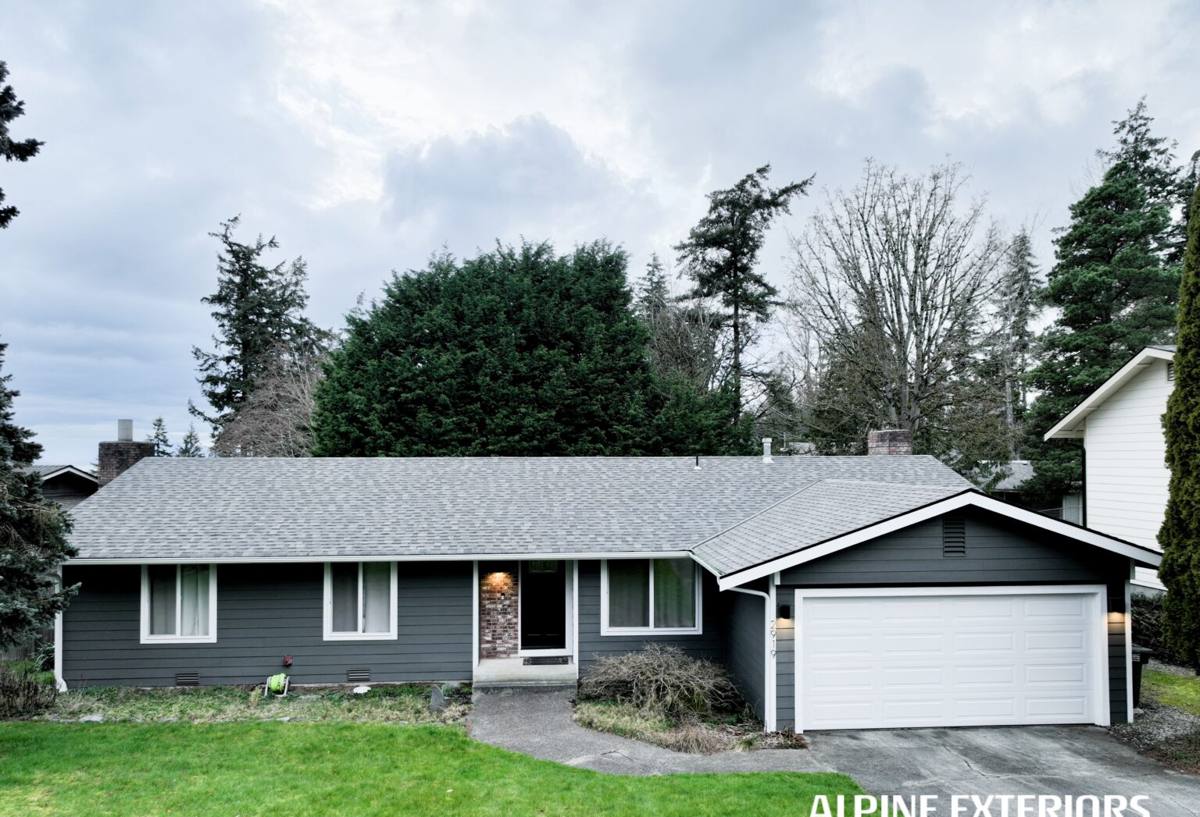
What Local Weather Actually Does to a Wall
Driving rain and wind-driven moisture
Rain that falls straight down is manageable for almost any siding product. Rain that's pushed sideways by wind — which is common in this part of Whatcom County — finds every gap, every under-caulked seam, and every place where boards weren't left with proper clearance. Over time it works its way behind the siding and into the wall assembly, where it does the real damage.
Moss, algae, and constant dampness
Everson's moss season isn't a cosmetic issue — it's a moisture issue. Moss and algae hold water against a surface long after the rain has stopped, which keeps wood-based sidings damp for extended stretches. That constant dampness is what accelerates rot, delamination, and paint failure. A siding material that doesn't feed moss and doesn't swell when it's wet has a real head start.
Salt-influenced air
Homes closer to the water in this region deal with a low but steady level of salt in the air, which speeds up corrosion on fasteners and metal trim and can accelerate the breakdown of lower-grade coatings. It's a slow effect, but it adds up over a couple of decades — and it's one more reason the fastener and finish quality matter as much as the board itself.
What Correct Fiber Cement Installation Actually Involves
Fiber cement is a forgiving material compared to wood, but it is not install-and-forget. Done wrong, it can still trap moisture or fail early — just more slowly than a cheaper product would. Done right, it should outlast most of the other decisions made on a home's exterior. A correct installation includes:
- A water-resistive barrier installed and lapped correctly behind the siding, with all penetrations properly sealed
- Rainscreen or furring strips where conditions call for it, to let any incidental moisture drain and the wall assembly breathe
- Manufacturer-specified clearances at grade, decks, and roof lines so the bottom edge of the siding never sits in standing water or snow
- Flashing at every window, door, and horizontal trim transition — not just caulk
- Corrosion-resistant fasteners driven to the manufacturer's exact spec, not overdriven or underdriven
- Properly sized gaps at butt joints and trim, caulked with a product rated for the exposure, not just whatever's on the truck
- Factory-finished edges and cut ends sealed before installation, especially on field cuts
Skip any one of these steps and the siding can still look good for a few years. The problems show up later, usually as trapped moisture damage that's expensive to trace and repair.
Our Process, Start to Finish
For a fiber cement project in the Everson and Lynden area, our process is the same whether it's a single wall repair after storm damage or a full re-side:
- On-site assessment. We look at the existing siding, sheathing condition, and any signs of past moisture intrusion — not just the surface.
- Written estimate. Scope, product line, color, and a clear cost breakdown, no vague allowances.
- Prep and moisture check. Any soft sheathing or water damage gets addressed before new siding goes up — covering it over is how problems get worse, not better.
- Weather barrier and drainage plane installed to spec, with attention to the details that matter most in a wet climate: laps, seams, and penetrations.
- Siding installation following James Hardie's fastening, clearance, and joint-treatment requirements exactly, not "close enough."
- Trim, caulking, and touch-up using products rated for the exposure the wall actually sees.
- Final walk-through so you know what was done and what maintenance, if any, it needs going forward.
Why We Install James Hardie and Nothing Else
We standardized on James Hardie fiber cement because it's engineered specifically for climates like this one. Hardie's HZ5 product line is formulated for regions with heavier moisture exposure — including the Pacific Northwest — with a composition designed to resist moisture-related damage better than general-purpose fiber cement or wood-based siding. It's also non-combustible, which matters as wildfire smoke and dry-season fire risk become more of a regional concern even in historically wet counties.
The ColorPlus factory finish is another reason. It's baked on in a controlled environment rather than field-applied, which means better adhesion and color consistency than a job-site paint job — especially relevant in a climate where a fresh paint job barely has time to fully cure before the next stretch of rain rolls in. Hardie also backs its products with a strong transferable warranty, which carries real weight if you ever sell the home.
We don't install LP SmartSide, vinyl, Cemplank, Allura, or primed wood species like cedar or spruce. Each of those has legitimate uses and a place in the market — this isn't a claim that they're defective products. But we've made a professional decision to put our labor and our name behind one system we know performs consistently in this climate when installed correctly, rather than juggling multiple products with different moisture behaviors, warranty structures, and installation tolerances.
How Fiber Cement Compares for This Climate
| Material | Moisture Behavior in Wet Climates | Moss/Algae Resistance | Typical Lifespan |
|---|---|---|---|
| James Hardie Fiber Cement | Does not absorb and swell; resists rot | Non-organic surface, doesn't feed growth | 30+ years with proper install |
| Vinyl | Doesn't absorb water, but can warp and gap, letting moisture behind it | Can trap moisture at seams that promotes growth | 15-25 years |
| Engineered Wood (LP SmartSide) | Wood-based; vulnerable if edges/seams aren't perfectly sealed | Organic material can support growth if damp | 20-30 years, install-dependent |
| Cedar / Primed Wood | Absorbs moisture readily; needs consistent maintenance | Prone to moss and algae without regular treatment | 15-25 years with active upkeep |
This isn't a claim that every other product fails — it's why, for a climate like Everson's, we think fiber cement with a factory finish gives homeowners the least ongoing maintenance for the money over the life of the siding.
What It Costs and What Drives the Price
Every home is different, but a few factors consistently move the price of a fiber cement project in this area:
| Factor | Why It Matters |
|---|---|
| Existing wall condition | Rotted sheathing or hidden moisture damage found during tear-off adds repair scope |
| Home size and complexity | More corners, gables, and trim details mean more labor and material waste |
| Siding profile and accent details | Shake-style accents or mixed profiles cost more than straight lap siding |
| Access | Steep grades, tight lot lines, or multi-story walls affect staging and labor time |
| Full re-side vs. repair/replacement of a section | Partial work can cost less upfront but may complicate color/batch matching |
We'll walk through all of this in a written estimate before any work starts — no surprise line items partway through the job.
Maintenance in Moss Season
Fiber cement needs far less upkeep than wood-based siding, but "low-maintenance" isn't "no-maintenance," especially through a long wet season. A short seasonal checklist:
- Rinse siding annually to clear pollen, dust, and early moss growth before it takes hold
- Keep gutters clear so overflow doesn't run down the wall face
- Trim back shrubs and trees that keep siding shaded and damp longer than the rest of the house
- Check caulking at trim and window edges every couple of years and re-seal as needed
- Watch for any soft spots or discoloration near grade, decks, or roof lines — early signs are cheap to fix, late ones aren't
Why It Matters to Hire a Crew That Already Works This Area
A crew that regularly works Everson and Lynden already understands how this climate behaves on a wall — where driving rain tends to hit hardest, how long moss season really runs, and which details get skipped by installers used to drier regions. That local familiarity shows up in the small decisions: where extra flashing gets added, how clearances are handled at grade, and which caulk actually holds up through a full Whatcom County winter. It's the difference between a siding job that looks right at handoff and one that's still performing correctly in fifteen years.
If you're planning a re-side, repair, or new construction project in Everson or the greater Lynden area, we're happy to take a look and put together a straightforward, no-pressure estimate — just fill out the form below.