 Lynden
 Siding That Has to Work in Laurel, Not Just Look Good
Laurel sits in the part of Whatcom County where marine weather off the Salish Sea meets the wet, green interior around Lynden. Homes here deal with a specific combination of stresses: salt-tinged air moving in off the water, long stretches of driving rain pushed sideways by wind, and a moss season that can run eight months or more in shaded, north-facing spots. Siding that was engineered for a drier climate, or for a warmer one without the salt exposure, tends to show it here first — at the bottom courses, around window trim, and anywhere two surfaces meet and hold moisture.
We install fiber cement siding in Laurel because it's the one product category built to shrug off all three of those stresses at once, and because we've seen firsthand what happens to lesser materials on homes just like the ones in this neighborhood. This page covers what a correct fiber cement job looks like here specifically — not fiber cement in general terms lifted from a national spec sheet.
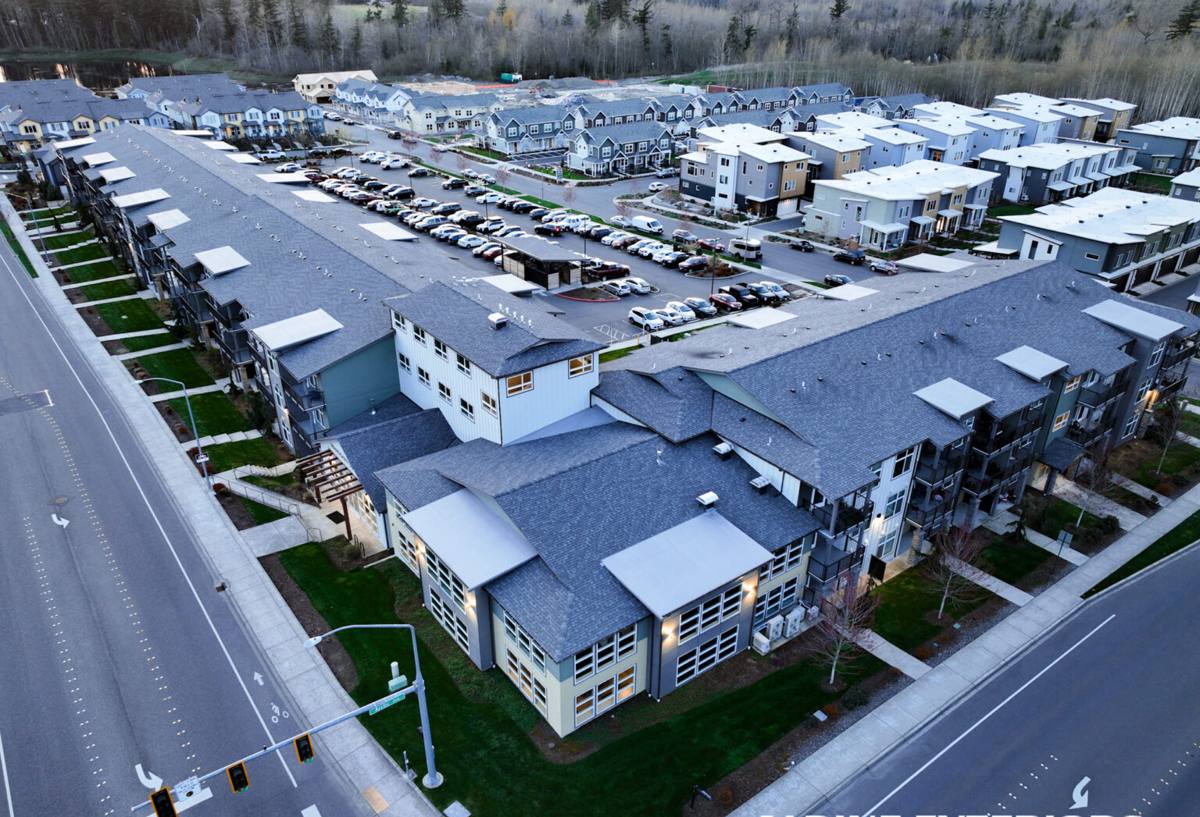
What Laurel's Climate Actually Does to Siding
Salt Air
Even well inland from the coastline, prevailing westerly winds carry a measurable amount of salt into Whatcom County's lowland communities. Salt is hygroscopic — it pulls moisture out of the air and holds it against whatever surface it lands on. Over years, that means siding surfaces stay damp longer than they would in a drier inland climate, and any exposed or under-protected wood fiber in a siding product has more opportunity to swell, soften, and eventually rot.
Driving Rain
Lynden-area rain rarely falls straight down. Wind-driven rain gets forced sideways and upward under laps, around corner trim, and into any gap that wasn't sealed and flashed correctly. This is less about total rainfall and more about wind-loaded moisture intrusion — a siding system's water management details (laps, flashing, joint treatment) matter more here than the raw material's water resistance rating.
Moss Season
Shaded north and east elevations, common on lots with mature trees or tight neighbor setbacks, can stay damp enough to grow moss for most of the year. Moss holds water against the siding surface constantly, which is a much harder test than rain that eventually dries. Paint film, caulking, and any wood component underneath all take that sustained-moisture load.
Why Fiber Cement Is the Right Category for This
Fiber cement is a mix of cement, sand, and cellulose fiber, cured into a rigid board. It doesn't have the wood-fiber rot pathway that engineered wood products rely on managing through resin and overlay treatments, and it doesn't have the thermal expansion and UV-brittleness issues that come with vinyl. For a lot exposed to salt air, wind-driven rain, and long moss seasons, that combination of dimensional stability and moisture indifference is what actually holds up over 20-30 years rather than 8-12.
We install James Hardie fiber cement exclusively. We don't install LP SmartSide, vinyl, Cemplank, Allura, primed spruce, or cedar, and we're upfront with Laurel homeowners about why: it's not that every alternative fails immediately, it's that we've made a standard for what we're willing to put our name on, and Hardie's engineered product lines, factory-baked ColorPlus finish, and transferable warranty structure are what we've found consistently meets that standard in this climate.
Hardie Product Lines We Use Locally
- HardiePlank lap siding — the primary field siding for most Laurel homes, in a smooth or cedarmill texture
- HardieTrim — corner boards, window and door trim, and fascia detail that resists the same moisture load as the field siding
- HardiePanel — vertical panel applications for accent walls, gables, or shed dormers
- HZ5 climate designation — engineered for the wetter, freeze-capable climates of the Pacific Northwest, which is the specification we use for this region
What a Correct Installation Involves in This Climate
Fiber cement is only as good as the water management behind it. Most siding failures we get called out to inspect in this part of Whatcom County aren't material failures — they're installation shortcuts that let moisture behind the siding where it can't dry out.
The details that matter most on a Laurel job:
- Correct weather-resistive barrier (housewrap) installed and lapped shingle-style, with all seams taped
- Rainscreen or drainage gap furring where the site conditions call for it, especially on shaded or low-airflow elevations
- Proper flashing at every window, door, and roof-to-wall transition — this is where wind-driven rain finds its way in
- Correct minimum clearance from grade, decks, and roof lines so the bottom edge of the siding isn't sitting in standing moisture
- Factory-cut or properly sealed field cuts — any exposed cut edge on fiber cement needs to be sealed per manufacturer spec or it becomes a moisture entry point
- Fastener placement and spacing per the Hardie install guide, not a generic "similar enough" pattern
- Caulk and sealant only at the joints Hardie's install spec actually calls for — over-caulking traps moisture just as badly as under-caulking lets it in
Every one of these is a step where a crew can cut corners without it being visible for a year or two. On a home in Laurel's climate, those shortcuts usually show up as staining, soft trim, or paint failure within the first few wet seasons — well inside what should be a multi-decade service life.
Our Process for a Laurel Project
1. On-Site Assessment
We walk the exterior, check current siding condition and any active moisture damage, note shaded/high-moss elevations, and assess drainage at grade, gutters, and roof transitions specific to the lot.
2. Product and Detail Plan
We spec the Hardie plank profile, trim package, and color, and identify which elevations need a rainscreen gap or extra flashing attention based on sun exposure and existing moss/moisture patterns on that specific house.
3. Tear-Off and Substrate Check
We remove existing siding down to the sheathing, inspect for rot or water damage that needs repair before new siding goes on — covering up damaged sheathing is one of the most common ways a good siding product still fails.
4. Weather Barrier and Drainage Plane
Housewrap, flashing, and rainscreen furring (where used) go on correctly before a single piece of siding is hung, because this layer — not the siding itself — is what actually keeps water out of the wall assembly.
5. Installation to Manufacturer Spec
Hardie boards, trim, and fasteners installed per the current James Hardie installation manual for the HZ5 zone, including proper laps, clearances, and sealed cuts.
6. Final Walkthrough
We review the completed exterior with the homeowner, cover basic care and what to watch for seasonally, and register the manufacturer warranty.
Cost Factors for a Laurel Fiber Cement Project
Every home is different, but these are the variables that actually move the price on a fiber cement job in this area — useful to know before you start collecting quotes.
| Factor | Why It Matters Here |
|---|---|
| Tear-off scope | Removing old siding down to sheathing costs more but is often the only way to find hidden moisture damage before it's covered up again |
| Sheathing/framing repair | Homes with long-term moisture exposure (shaded, mossy elevations especially) sometimes need rot repair discovered mid-project |
| Rainscreen/drainage gap | Adds labor and furring material but meaningfully improves drying capacity on shaded, high-moisture walls |
| Trim complexity | Multiple gables, dormers, and window trim details add cutting and flashing time |
| Siding profile and finish | Cedarmill vs. smooth, and ColorPlus factory finish vs. field-painted, affect material cost and long-term maintenance |
| Access and site conditions | Tight lots, slopes, and mature landscaping around the home affect staging and labor time |
Why a Crew That Already Works Laurel Matters
A contractor who only occasionally works this specific pocket of Whatcom County may not know which elevations in this micro-climate typically need extra drainage attention, or how much moss buildup is normal here versus a sign of a deeper moisture problem. A crew that's done multiple projects in and around Lynden and Laurel already has a feel for local drainage patterns, typical lot shading, and the wind-driven rain exposure specific to this area — which shows up as fewer surprises mid-project and a build that's detailed correctly the first time rather than patched after a callback.
It also matters for warranty follow-through. A local, established crew is the one who'll actually be reachable in year 8 if a question comes up, not a name that did one job in the area and moved on.
Signs Your Current Siding Isn't Keeping Up
- Persistent moss or algae staining that returns within weeks of cleaning
- Soft or spongy spots when you press on siding or trim, especially near the bottom courses
- Paint that's peeling or bubbling rather than just fading
- Visible warping, buckling, or gaps opening up at seams and corners
- Musty smell or interior wall staining near exterior walls
If you're seeing any of these on a Laurel home, it's worth having the siding and the wall assembly behind it looked at before deciding whether it's a repair or a replacement situation.
If you'd like an honest look at your home's siding and a straightforward estimate for a James Hardie fiber cement installation, we're glad to come take a look — no pressure, no obligation. Use the form below to get started.