 Lynden
 Ferndale's Climate Is Harder on Siding Than Most Homeowners Realize
Ferndale sits close enough to the water that salt-laden air is a regular part of the weather, not an occasional event. Add Whatcom County's driving winter rain, the wind that comes off the coast, and a moss season that can stretch from October well into spring, and you have a climate that tests exterior siding harder than almost anywhere else in Western Washington. Homes here don't fail because the siding was cheap — they fail because the material or the installation wasn't built for this specific combination of moisture, salt exposure, and shade.
We're based in Lynden and have worked in Ferndale enough times to see the pattern repeat: siding that looks fine from the street but is soft, delaminating, or growing moss at the bottom courses and behind trim. That's not bad luck. It's what happens when a product or a crew treats Ferndale like anywhere else.
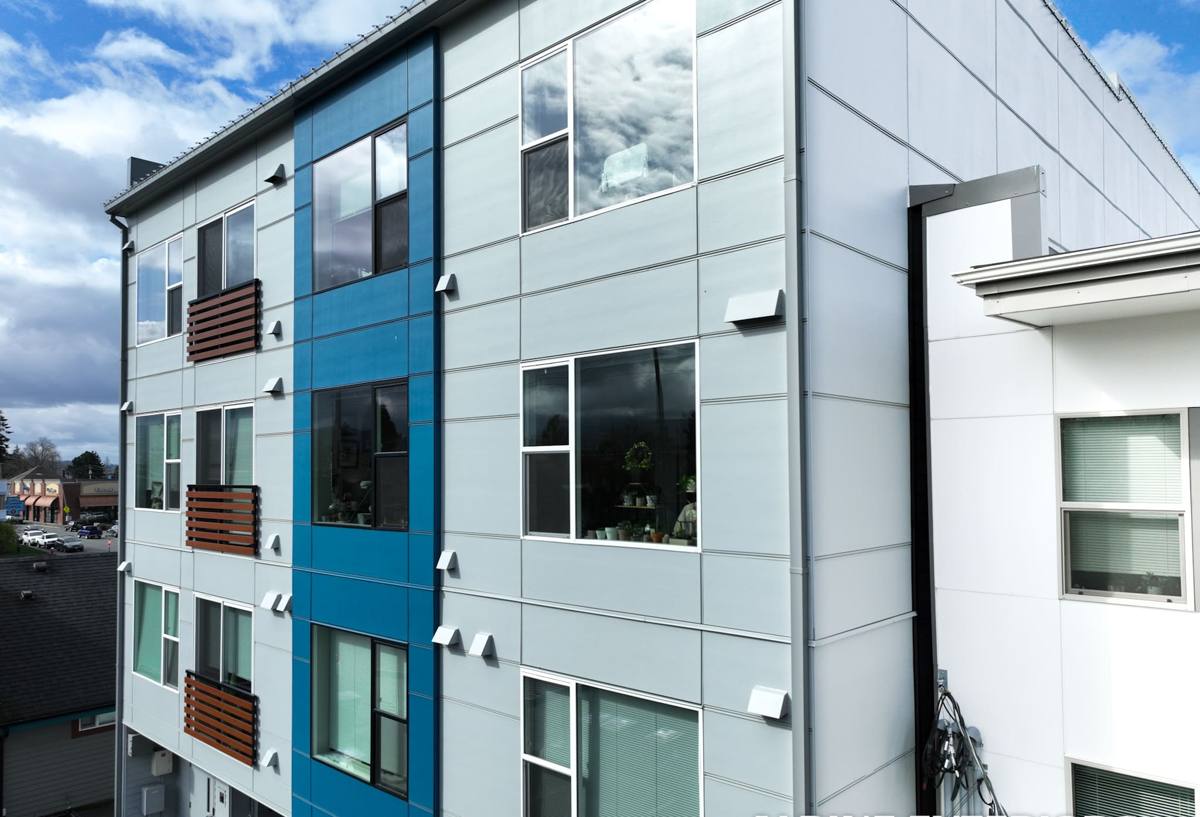
Why Salt Air Changes the Math on Siding Material
Coastal air carries fine salt particles that settle on exterior surfaces and accelerate corrosion of metal fasteners and trim, and it also holds moisture longer than dry inland air. Materials that rely on paint film or a factory coating to keep water out are under more stress here than they would be even twenty or thirty miles inland. Every seam, fastener head, and cut edge is a place where that moisture can start working.
What This Means for Fiber Cement Specifically
James Hardie's fiber cement is dimensionally stable and doesn't absorb and release moisture the way wood-based products do, which matters a lot in an environment where the siding is rarely fully dry for long stretches. It won't rot, and it's not a food source for the fungi that cause moss and mildew staining. That doesn't mean it's maintenance-free — it means the material itself isn't the weak point, so the maintenance that is required (rinsing off salt film, keeping gutters clear) actually does its job instead of fighting a losing battle against a material that's already breaking down underneath.
Moss Season and What It Actually Does to a Wall
Moss doesn't just look bad. On siding, it holds moisture directly against the surface for months at a time, which is exactly the condition that causes the most damage on products that aren't built to handle sustained dampness. North-facing walls, areas shaded by fences or landscaping, and lower courses near grade are where we see it worst in Ferndale — those spots simply don't get enough sun or airflow to dry out between rain events.
James Hardie's factory-applied ColorPlus finish is baked on under controlled conditions and holds up better against the grime and organic growth that moss season leaves behind than field-applied paint does. It's also easier to clean without stripping the finish, which matters if you're rinsing siding on a schedule rather than just when it looks bad.
What Correct Installation Looks Like in This Climate
James Hardie makes a good product, but the installation is what actually determines whether a house handles fifteen years of Ferndale winters or starts showing problems in five. In a climate this wet, the details most homeowners never see matter more than the siding profile or color they picked.
The Non-Negotiables
- Proper water-resistive barrier and flashing behind every window, door, and penetration — this is the actual waterproofing layer; the siding is the second line of defense, not the first
- Correct fastener type and placement, driven to manufacturer spec rather than overdriven or underdriven, which is a common cause of premature failure at the fastener line
- Minimum clearance from grade, decks, and roof lines so the bottom courses aren't sitting in a wet zone permanently
- Factory-cut edges kept factory-sealed, and field cuts properly sealed before installation, since a raw cut edge is the fastest way for moisture to get into the board
- Correct gaps and joint treatment at butt seams and trim, sized for the product and caulked with a product rated for the application
Skip any one of these and you can end up with a house wearing a premium product that performs like a cheap one. This is also why we only install James Hardie — we've standardized our crew's training, tools, and process around one system so every one of these details is handled the same way, every time, instead of switching techniques between three or four different products.
Our Process on a Ferndale Job
Assessment and Plan
We walk the home, check the current siding and sheathing for hidden moisture damage, and look specifically at the areas most exposed to wind-driven rain and the least sun — those areas often need extra attention to flashing and drainage that a straightforward re-side elsewhere on the house wouldn't require.
Prep and Weather Barrier
Old siding comes off, sheathing gets inspected and repaired where needed, and a new water-resistive barrier and flashing system goes in before a single piece of Hardie board is hung. This step is where most long-term failures are actually prevented or created.
Installation
Boards, trim, and fasteners go in to manufacturer spec, with attention to the clearances and sealing details above. We don't rush the cuts, seams, or caulk lines — they're the parts of the job a homeowner won't inspect closely but that decide how the house performs in year eight, not year one.
Walkthrough
We go over the finished job with the homeowner, point out anything relevant to long-term care in a coastal climate, and make sure everyone's clear on what maintenance (if any) is expected going forward.
Comparing Siding Options for a Coastal Whatcom County Home
| Factor | James Hardie Fiber Cement | Vinyl | Untreated Wood / Primed Spruce |
|---|---|---|---|
| Moisture behavior in salt air / long wet season | Dimensionally stable, doesn't absorb and swell | Doesn't absorb water but can warp or gap, letting water behind it | Absorbs moisture readily; prone to rot without diligent upkeep |
| Moss and organic growth resistance | Factory finish resists staining, cleans without damaging the coating | Doesn't feed growth but shows staining and is harder to refinish | Provides an organic surface that moss and mildew can take hold on |
| Fastener and edge vulnerability | Low, when installed and sealed to spec | Low, but seams can loosen with wind and temperature swings | Higher — end grain and cut edges are constant entry points |
| Fire performance | Non-combustible | Combustible, can melt or deform near heat sources | Combustible |
| Typical repaint / refinish need | Rare with factory ColorPlus finish | Never painted, but fades and can't be easily color-matched | Regular repainting required to keep water out |
Signs Your Ferndale Home's Siding Is Already Losing the Fight
- Soft or spongy spots when you press on the siding, especially near the bottom courses
- Persistent moss or dark staining that comes back quickly after cleaning
- Paint that's bubbling, peeling, or chalking heavily on wood-based or primed products
- Visible gaps opening at seams, corners, or trim boards
- Musty smell or discoloration on interior walls that share an exterior wall with a shaded or north-facing side
- Fastener heads showing rust streaks or popping through the surface
Any one of these on its own isn't necessarily an emergency, but in a climate like Ferndale's, several of them together usually mean the siding is past the point where cleaning or spot repair solves the problem.
Why a Crew That Already Works Ferndale Matters
A lot of siding problems in this area trace back to a crew that installed correctly for a drier climate and didn't adjust for coastal conditions — clearances too tight, sealants not rated for constant damp exposure, or flashing details that work fine in a low-moisture region but aren't enough here. Working regularly across Whatcom County, including Ferndale and the surrounding coastal areas near Lynden, means we're not guessing at how a wall assembly needs to perform against salt air and a long wet season — it's the baseline we build to on every job in this part of the county.
It also means practical things: we know what local permitting and inspection expects, we're not learning the area's weather patterns on your project, and we're close enough to actually be responsive if something needs a follow-up visit after the job is done.
Maintenance That Actually Fits This Climate
James Hardie siding installed correctly doesn't need much, but "not much" isn't "nothing" in a coastal environment. A yearly rinse to knock off salt film and organic buildup, especially on shaded or north-facing walls, keeps the factory finish looking right and prevents moss from getting a foothold. Keeping gutters clear and vegetation trimmed back from the siding does more to prevent long-term problems than any product choice alone — even the best siding performs worse if it's sitting behind an overgrown hedge that never lets it dry out.
If you're dealing with siding that's struggling to keep up with Ferndale's weather, or you're planning ahead for a replacement, we're happy to take a look and give you a straightforward, no-pressure estimate — just fill out the form below.