 Lynden
 Why Siding Takes a Beating in Nooksack
Nooksack sits in a part of Whatcom County where the weather doesn't do a home any favors. Moist air moves in off the water and settles into the Nooksack River valley, driving rain comes in sideways more often than most homeowners expect, and the wet season stretches long enough that moss and algae get a real foothold on anything that stays damp for more than a day or two. Add in the salt-tinged air that reaches inland from the Strait of Georgia and Puget Sound, and you've got a combination that's hard on paint, hard on wood, and hard on cheap siding materials generally.
None of this is unusual for this part of Washington — it's just the trade-off for living somewhere green. But it does mean the siding on a Nooksack home needs to do three things well: shed water fast, resist moisture absorption at the material level, and hold a factory finish without chalking, peeling, or feeding mold. That's the exact set of problems James Hardie fiber cement siding was engineered to solve, which is why it's the only product we install.
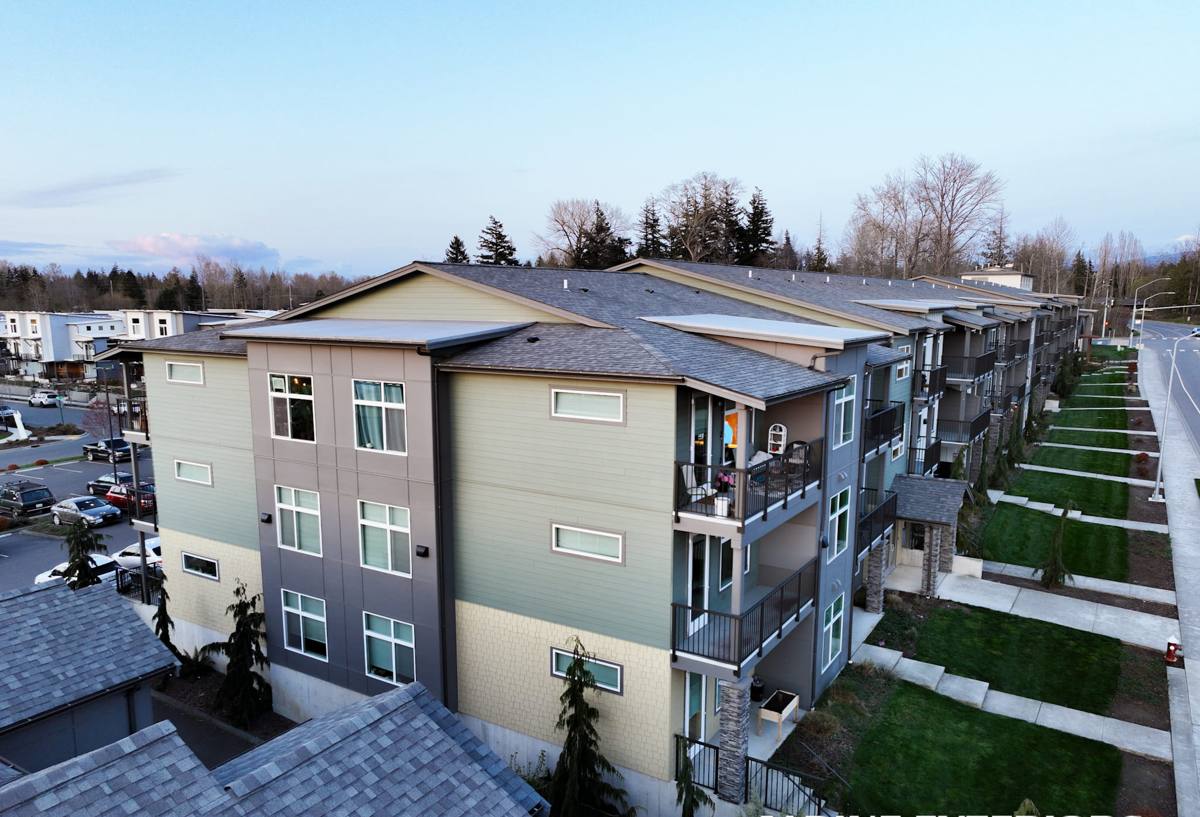
What James Hardie Siding Actually Does Differently
Fiber cement isn't a coating or a treatment — it's a different material category from wood, vinyl, or engineered wood siding. James Hardie boards are made from cement, sand, and cellulose fiber, pressed and cured into a dense, dimensionally stable board. That matters in a climate like ours for a few concrete reasons:
- It doesn't absorb water the way wood-based products do. Fiber cement resists moisture penetration at the material level, which matters when a house sees rain more days than not for months at a time.
- It doesn't feed mold and algae as readily. Cement-based board doesn't give organic growth the food source that wood fiber or wood-derived products can, which slows the moss and algae staining that's common on north-facing walls and shaded elevations around here.
- The ColorPlus factory finish is baked on, not brushed on. It's cured under controlled conditions and backed by its own finish warranty, so it holds color and resists fading, chalking, and peeling far longer than field-applied paint typically does in a wet coastal climate.
- It's non-combustible. Not a climate factor specific to Nooksack, but it's part of why we standardized on it — it's simply a better long-term material.
None of that means Hardie siding is maintenance-free or installation-proof. It's a system, and it only performs the way it's designed to when the flashing, clearances, and fastening are done correctly. That's where most siding failures — on any brand — actually come from.
The Right Hardie Product Line for This Climate
James Hardie engineers its siding by climate zone, and homes in Whatcom County fall into the HZ5 zone — their most moisture- and freeze-aware engineering category. That's not a marketing detail; it affects the composition of the board itself. For Nooksack homes, the products we typically recommend are:
| Product | Best Use | Why It Fits Nooksack |
|---|---|---|
| HardiePlank lap siding | Most exterior walls | Traditional look, engineered for HZ5 moisture exposure, wide ColorPlus color range |
| HardiePanel vertical siding | Accent walls, gables, modern facades | Clean lines that shed water well on steep gable ends common in this area |
| HardieTrim boards | Corners, window and door trim, fascia | Matches the plank's moisture resistance so trim doesn't become the weak point |
| HardieShingle siding | Accent gables, dormers | Cedar-shake look without the maintenance burden of real cedar in a wet climate |
We walk every Nooksack estimate through which combination fits the home's exposure — a wall that takes the brunt of the prevailing wind and rain needs different attention at the seams and flashing than a sheltered side yard, even though the siding product itself may be the same.
What a Correct Installation Involves
Most siding problems people blame on a "bad product" are actually installation problems. Fiber cement is less forgiving of shortcuts than vinyl, and in a wet climate those shortcuts show up fast — usually as staining, warping trim, or moisture getting behind the cladding where it can't dry out. A correct James Hardie install includes:
Water Management First
Before a single piece of siding goes up, the wall needs a proper weather-resistive barrier and correctly lapped flashing at every window, door, and penetration. Water is going to hit the wall in Nooksack — the entire job is making sure it has a way out.
Correct Clearances
James Hardie specifies minimum clearances from grade, roof lines, decks, and other horizontal surfaces. Skipping these is one of the most common causes of moisture wicking into the bottom of a board, and it's an easy detail to miss if a crew isn't used to installing Hardie specifically.
Fastening to Spec
Fastener type, spacing, and placement affect both the warranty and how the board performs over decades of expansion and contraction. Manufacturer-approved fasteners driven at the right depth and location are non-negotiable on our jobs.
Factory-Finished Cuts and Touch-Up
Every cut edge needs to be sealed or caulked per spec so raw board edges aren't left exposed to standing water. It's a small step that gets skipped on rushed jobs and shows up years later as edge swelling.
Our Process, Start to Finish
Homeowners in Nooksack generally go through the same sequence with us:
- Free on-site estimate. We look at the home's exposure, current siding condition, trim, and any moisture or moss issues already visible, and walk through product and color options.
- Written scope and pricing. Clear line items — no vague "siding replacement" lump sum. You see what's being replaced, what's staying, and where flashing and trim work is included.
- Prep and water management. Removal of old siding, inspection of sheathing for hidden rot or damage, and installation of the weather barrier and flashing system before any Hardie board goes up.
- Installation to manufacturer spec. Plank, panel, or shingle installation with correct fastening, clearances, and joint treatment.
- Final walkthrough. We go over the finished job with you before calling it done.
Why We Only Install James Hardie
We get asked fairly often why we don't offer vinyl or engineered wood alternatives. The honest answer is that we've seen how each of those products performs over time in this exact climate — the maintenance burden, the moisture sensitivity, or the warranty gaps — and we didn't want to keep installing something we couldn't stand behind fully in ten or fifteen years. James Hardie's HZ5-engineered boards, factory finish, and transferable warranty gave us a product we could commit to as our only offering, rather than presenting homeowners with a menu of options of varying quality and letting price decide. It also means every crew member on a Nooksack job is deeply familiar with one system, not switching between five.
What Drives the Cost of a Nooksack Siding Job
| Factor | Why It Matters Here |
|---|---|
| Home size and elevation count | More wall area and more gable ends means more material and more flashing detail |
| Current siding condition | Hidden rot or moisture damage under old siding adds sheathing repair before install can start |
| Product line and profile | Lap width, shingle accents, and panel vs. plank choices affect material and labor |
| Trim scope | Full HardieTrim replacement around windows and corners vs. reusing existing trim |
| Color | Standard ColorPlus colors vs. custom field-painted finishes |
| Access and site conditions | Multi-story sections, tight lot lines, or landscaping that limits scaffolding access |
We give exact numbers at the estimate, not a range pulled out of the air — every Nooksack property is different enough that a real walkthrough matters.
Keeping It Looking Right Through the Long Wet Season
James Hardie siding resists moss and algae better than wood-based products, but "resists" isn't "immune." A short annual routine keeps it looking sharp through Whatcom County's long damp stretch:
- Rinse the siding with a garden hose (not a pressure washer aimed directly at seams) once or twice a year, focusing on shaded, north-facing walls where moss tends to start
- Keep gutters clear so overflow doesn't run down the siding face and hold moisture against it
- Trim back shrubs and trees so foliage isn't holding damp air against the wall
- Check caulking at trim joints and penetrations annually and re-caulk any cracked or missing beads
- Address any paint chalking or color fade under warranty rather than waiting for it to spread
Why a Crew That Already Works Nooksack Matters
Whatcom County's wet, moss-prone microclimate isn't something you learn from a manual — it's something you learn from installing siding on homes here, season after season, and seeing which details actually matter. A crew that already works Nooksack knows which walls take the worst weather, which older homes tend to have hidden moisture issues behind the siding, and how to sequence a job around the rain instead of fighting it. That local experience shows up in the flashing details, the clearances, and the small calls that separate a Hardie installation that lasts thirty years from one that runs into trouble in five.
If you're weighing a siding replacement or repair in Nooksack, we're happy to take a look and give you a straight, no-pressure estimate — use the form below to get started.