 Lynden
 Decks in Kendall Take a Different Kind of Beating
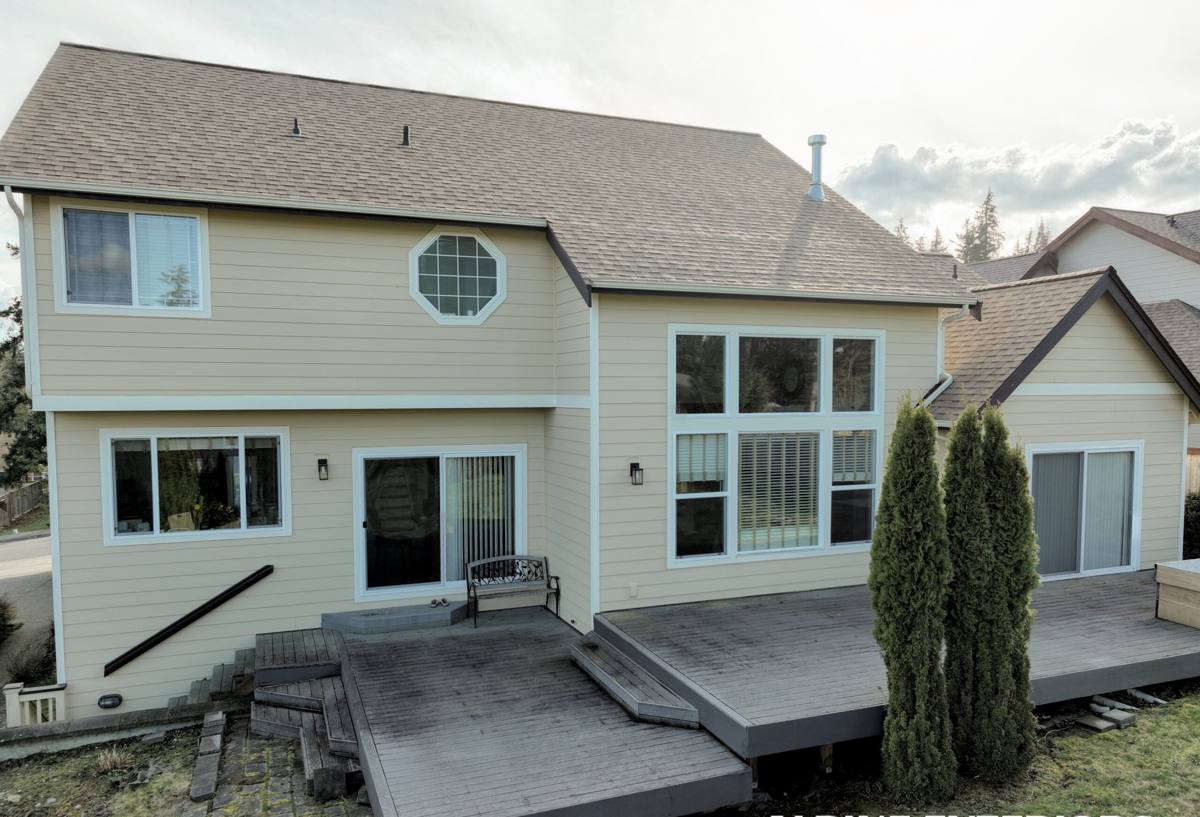
Kendall sits up against the foothills northeast of Lynden, and that location matters more than most homeowners realize when it comes to deck longevity. The tree cover is heavier here than in town, shade lingers longer into the day, and the ground stays damp well past when other parts of Whatcom County have dried out. Add in the marine-influenced rain systems that roll through the county for much of the fall, winter, and spring, and you've got a recipe for decks that look fine from a distance but are quietly failing underneath.
We're not talking about cosmetic wear. We're talking about the structural stuff — ledger boards pulling away from the house, joists softening from years of trapped moisture, fasteners corroding faster than they should, and moss building up a spongy mat that holds water against the wood for weeks at a time. A deck repair in this climate isn't just "replace a few boards and call it done." Done right, it's an inspection of the whole system, a plan for what actually needs fixing, and a repair that accounts for why the original problem happened in the first place.
What Kendall's Climate Actually Does to a Deck
Long Moss Season
Moss doesn't just grow on roofs. On a shaded deck in Kendall, it colonizes decking boards, stair treads, and the gaps between boards where debris collects. Once established, it holds moisture against the wood surface far longer than open air ever would, which accelerates rot from the top down — not just from underneath, which is where most people expect deck damage to start.
Driving Rain and Wind-Driven Moisture
Whatcom County gets its share of storms that push rain sideways instead of straight down. That means water finds its way into places a standard deck wasn't necessarily built to shed — under flashing at the house connection, into end grain on cut boards, and behind railing posts where caulking has aged out. Over a few wet seasons, that adds up to hidden damage that doesn't show on the surface until a board finally gives.
Freeze-Thaw Cycling
Kendall's elevation and proximity to the foothills mean it sees more frost events than lower-lying parts of the county. Water that's worked its way into a crack or a fastener hole expands when it freezes, widening the damage every winter. A crack that was cosmetic in October can be a real structural concern by March.
Signs Your Kendall Deck Needs a Real Look
- Boards that feel spongy, bounce, or flex more than they used to underfoot
- Green or black staining that keeps coming back even after cleaning
- Rust streaks around screws or nail heads
- Gaps opening up where the ledger board meets the house
- Railings or posts that wiggle when pushed
- Stair stringers that feel uneven or have visible splitting
- A persistent musty smell coming from underneath the deck
- Water pooling anywhere on the deck surface instead of draining off
Any one of these on its own might be minor. Two or three together usually means the deck has been dealing with moisture problems for a while, and it's worth having someone look at the framing, not just the visible boards.
Repair or Replace: How We Make the Call
Homeowners often assume any deck trouble means a full teardown. That's rarely true, and it's not how we approach it. Most of the time a deck can be repaired section by section if the framing underneath is sound. The real question is whether the problem is isolated or systemic.
| Situation | Usually Repairable | Usually Needs Replacement |
|---|---|---|
| A few soft or cracked deck boards | Yes — swap individual boards | Only if joists underneath are also compromised |
| Ledger board separating from house | Yes, if caught early with proper reflashing | If rot has spread into the house rim joist |
| Loose or rotting railing posts | Yes — sister or replace posts individually | If most posts on the deck show the same failure |
| Widespread joist rot from long-term moisture | Rarely | Yes — framing is the deck's skeleton |
| Moss and staining with sound wood underneath | Yes — clean, treat, reseal | No |
| Original deck over 20-25 years old, multiple failure points | Sometimes, case by case | Often more cost-effective long term |
The honest answer is that a repair only makes sense if the framing is still structurally sound. We won't put new boards on top of joists we can't stand behind, and we'll tell you plainly if that's what we find.
What a Correct Repair Actually Involves
Full Structural Inspection First
Before any board comes off, we get underneath the deck and check the framing directly — joists, beams, posts, and footings. Surface damage tells you where to start looking, not necessarily where the problem is worst. We probe suspect wood with an awl rather than guessing from appearance, because wood can look fine on the outside and be punky an inch in.
Ledger Board and Flashing
The ledger board — where the deck attaches to the house — is the single most important structural connection on most decks, and it's also the most common place for hidden rot to start because water gets trapped between the ledger and the siding. Any real repair includes checking this connection and making sure flashing is correctly lapped so water sheds away from the house, not into it.
Matching Fasteners to Conditions
Standard fasteners corrode faster in a damp, shaded environment like Kendall's. We use fasteners rated for ground-contact and treated-lumber compatibility, and we check that any existing hardware hasn't been quietly corroding for years before we build on top of it.
Board Replacement Done Right
When boards need replacing, end cuts get sealed before installation — untreated end grain is one of the fastest paths for water into a board. Gaps between boards are set to allow drainage and airflow, which matters more here than in drier climates because it's the difference between a board drying out between rains or staying wet for weeks.
Railings and Guardrails
Loose or rotting railings aren't just cosmetic — they're a safety and code issue. We rebuild railing connections to current guardrail height and spacing requirements where the existing setup doesn't meet code, not just patch what's failing.
Materials: What Holds Up Here vs. What Doesn't
We get asked a lot whether composite decking is worth it over wood, and the honest answer is it depends on the situation. Both have tradeoffs in this climate, and neither is a fix-all.
| Factor | Pressure-Treated Wood | Composite/PVC Decking |
|---|---|---|
| Upfront cost | Lower | Higher |
| Moss resistance | Low — moss grows readily on wood grain | Higher, though moss can still colonize dirty or shaded boards |
| Maintenance | Needs periodic cleaning, sealing, and stain | Needs occasional cleaning but no sealing |
| Repair flexibility | Easy to replace individual boards, easy to match down the road | Board profiles change over the years, matching an old board can be hard |
| Feel underfoot | Warmer, more traditional | Can get hot in direct sun; less relevant in Kendall's shadier lots |
| Long-term structural framing | Same pressure-treated framing either way | Same pressure-treated framing either way |
Whichever decking material sits on top, the framing underneath should always be pressure-treated lumber rated for the exposure. That part doesn't change based on what's on the surface, and it's the part that actually determines whether the deck holds up.
Our Process for a Kendall Deck Repair
- On-site inspection — we look above and below the deck, check moisture levels in suspect wood, and identify every failure point, not just the one you called about
- Written assessment — a plain explanation of what's failing, why, and what it'll take to fix it, with repair and replacement options laid out honestly
- Material sourcing — matched or compatible decking, correctly rated fasteners, and flashing components sized for the actual connection details on your house
- Repair work — framing first, then decking, then railings, in that order, so nothing gets rebuilt on top of a problem we haven't addressed
- Finish and seal — sealing cut ends, treating exposed wood, and making sure drainage and airflow are set up to resist the next wet season, not just look good on day one
Why a Crew That Already Works Kendall Matters
A deck repair company that mostly works drier, more open parts of the county will approach a Kendall deck the same way they'd approach any other job — and that's exactly the gap. Decks tucked under tree cover with limited afternoon sun dry out on a different schedule than decks in full exposure, and that changes how aggressively moss and rot set in, how often maintenance needs to happen, and where the failure points tend to show up first.
Working this specific area regularly also means knowing the practical stuff: which weeks in the calendar actually give a dry-enough window to do flashing and sealing work properly, how driving rain off the foothills tends to hit certain elevations and orientations harder than others, and what a deck that's been sitting under heavy shade for fifteen years typically looks like underneath once you pull a few boards. That's not something you learn from a single job — it's something you learn from doing this work in this specific area, season after season.
A Straightforward Maintenance Checklist
Whether you're repairing now or trying to avoid a repair later, this is the baseline maintenance that actually matters in a climate like this:
- Sweep debris out of board gaps regularly — trapped leaves and needles hold moisture and feed moss growth
- Clean moss and algae off the surface at least once a year, ideally before the wet season sets in
- Check railing posts and stair stringers for movement each spring
- Look at the ledger board connection annually for gaps, staining, or soft wood
- Reseal or re-stain wood decking on the manufacturer's recommended schedule, not just when it looks faded
- Keep gutters and downspouts near the deck clear so runoff isn't dumping extra water onto the structure
Getting an Honest Read on Your Deck
If your Kendall-area deck is showing soft spots, staining that won't go away, or just feels less solid than it used to, it's worth having someone look before it turns into a bigger project. We'll tell you straight whether it's a repair or something bigger, and why.
We offer a free, no-pressure estimate — fill out the form below and we'll take a look.