 Lynden
 What Kendall's Climate Does to Exterior Siding
Kendall sits up the Nooksack River valley northeast of Lynden, closer to the foothills that lead toward Mt. Baker than to the open farmland around town. That position matters for siding. Homes here tend to get more rainfall than the valley floor, more shade from evergreen tree cover, and regular pushes of moist, salt-tinged marine air off the Puget Sound and the Strait of Georgia. Over a Whatcom County winter, that combination means siding that stays damp and shaded for long stretches instead of drying out between storms.
That's the real threat to a house — not any one storm, but months of slow drying. Wood-based siding swells and checks when it can't shed water fast enough. Paint film breaks down faster under salt exposure and freeze-thaw cycling than most product literature assumes. And on the shaded, tree-lined lots common around Kendall, north- and east-facing walls green up with moss and algae well before a homeowner expects to need another repaint.
None of this is exotic — it's the same pattern across most of Whatcom County. But it's more pronounced in Kendall's shadier, wetter pockets than in the more open, sun-exposed parts of the area. A siding product and installation detail package that performs fine in a drier climate can fail years ahead of schedule here if it isn't matched to what the valley actually delivers.
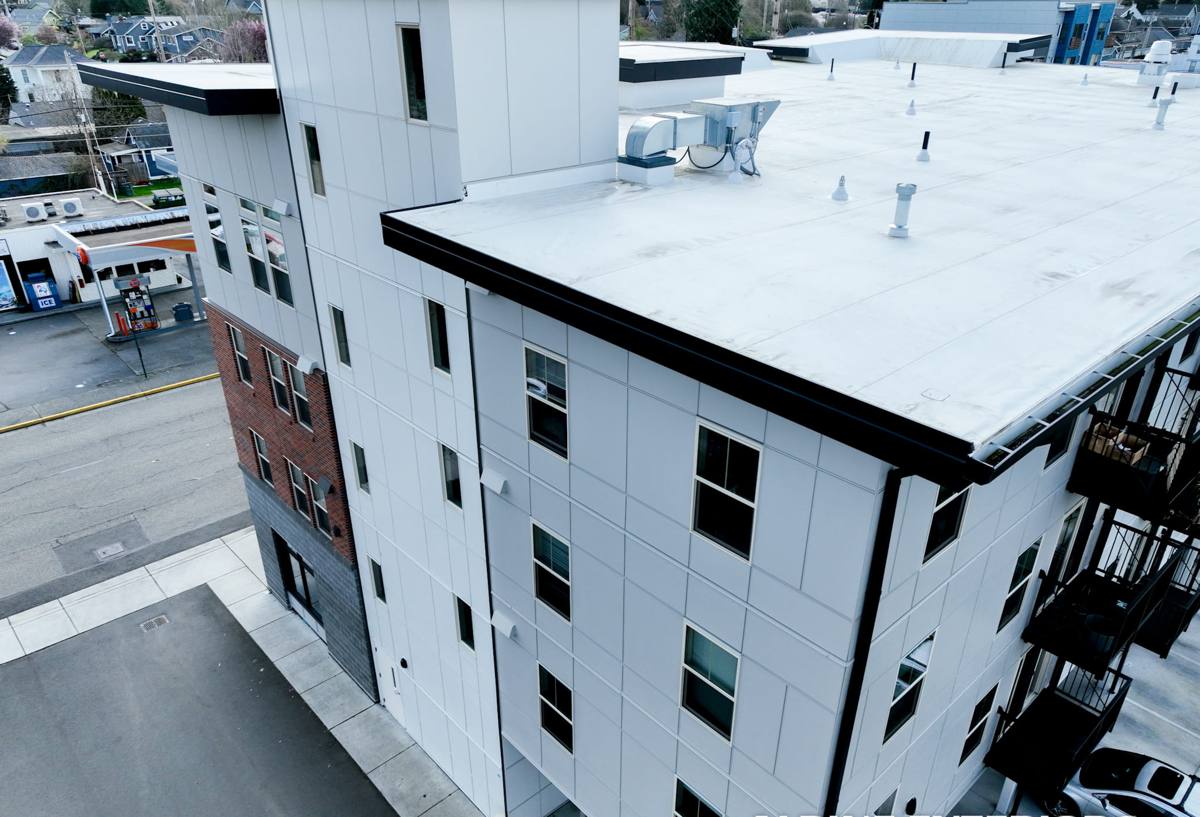
Why We Only Install James Hardie in This Area
We standardized on James Hardie fiber cement siding for every home we work on, including in Kendall, and we don't install vinyl, LP SmartSide, cedar, or other fiber cement brands. That's not a marketing position — it's a maintenance and moisture-performance call based on what actually holds up in this climate over decades, not just the first few years.
A core that doesn't feed moisture problems
Fiber cement is made from cement, sand, and cellulose fibers. It doesn't have the wood sugars that feed mold and fungal growth, and it doesn't swell or rot the way engineered wood products can when a seam or fastener hole lets water in. In a valley where siding stays wet for extended periods, that's the difference between a maintenance issue and a replacement job.
A factory finish built for UV and moisture, not job-site conditions
James Hardie's ColorPlus finish is baked on at the factory under controlled conditions, not brushed or sprayed on site. It resists fading and chalking longer than field-applied paint, and because it's engineered specifically for exterior fiber cement, it handles the freeze-thaw and salt-air cycling common in this part of the county better than a generic exterior paint would on a wood-based substrate.
Non-combustible
Fiber cement doesn't support flame spread the way wood-based siding does. That's a genuine safety advantage independent of climate, and one reason insurance carriers increasingly favor it.
The HZ5 Product Line: Matched to Pacific Northwest Conditions
James Hardie makes climate-specific formulations, and the HZ5 line is engineered for the wetter, cooler regions that include western Washington. The difference isn't cosmetic — it's in how the product is formulated to resist moisture intrusion and cracking under this region's freeze-thaw and rain patterns, as opposed to a formulation built for a hot, dry climate where UV degradation is the bigger concern.
Installing the wrong zone product, or installing HZ5 without following Hardie's climate-specific fastening and clearance specs, undercuts the whole reason to choose the material in the first place. Part of what we do on every Kendall project is confirm the right product line and installation details are being used together — not just the right siding panel on its own.
What a Correct Installation Involves on a Kendall Home
Fiber cement siding is only as good as the details behind it. Most siding failures we see on inspection aren't the panel failing — they're water getting behind the panel through a detail that was rushed or skipped.
Water management first
On damp, shaded lots, we pay close attention to flashing at windows, doors, and roof-to-wall intersections, and to how the weather-resistive barrier is lapped and sealed behind the siding. Where a wall assembly calls for it, a rainscreen gap lets any moisture that does get behind the cladding drain and dry instead of sitting against the sheathing.
Fastening, clearances, and joints
James Hardie specifies exact nailing patterns, fastener types, and minimum clearances from grade, roofing, and decks. Cut edges and field cuts get sealed and back-primed. Butt joints are caulked or flashed according to spec rather than just butted together. These aren't optional refinements — they're the difference between a 30-year installation and a callback in year five.
Ventilation and drying capacity
Because Kendall's shaded lots reduce how fast a wall assembly dries out after rain, ventilation behind the siding and proper soffit and attic venting matter more here than they would on an open, sun-exposed site. We look at the whole assembly, not just the cladding layer.
How Hardie Compares to Other Siding Options in This Climate
| Factor | James Hardie Fiber Cement | Vinyl | LP SmartSide / Engineered Wood | Cedar |
|---|---|---|---|---|
| Moisture tolerance | High — cement-based core doesn't rot or swell | Doesn't absorb water, but seams can trap it behind the panel | Moderate — engineered to resist moisture but still wood-based | Moderate — needs consistent finish maintenance to stay water-resistant |
| Moss/algae resistance | Good, especially with factory finish; cleanable without damaging the substrate | Moss and mildew sit on the surface and can be pressure-washed, but panels can crack in cold snaps | Moss retention can accelerate substrate breakdown if not addressed | Prone to moss and graying without regular treatment |
| Repaint/refinish cycle | Factory finish rated well beyond a typical repaint interval | Never repainted, but fades and becomes brittle over time | Field-applied finish, shorter repaint interval | Regular staining or sealing needed, often every few years |
| Fire resistance | Non-combustible | Melts/deforms under heat exposure | Combustible, treated for ignition resistance | Combustible |
| Typical warranty structure | Long-term, transferable manufacturer warranty on the product; separate labor warranty from installer | Varies widely by manufacturer and thickness | Manufacturer warranty with documented installation and maintenance requirements | Typically no manufacturer warranty; performance depends on ongoing maintenance |
Every option on that list has homeowners who are happy with it somewhere in the country. The question we care about is what holds up with the least maintenance burden in Kendall's specific combination of shade, rainfall, and marine air — and that's consistently fiber cement done right.
Our Process, Start to Finish
- On-site assessment. We look at existing siding condition, sheathing and trim for hidden moisture damage, sun exposure by elevation, and any flashing details that need correcting before new siding goes on.
- Product and color selection. We walk through James Hardie's plank, panel, and trim options and the HZ5 formulation appropriate for this region, and help match colors and textures to the home.
- Preparation and tear-off. Old siding comes off, the weather barrier and any damaged sheathing get addressed, and water management details get corrected — not just covered over.
- Installation to manufacturer spec. Fastening pattern, clearances, joint treatment, and rainscreen detailing where called for, all installed to James Hardie's published specifications so the manufacturer warranty stays intact.
- Final walkthrough and documentation. We review the finished work with the homeowner and provide the paperwork needed to register the transferable warranty.
What Maintenance Looks Like Afterward
Fiber cement done correctly is a low-maintenance product, but "low" isn't "none," especially on shaded Kendall lots where moss pressure is higher than average.
- Rinse siding annually, more often on heavily shaded north- and east-facing walls, to keep moss and algae from taking hold
- Keep gutters clear so overflow doesn't run down the siding face and stay wet longer than it should
- Trim back vegetation and tree limbs that shade walls and slow drying time
- Re-caulk joints and trim intersections if you notice gaps opening up over time
- Have flashing and caulking inspected every few years, particularly around windows, doors, and roof lines
- Address any impact damage promptly rather than letting a chip sit exposed through a wet season
Why a Crew That Already Works in Kendall Matters
Siding installation is detail work, and the right details change depending on where a house sits. A crew that's spent time on Kendall-area homes already knows to expect shadier, slower-drying walls, to plan around the area's higher moss pressure, and to size up which elevations need extra attention before the first panel goes up. That's different from applying a generic installation checklist to every job regardless of site conditions.
There's also a practical side: familiarity with Whatcom County permitting requirements, realistic scheduling around the area's wetter months, and being reachable afterward if a question comes up — all of which matter more once the crew has already packed up and moved to the next job.
If you're weighing a siding replacement or new install in Kendall, we're glad to walk the property, look at what your current siding and trim are telling us, and put together a straightforward, no-pressure estimate for a correctly installed James Hardie system built for this climate.