 Lynden
 Window Installation in Laurel: Built for This Corner of Whatcom County
Laurel sits in the farmland and low rolling hills just outside Lynden, in the part of Whatcom County that gets the full mix of what Pacific Northwest weather can do to a house. It's close enough to open water and the Strait of Georgia to pick up salt-tinged air on a regular basis, exposed enough to catch driving, wind-pushed rain off the fields, and shaded enough in places to grow moss on almost anything that sits still for a season. Windows take the brunt of that. They're the seam between conditioned indoor space and everything the weather is doing outside, and a window that's installed even slightly wrong in this climate tends to show it within a year or two, not decades.
We install and replace windows across Lynden and the surrounding Whatcom County communities, including Laurel, and we also handle siding, roofing, and decks — because a window is never really a standalone product. It's one piece of a wall assembly that has to work together with the siding, the flashing, and the framing behind it. When we bid a window job in Laurel, we're planning for salt air, sideways rain, and a moss season that runs longer here than it does in drier parts of the state, not just swapping an old sash for a new one.
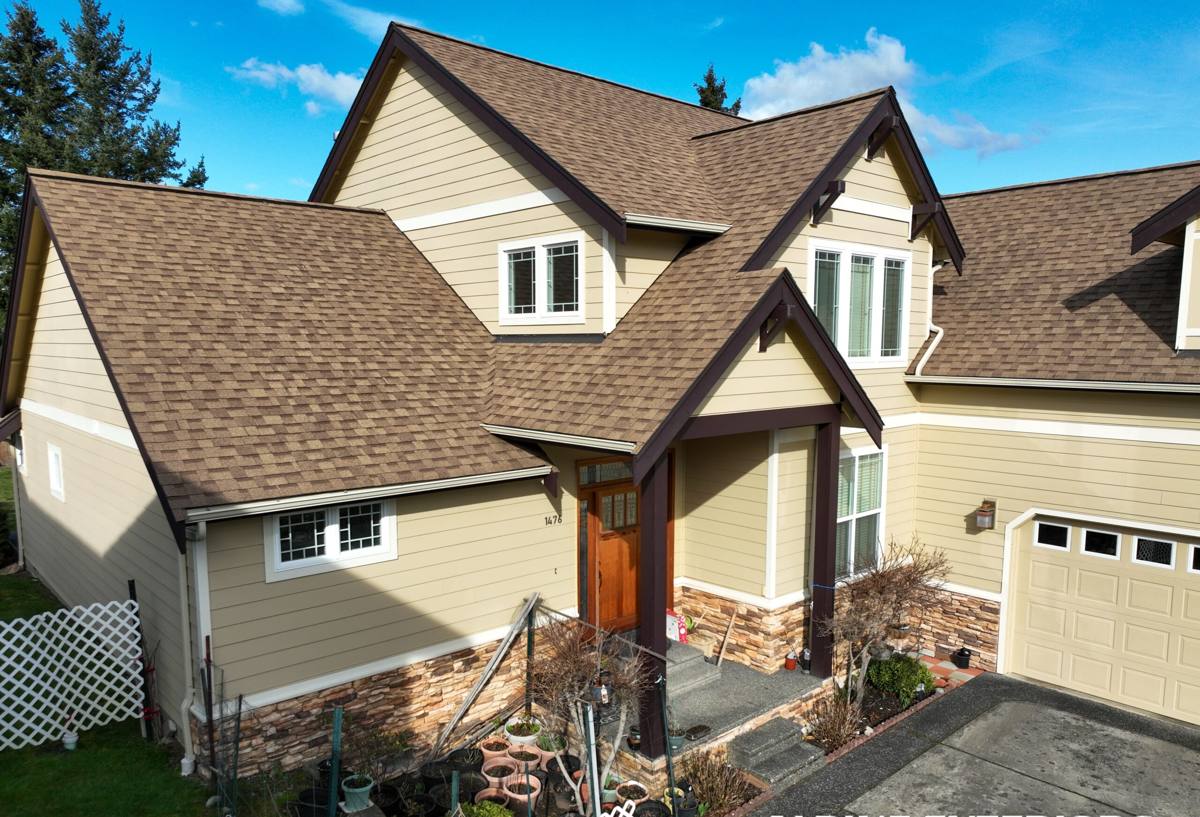
What This Climate Does to Windows in Laurel
Salt Air and Hardware Corrosion
Laurel's open, rural exposure means prevailing wind carries salt-influenced marine air across the property with little to break it up — fewer buildings and trees than you'd find in town to slow it down. That steady exposure works on window hardware, screen frames, and cheaper fasteners over time, showing up first as pitting, stiffness in locks and cranks, or corrosion streaks below hinges and latches. It's usually the hardware that fails first, well before the glass or the frame itself.
Driving Rain and Flashing Failures
Rain in this part of Whatcom County rarely falls straight down. Wind drives it sideways into window heads, jambs, and sills, especially on walls facing the open farmland that surrounds Laurel. That sideways pressure is a bigger test of the installation than of the window product itself. A quality window installed with sloppy flashing will leak eventually; a modest window installed with a correctly pitched sill pan and properly lapped flashing usually won't. In our experience, most water problems we find around windows trace back to how the window was installed, not what brand it was.
Moss, Mildew, and Sill Rot
Shaded sides of a house and any horizontal surface that holds moisture — including window sills that don't drain cleanly — support moss and mildew growth for most of the year here. On wood-framed or wood-trimmed windows, that sustained dampness leads to slow rot at the sill and lower corners, the kind of damage that's easy to miss until paint starts failing or the wood underfoot feels soft.
Signs a Laurel Home Needs Window Attention
- Fogging or condensation trapped between panes, usually meaning a failed seal on a double- or triple-pane unit
- Noticeable drafts or a cold spot near a window that's fully closed and latched
- Soft, discolored, or spongy sill or trim material, especially on shaded or weather-facing walls
- A window that's become hard to open, close, or lock compared to how it used to operate
- Peeling paint, bubbling finish, or visible gaps around a wood-framed window
- Cracked or missing caulk with daylight visible around the frame from inside
- Water staining on interior wall or ceiling surfaces below or beside a window
Any single item on that list is worth a look before it goes another wet season. Several of them together, especially on an older home, usually mean the water damage has already moved into the wall framing and a repair alone won't fix it.
Window Materials: What Actually Holds Up Here
There's no universal right answer — budget, sun exposure, and how long you plan to stay in the house all factor into the decision. What matters is understanding the real trade-offs for a climate that stays this damp for this much of the year before you commit to a material.
| Frame Material | Moisture & Corrosion Behavior | Typical Maintenance | Realistic Lifespan Here |
|---|---|---|---|
| Vinyl | Won't rot; weld and corner seams can fail early if installation quality is poor | Low; occasional track and weep-hole cleaning | 20-30 years |
| Fiberglass | Dimensionally stable, holds up well against sustained moisture and corrosion | Low | 30-40+ years |
| Wood, painted or clad | Attractive but vulnerable at joints and sills without diligent upkeep | Higher; regular paint or finish maintenance | 15-30 years depending on upkeep |
| Aluminum | Conducts cold and can corrode in salt-influenced air unless well-finished | Moderate | 20-30 years |
We'll walk you through which frame material fits your home's exposure, your budget, and the look you're after, rather than defaulting to whichever product is easiest for us to sell. A shaded north wall and an open, wind-exposed south wall on the same Laurel property don't always call for the same answer.
Full-Frame Replacement vs. Insert Replacement
One of the first decisions on any window project is whether to do a full-frame replacement, which removes the old window down to the rough opening and rebuilds the flashing from scratch, or an insert replacement, which fits a new window into the existing, intact frame. Insert replacement is faster, less invasive to the surrounding siding and trim, and usually less expensive, and it works well when the existing frame is structurally sound and was properly flashed to begin with. Full-frame replacement takes longer and costs more, but it's the honest recommendation when there's already moisture damage at the sill or jambs, or when the original flashing was never done correctly. We'll tell you which situation you're actually in — including cutting into the wall to check, when needed — rather than defaulting to the cheaper option and sealing a moisture problem up behind a brand-new window.
Installation Fundamentals We Don't Treat as Optional
Most window failures in this climate aren't failures of the window itself — they're shortcuts in the flashing and sealing details that don't surface until a wet season or two later. On every job in Laurel, that means:
- A properly pitched sill pan that sheds water outward instead of letting it pool under the frame
- Head flashing integrated with the housewrap or building paper above the window, lapped correctly for water to shed down and out
- Jamb flashing tied into the surrounding wall assembly rather than relying on caulk alone to do that job
- Weep holes and drainage paths left clear and functional, not sealed shut during installation
- Corrosion-resistant fasteners and hardware suited to a consistently damp, salt-influenced climate
- Insulation and air sealing around the frame that doesn't trap moisture against the framing
None of these steps add meaningful cost relative to the price of the window itself, but skipping any one of them is exactly what turns a window that should last decades into one that's leaking inside the wall within a few years.
How the Job Actually Runs, Start to Finish
Estimate and Assessment
We start by looking at the actual windows in question — age, frame material, condition of the surrounding trim and siding, and whether there's any sign of existing moisture damage. On an older Laurel home we'll also check how the current windows were flashed originally, because that tells us whether insert replacement is realistic or whether we're looking at full-frame work. You get a written estimate that spells out the scope, not a verbal guess.
Product Selection
Once we know what the opening needs, we go through frame material, glass package, and hardware options together. We're candid about which choices make sense for your exposure and budget and which ones would be spending money on a feature this climate won't reward.
Removal and Prep
Old windows and any compromised trim come out carefully so we can see the condition of the rough opening, sheathing, and existing flashing before anything new goes in. This is often where we find out whether a wall has been quietly taking on water — better to know before the new window goes in than after.
Flashing and Installation
This is the stage that actually determines how the window performs over the next twenty or thirty years — sill pan, head flashing, jamb flashing, air sealing, and fastening, done in the sequence that lets water shed outward at every layer. We don't compress this step to save time.
Trim, Cleanup, and Walkthrough
Interior and exterior trim get finished to match the surrounding wall, the site gets cleaned up, and we walk the job with you so you can see and operate every window before we call it done.
What Drives the Cost of a Window Job
Two houses with the same number of windows can land at very different price points depending on a handful of factors. Knowing what's driving the number helps you make an informed decision instead of just comparing bottom-line quotes.
| Cost Factor | Why It Matters |
|---|---|
| Insert vs. full-frame replacement | Full-frame costs more but is often the only honest fix when flashing or framing is already compromised |
| Frame material | Vinyl, fiberglass, wood, and aluminum carry different upfront costs and different long-term maintenance |
| Glass package | Double- vs. triple-pane, low-E coatings, and gas fills affect both price and energy performance |
| Number and size of openings | Larger or custom-sized windows cost more to source and install than standard sizes |
| Existing damage | Sill or framing rot found during removal adds repair scope before the new window can go in |
| Access and site conditions | Second-story openings or tight access can add labor time |
We break these factors out in every estimate so you can see where the money is going and where there's room to adjust scope if budget is a concern.
Repair, Reseal, or Replace? How We Help You Decide
Not every window problem calls for full replacement, and we don't default to recommending one. We look at the age and condition of the window, whether a seal failure or draft is isolated to one unit or spread across several, and whether there's already moisture damage in the surrounding frame or wall. A single window with a failed seal on an otherwise sound, well-flashed house is often a straightforward repair or reseal. A house with several aging windows, visible sill rot, or a history of past leaks is usually better served by a broader replacement plan, done in phases if the budget calls for it, rather than patching individual units one at a time. We'll explain what we find and why, and give you the real trade-offs instead of steering you toward whichever option pays us more.
Why a Crew That Already Works Laurel Matters
A crew that installs and repairs windows across Whatcom County through every season sees how salt air, wind-driven rain, and moss actually behave on real houses over years, not just how a product performs on a spec sheet. That shows up in practical decisions: how much attention a given wall orientation needs based on the open exposure common around Laurel, how a sill pan should be pitched for the amount of water a given elevation actually sees, and which flashing details are worth the extra time on install day so you're not dealing with a leak two winters from now. It also means working with someone who understands the difference between an open, rural property outside Lynden and a sheltered in-town lot, and doesn't apply the same approach to both.
If you're weighing a repair, a few replacement windows, or a full-house project in Laurel, we're glad to take a look and give you a straightforward, no-pressure estimate — just fill out the form below to get started.