 Lynden
 Deck Replacement in Maple Falls: What This Climate Actually Requires
Maple Falls sits up against the foothills of the North Cascades, and that location changes what a deck has to survive compared to a deck closer to the water in Bellingham or Blaine. You're dealing with more shade from tree cover, more standing moisture in the shoulder seasons, and a longer moss season than most of Whatcom County gets. Add in the colder overnight temperatures this close to the mountains, and you get freeze-thaw cycling on top of everything else. A deck built or maintained without that in mind will show it early — usually in the ledger board, the footings, and the deck boards themselves.
When we replace a deck in Maple Falls, we're not just swapping old boards for new ones. We're looking at drainage, ventilation underneath the structure, and how the whole system sheds water instead of holding it. That's the difference between a deck that lasts 20-plus years and one that needs boards replaced again in five.
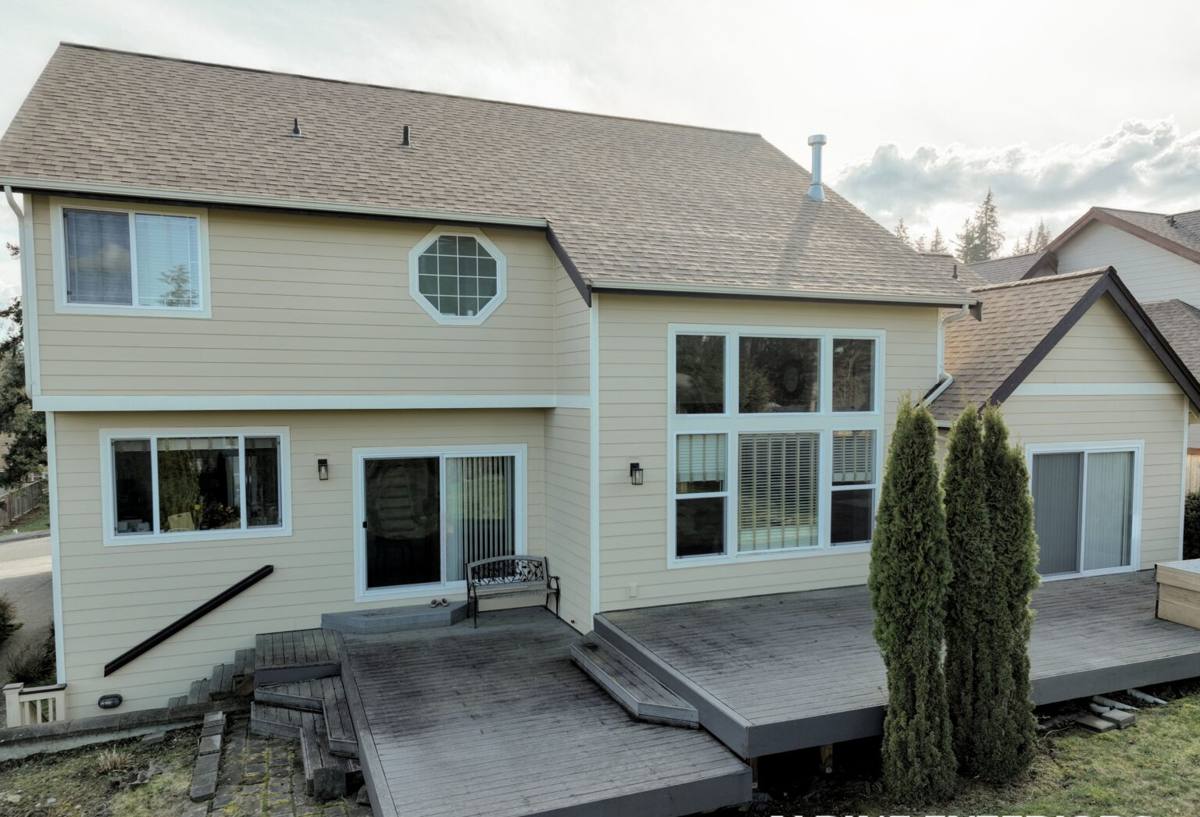
Why Decks Fail Faster Here Than in Town
Moss and Moisture Retention
Shaded lots near Maple Falls hold moisture longer after rain than open lots do. Moss doesn't just look bad on a deck surface — it holds water against the wood and finish, which accelerates rot, especially where boards meet the frame or where fasteners have started to work loose. On older decks we often find the worst damage isn't on the visible surface but underneath, where moss and debris have been trapping moisture against joists for years without anyone noticing.
Freeze-Thaw at Elevation
Being closer to the mountains means colder nights and more freeze-thaw cycles through fall and winter than you'd get in Lynden proper. Water that gets into a crack, a fastener hole, or a poorly sealed cut edge expands when it freezes. Over a few seasons that's enough to split boards, loosen connections, and heave footings that weren't set below the frost depth.
Driving Rain and Wind-Driven Wet
Storms coming off the water and up through the valley bring rain at an angle, not just straight down. That means vertical surfaces — skirting, stair stringers, the face of a ledger board — take on more water than a flat deck surface alone would suggest. A lot of deck failures we see start at these vertical connection points, not the decking itself.
Common Failure Points We See in This Area
- Ledger board attachment to the house — the single most common structural failure point on older decks
- Joist ends and joist hangers where moisture collects and rust sets in
- Footings that were never set to proper frost depth for this elevation
- Deck boards cupping or splitting where moss has held moisture against the wood
- Railing posts loosening from water intrusion at the base connection
- Stair stringers rotting from the bottom up where they meet grade
What a Correct Deck Replacement Involves
A proper replacement isn't just cosmetic. We start below the surface and work up.
1. Structural Assessment
Before anything gets torn off, we check the ledger board attachment, footings, and joists for rot, movement, or undersized framing relative to current code. A lot of older decks in this area were built to standards that have since changed, especially around ledger flashing and footing depth.
2. Demolition and Disposal
Full tear-off of decking, railings, and any framing that doesn't pass inspection. We haul it off — no leaving debris on site for the homeowner to deal with.
3. Framing and Waterproofing
This is where most of the long-term performance gets decided. Correct ledger flashing (with a proper drip edge and house wrap integration), joist tape or flashing on top of joists before decking goes down, and footings set to the right depth for this elevation's frost line. Skipping this step is the single most common shortcut that leads to a repeat replacement in under a decade.
4. Decking and Railing Installation
Board selection, fastening pattern, and gap spacing all get adjusted for local moisture and seasonal wood movement. Railings get through-bolted at posts, not just screwed to the rim joist, so they don't work loose over time.
5. Final Grading and Ventilation Check
We confirm the ground under the deck sheds water away from the house and that there's enough airflow underneath to let the structure dry out between rain events — a step that matters more here than in drier parts of the county.
Decking Material Options for Maple Falls Conditions
There's no single "best" decking material — it depends on budget, maintenance tolerance, and how much shade and moisture the specific site gets. Here's how the common options actually compare for this climate.
| Material | Moisture/Moss Resistance | Maintenance | Typical Lifespan |
|---|---|---|---|
| Pressure-treated wood | Fair — needs sealing to hold up in shade | Annual cleaning and re-sealing recommended | 10–15 years |
| Cedar | Good natural rot resistance, but still absorbs moisture | Periodic sealing/staining to maintain color and protection | 15–20 years |
| Composite decking | Very good — doesn't absorb water like wood, but can still grow surface moss in deep shade if never cleaned | Occasional washing, no sealing/staining needed | 25–30+ years |
| PVC/capped composite | Best — fully sealed surface resists moisture intrusion | Lowest — soap and water cleaning only | 25–30+ years, often warrantied longer |
In heavily shaded Maple Falls lots specifically, we lean toward composite or capped composite for most replacements — not because wood is a bad product, but because the maintenance schedule required to keep wood performing well in constant shade is more than most homeowners realistically keep up with. If you want the look and feel of real wood and are comfortable with a sealing routine, cedar is still a solid honest choice — we'll walk through the trade-offs for your specific site.
Our Process for a Maple Falls Deck Replacement
- On-site assessment — we look at the existing structure, note failure points, check footing depth and ledger condition, and discuss material options based on your site's sun/shade exposure.
- Written estimate — a clear scope of work and price range, no vague allowances.
- Permitting — deck replacements of most sizes require a permit in Whatcom County; we handle that paperwork so it doesn't fall on you.
- Scheduling around weather — we plan tear-off and framing for drier stretches where possible, since exposed framing sitting in rain is exactly the moisture problem we're trying to eliminate.
- Build — framing and waterproofing first, then decking and railings.
- Final walkthrough — we go over the finished deck with you, including any maintenance recommendations specific to your material choice.
Questions to Ask Before You Hire Anyone for This
- Will you pull a permit, or are you asking me to skip that?
- What flashing and waterproofing details will you use at the ledger board?
- How deep will the footings be set for this elevation?
- What's your plan for ventilation and drainage underneath the deck?
- Do you have current liability insurance and workers' comp coverage?
Why Hire a Crew That Already Works This Area
A contractor who mostly works closer to Bellingham or the coast may not think twice about frost depth or moss-driven moisture retention — because it's less of a factor there. Out here, those aren't optional details; they're the difference between a deck that holds up and one that doesn't. We work Lynden, Maple Falls, and the surrounding Whatcom County foothill communities regularly, so the framing and waterproofing decisions on your deck reflect what actually happens on lots like yours through a full Pacific Northwest winter — not a generic spec sheet.
We also know which older subdivisions in this area tend to have decks built to now-outdated ledger and footing standards, which helps us flag problems during the initial assessment instead of discovering them mid-project.
Maintaining Your New Deck Once It's In
Whatever material you choose, a few habits go a long way in this climate:
- Sweep leaves and debris off the deck surface regularly in fall — trapped organic matter is what feeds moss growth
- Keep gutters and downspouts clear so roof runoff isn't dumping extra water onto or near the deck
- Check railing post connections annually for looseness
- For wood decks, re-seal on the schedule recommended for your specific product — skipping a year in a shaded, moist location catches up fast
- Rinse composite or PVC decking periodically to prevent surface moss buildup, even though the material itself won't rot
If your current deck is showing rot, soft spots, loose railings, or persistent moss you can't keep ahead of, it's worth getting a straight assessment before it gets worse. We offer free, no-pressure estimates for deck replacement in Maple Falls — use the form below to get a time on the calendar.