 Lynden
 Metal Roofing for Nooksack's Wet, Mossy Climate
Nooksack sits inland from the Strait of Georgia and Puget Sound, but Whatcom County's marine air still reaches it — carrying salt-tinged moisture, near-constant fall and winter rain, and the damp shade that lets moss take hold on any roof surface that isn't shedding water fast. Add wind-driven storms off the water and a growing season that barely pauses, and you have a climate that is genuinely hard on roofing. Metal holds up to that combination better than most materials, but only when it's specified and installed correctly for this specific area. That's the part that gets skipped by crews who don't work here regularly.
This page covers what metal roofing needs to do in Nooksack, what a correct installation actually involves, and how we approach the work when we're on your roof.
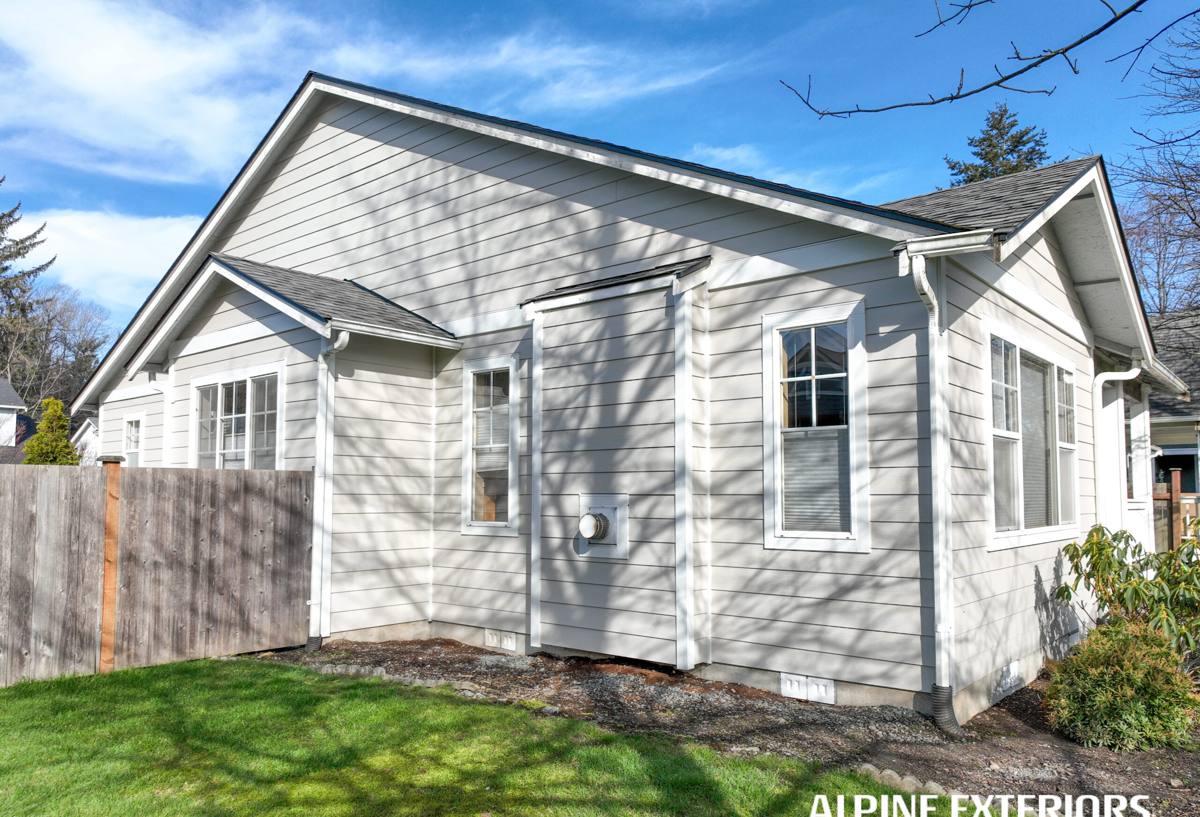
What Local Weather Does to a Roof Over Time
Driving Rain and Wind
Whatcom County storms don't just drop rain straight down — wind pushes it sideways under laps, up under flashing, and into any gap that a lazy installation left open. A roof here needs overlaps, fastener patterns, and flashing details sized for wind-driven water, not just a dry-weather rain event.
Moss and Organic Growth
Shaded roof sections, north-facing slopes, and anywhere debris collects will grow moss in this climate almost regardless of material. On asphalt shingles, moss roots into the granule surface and lifts it as it grows, which shortens the roof's life. On a properly installed metal roof, moss has nothing to grip — the surface is too smooth and too clean an edge for roots to establish, so growth stays superficial and rinses off instead of degrading the material underneath.
Salt Air and Metal Corrosion
This is the detail that separates a metal roof that lasts decades from one that stains and pits within a handful of years: not all metal roofing handles salt-laden air the same way. Bare or thin-coated steel panels are vulnerable to edge corrosion and fastener rust well before the panel itself fails structurally. The coating system and base metal matter more here than in a dry inland climate, and it's a conversation we have with every Nooksack homeowner before we quote a panel type.
Metal Panel Types We Install
Not every metal roofing product is a good fit for this climate or every home. Here's how the common options compare for a Whatcom County property.
| Panel Type | Best For | Coastal/Salt-Air Durability | Trade-Offs |
|---|---|---|---|
| Standing seam (concealed fastener) | Most homes; long-term, low-maintenance roofs | Strong — no exposed fasteners to corrode or back out | Higher upfront cost; needs a skilled installer for clean seams |
| Exposed-fastener panel (e.g. corrugated or ribbed steel) | Shops, outbuildings, budget-conscious projects | Weaker — fastener washers age and are the first failure point | Lower cost, but needs fastener re-torquing/replacement over time |
| Metal shingle/shake profile | Homes wanting a traditional look with metal's durability | Good, if coating and underlayment specified correctly | More seams than standing seam; installation detail matters more |
For most Nooksack homes we recommend standing seam because it removes the weakest point in this climate — exposed fasteners — from the equation entirely. Where exposed-fastener panels make sense for cost or outbuilding use, we spec fastener types and coatings that are rated for the moisture load and walk homeowners through the added maintenance that choice requires.
What a Correct Metal Roof Installation Involves
Underlayment and Water Protection
A metal panel is the visible layer, not the only line of defense. Under it, we use a synthetic or self-adhered underlayment sized for the roof's exposure, with self-adhered membrane at eaves, valleys, and any low-slope transition where wind-driven rain is most likely to find a way in.
Fastening and Seams
Panel spacing, clip type, and seam engagement all affect how a roof performs in wind and how it expands and contracts through temperature swings without stressing the seams open. This is where rushed installs show up years later as loosened panels or leaking seams.
Flashing, Valleys, and Penetrations
Every roof-to-wall transition, valley, vent pipe, and chimney is a place water wants to get in. Flashing has to be layered correctly with the underlayment and panel — installed on top of what's below it and under what's above it — so water is always directed out, never trapped.
Ventilation
A metal roof needs proper intake and exhaust airflow underneath it. Without it, moisture gets trapped in the attic space, which encourages condensation on the underside of the deck and undercuts the whole point of installing a low-maintenance roof.
Mistakes We Find on Older Metal Roofs Around Nooksack
- Exposed fasteners left un-serviced for years, with washers cracked or backed out and no maintenance plan in place
- Flashing installed in the wrong order — tucked under the panel instead of over it — so water runs behind it instead of off it
- Missing or undersized underlayment at valleys, where wind-driven rain concentrates
- Panels fastened too tight or too loose for the climate's temperature swings, leading to oil-canning or seam stress
- No ventilation plan, leaving trapped moisture to condense against the deck from underneath
None of these are visible from the ground, which is exactly why they go unnoticed until there's a leak or a coating failure.
Our Process, Start to Finish
- On-site assessment — we look at your roof's slope, exposure, existing decking condition, and any moss or moisture issues already present.
- Panel and system recommendation — based on your home's exposure to wind and moisture, not a one-size-fits-all pitch.
- Written estimate — clear on materials, underlayment, flashing scope, and timeline, with no vague allowances.
- Installation — deck inspection and repair as needed, underlayment, flashing, panels, and ventilation, in that order, done right the first time.
- Final walkthrough — we go over the finished roof with you before we consider the job done.
Keeping a Metal Roof Performing for Decades
Metal roofing is genuinely low-maintenance compared to shingles, but "low-maintenance" isn't "zero-maintenance" in this climate. A simple annual check goes a long way:
- Clear debris from valleys and gutters before fall storms — trapped leaves and needles hold moisture against the panel
- Rinse off any early moss growth before it has a chance to build up organic matter that holds water against the surface
- Check exposed-fastener areas (if your roof has any) for loose or corroding fasteners
- Have flashing and seams looked at after any major windstorm
What Affects the Cost of a Metal Roof
| Factor | Why It Matters |
|---|---|
| Panel type | Standing seam costs more upfront than exposed-fastener panel but needs less long-term maintenance |
| Roof complexity | More valleys, penetrations, and roof planes mean more flashing labor and detail work |
| Deck condition | Rot or damage found under an old roof adds repair scope before new material goes on |
| Coating and gauge | Heavier gauge steel and better coating systems cost more but resist this area's moisture and salt air longer |
| Access and pitch | Steep or hard-to-access roofs take longer and require more safety setup |
We don't quote broad averages before we've seen the roof — every one of these factors changes the number, and a real estimate reflects your home specifically.
Why a Crew That Already Works This Area Matters
A metal roof installed without accounting for Nooksack's moisture load and salt-tinged air can look fine for a season or two and still be set up to fail early — loose fasteners, moss holding water against a seam, flashing that was never detailed for wind-driven rain. Working in Whatcom County regularly means we've seen how these roofs actually age here, not just how they're supposed to perform on paper.
Before hiring anyone for a metal roofing project, it's worth checking:
- Are they licensed and insured to work in Washington State?
- Can they explain, specifically, how their flashing and underlayment detailing accounts for wind-driven rain?
- Do they recommend a panel type based on your home's exposure, or push one product regardless of the situation?
- Will they put material specs, warranty terms, and scope of work in writing before the job starts?
- Do they have experience with roofs in this specific area, not just a general service radius?
If a contractor can't answer these clearly, that's worth noticing before a contract is signed, not after the panels are on.
If you're considering a metal roof for a home in Nooksack, we're happy to take a look and give you a straight answer on what your roof needs — no pressure, no pushy sales pitch. Reach out below for a free estimate.