 Lynden
 Why Nooksack Roofs Wear Out Differently Than Roofs Inland
Nooksack sits close enough to the water and low enough in the Whatcom County valley that its roofs take a different kind of beating than roofs fifty miles inland. Three things drive most of the early failures we see out here: salt-tinged air moving in off the Sound and up the river valleys, wind-driven rain that gets pushed sideways into laps and flashings that were only ever designed to shed water falling straight down, and a moss season that runs long — often eight or nine months a year on north-facing slopes and anything shaded by fir or cedar cover.
None of those three things alone destroys a roof fast. Together, over ten or fifteen years, they compound. Salt air accelerates corrosion on exposed fasteners and metal flashing. Driving rain finds the smallest gap in a nail line or a step-flashing lap and works it wider every winter. Moss holds moisture against the shingle surface long after the rest of the roof has dried, which softens the mat, lifts granules, and shortens the life of even a good-quality shingle by years. A roof replacement done for Nooksack needs to answer all three of those problems specifically, not just replace old shingles with new ones in the same configuration.
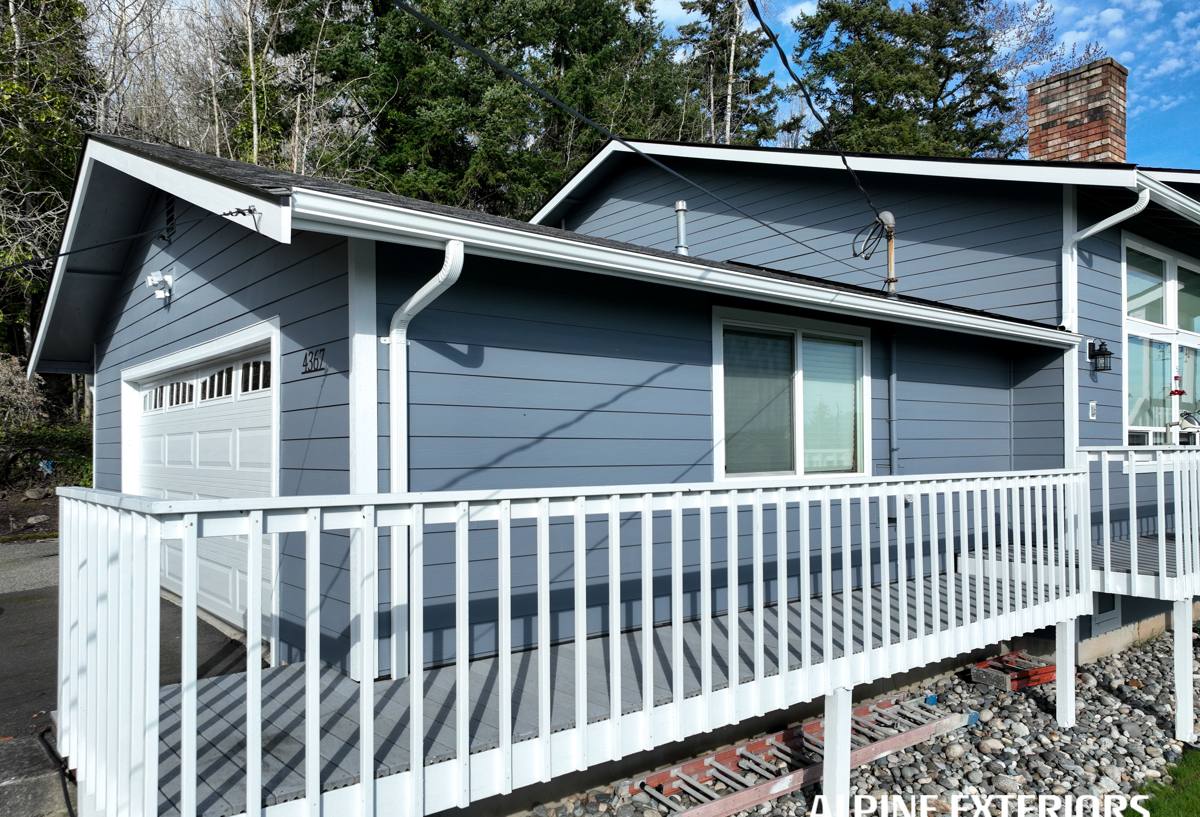
Signs a Roof in Nooksack Is Due for Replacement, Not Another Repair
We get calls every year from homeowners who've had the same leak patched two or three times and are ready to just deal with it properly. Here's the honest way to tell whether you're at that point:
- Granules collecting in gutters and at downspout outlets, especially after a hard rain — the shingle surface is wearing thin
- Moss or dark algae streaking that comes back within a season or two of cleaning, even after treatment
- Shingles that are cupping, curling at the edges, or visibly brittle when walked on
- Daylight visible through the roof deck from the attic, or damp insulation near the eaves
- Soft or spongy spots underfoot on the roof, which usually means the decking underneath has taken on moisture
- A roof already at or past 20–25 years old for asphalt composition, even if it "looks fine" from the ground
- Multiple past repairs in different spots — a sign the underlayment and flashing system, not just the shingles, is failing
If you're seeing two or more of these, a repair is usually a short-term patch on a roof that's already telling you it's done. That's not us trying to upsell a bigger job — it's just how asphalt and moisture behave together over time.
Why "Just Reshingle Over It" Isn't the Right Call Here
Layering new shingles over old ones is sometimes technically allowed by code, but we don't recommend it for this area. It traps whatever moisture and moss growth is already in the old layer, adds weight without adding structural benefit, and makes it impossible to inspect or replace the decking underneath — which, given how much moisture Nooksack roofs deal with, is exactly the part you want a clean look at before closing it back up.
What a Correct Roof Replacement Actually Involves
A roof replacement isn't just "new shingles." Done right, it's a system, and every layer of that system matters more here than it would in a drier climate.
Full Tear-Off and Deck Inspection
We remove the existing roofing down to bare decking. This is the only way to find soft or delaminated plywood, rot around old flashing, or hidden moisture damage — problems that are common on older Whatcom County homes and that get sealed in (and get worse) if you don't tear off first.
Ice-and-Water Shield at Vulnerable Points
Valleys, eaves, and anywhere driving rain is likely to push water uphill under the shingle laps get a self-adhering waterproof membrane, not just standard felt. This is the single biggest defense against wind-driven rain finding a way in.
Synthetic Underlayment Across the Field
Modern synthetic underlayment holds up to wet, windy install conditions better than old-style felt and gives a second line of defense if wind ever lifts a shingle tab during a storm.
Correct Flashing at Every Penetration
Chimneys, vents, skylights, and roof-to-wall transitions are where the vast majority of leaks start — not in the open field of the roof. New step flashing, counter-flashing, and pipe boots go in as part of the job, not reused from the old roof.
Balanced Ventilation
Intake at the eaves and exhaust at the ridge need to work together. In a climate this damp, poor ventilation traps humid attic air against the underside of the deck, which encourages rot and, ironically, can accelerate moss and algae growth on the shingle surface above it.
Choosing a Roofing Material for a Nooksack Home
There's no single "best" roofing material — there's a best fit for your roof's pitch, your budget, and how much shade and moss exposure the property gets. Here's how the common options actually compare for this climate:
| Material | Moss/moisture resistance | Wind/rain performance | Maintenance | Typical lifespan |
|---|---|---|---|---|
| Standard 3-tab asphalt | Fair — moss takes hold if not maintained | Good when properly nailed and sealed | Periodic moss treatment recommended | 15–20 years |
| Architectural (laminate) asphalt | Good — thicker mat sheds moisture better | Very good, rated for higher wind | Occasional moss treatment | 25–30 years |
| Metal (standing seam) | Excellent — nothing for moss to root into | Excellent | Very low | 40–50+ years |
| Cedar shake/shingle | Poor without diligent upkeep — organic material holds moisture | Good if installed and maintained correctly | High — regular treatment and inspection needed | 20–30 years with upkeep |
We'll install what you want on your own home, but our honest recommendation for most Nooksack roofs — especially anything shaded or north-facing — is a quality architectural asphalt shingle with a strong algae-resistant rating, or metal where the budget and roof style support it. We steer people away from lower-grade 3-tab and untreated wood products in heavy-shade lots not because the products are bad, but because the maintenance burden they create in this specific climate is more than most homeowners want to sign up for.
A Note on Algae-Resistant Shingles
Most manufacturers now offer shingles with copper- or zinc-infused granules specifically to resist the dark algae streaking common in the Pacific Northwest. These cost a little more up front but are worth it on a shaded Nooksack roof — the alternative is cleaning and treating a standard shingle roof more often to get the same look and longevity.
Our Roof Replacement Process
We keep the process straightforward and try not to leave you guessing at any stage:
- On-site inspection — we get on the roof (not just a ground look) to check decking condition, ventilation, flashing, and the actual scope of the job.
- Written estimate — a clear breakdown of material, labor, and any decking repair allowance, so there are no surprise change orders mid-job.
- Material selection — we walk through the options above based on your roof's exposure and your budget.
- Permitting — handled on our end where required.
- Tear-off and deck repair — full removal, with any soft or damaged decking replaced and documented before we close it up.
- Installation — underlayment, ice-and-water shield, flashing, and shingles or metal panels installed to manufacturer spec.
- Site cleanup — magnetic sweep for nails, haul-away of old material and debris.
- Final walkthrough — we go over the finished roof with you before calling the job done.
What Affects the Cost of a Roof Replacement
We won't quote a price without seeing the roof, but these are the factors that actually move the number, so you know what you're paying for:
| Factor | Why it matters |
|---|---|
| Roof size and number of facets | More square footage and more valleys/hips mean more material and labor time |
| Pitch and access | Steep or hard-to-access roofs take longer and require more safety setup |
| Number of existing layers | Tearing off two layers of old roofing costs more than one |
| Decking condition | Rotted or soft plywood found during tear-off needs replacement before new roofing goes on |
| Material chosen | Architectural asphalt, metal, and cedar all sit at different price points |
| Ventilation upgrades | Adding proper intake/exhaust venting where none exists is worth the added cost long-term |
Moss and Moisture Management After Replacement
A new roof still needs some basic upkeep in this climate to get its full lifespan. A short checklist we give every customer:
- Have gutters cleared at least twice a year — clogged gutters back water up under the eaves
- Keep overhanging branches trimmed back to reduce shade and debris buildup on the roof surface
- Apply a zinc or copper moss-preventative treatment annually on shaded sections, even with algae-resistant shingles
- Have the roof looked at after any major windstorm to catch a lifted shingle or damaged flashing early
- Don't pressure-wash the roof — it strips granules and can force water under laps; soft-wash or hand-treatment only
Why Hiring a Crew That Already Works in Nooksack Matters
A roofer who mainly works drier inland areas will build to a general code minimum. A crew that works Nooksack and the surrounding Whatcom County towns regularly builds knowing exactly where wind-driven rain typically gets in on this style of home, how much moss pressure a given roof orientation is going to see, and which details — extra ice-and-water membrane in valleys, upgraded flashing at wall transitions, algae-resistant shingle lines — are worth the modest upcharge here even when they'd be optional elsewhere. That local pattern recognition is the difference between a roof that looks right on install day and one that's still performing in year eighteen.
If your roof is showing its age — or you just want an honest read on how much life it has left — we're happy to come take a look. Reach out for a free, no-pressure estimate using the form below.