 Lynden
 Roof Repair Built for Blaine's Coastal Climate
Blaine sits right where the Salish Sea meets the northern edge of Whatcom County, and that location shapes what happens to a roof here. Homes get a steady dose of salt-laden air off the water, driving rain that comes in sideways during winter storms, and a moss season that can stretch from October well into spring. None of that is unique to any one house in town — it's just the trade-off of living this close to the coast. But it means a roof repair that works fine in a drier inland climate can fail here within a few seasons if it isn't done with these conditions in mind.
We've repaired roofs across this stretch of Whatcom County long enough to know which failures show up first in Blaine specifically, and which fixes actually hold up against salt air and sustained moisture. This page walks through what that looks like in practice.
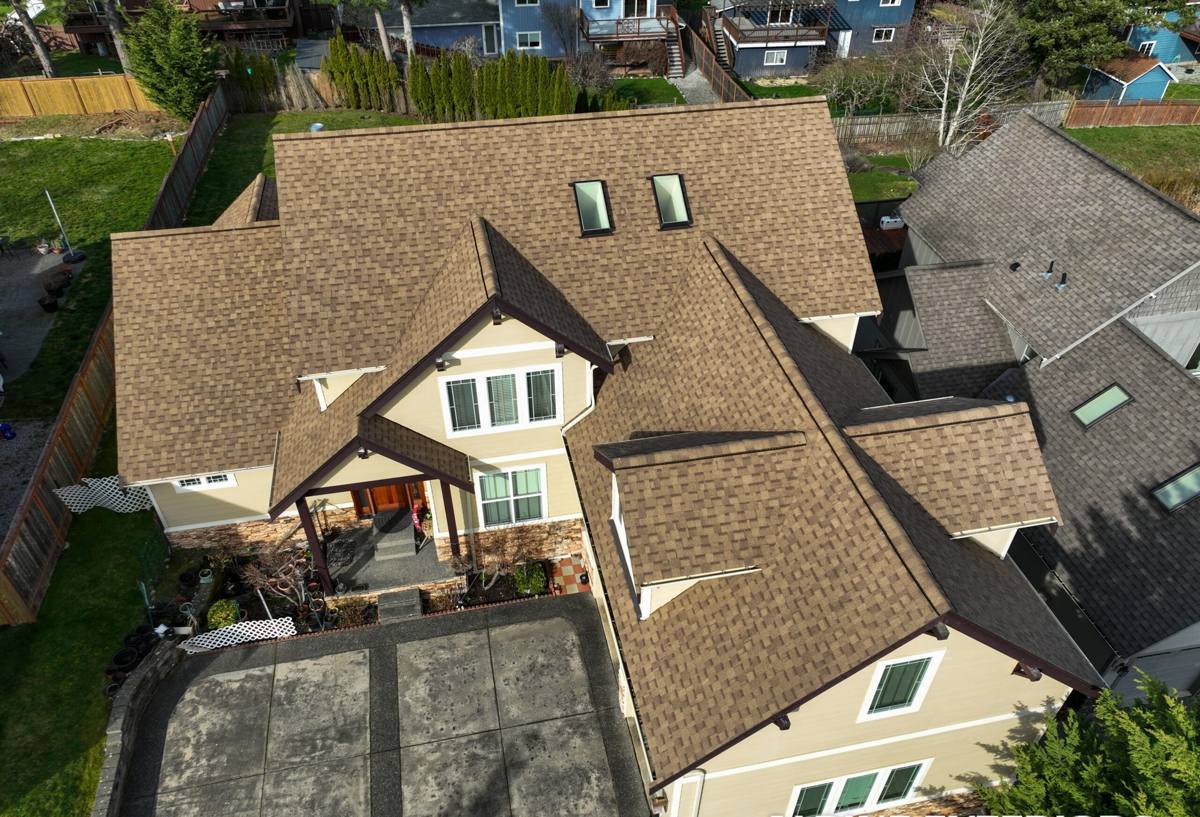
Signs a Blaine Roof Needs Repair, Not Replacement
Most roofs don't fail all at once — they fail in sections, usually starting at the places most exposed to wind-driven rain and standing moisture. Catching these early is what keeps a repair a repair instead of turning into a full tear-off.
What to look for
- Dark streaking or green-black growth concentrated on north-facing slopes or shaded areas
- Granule buildup in gutters, which signals asphalt shingles are wearing thin
- Soft spots or slight sagging along roof edges or valleys, where water collects longest
- Rust bleeding from exposed fasteners, flashing, or vent caps
- Curling, lifting, or cracked shingle edges, especially on slopes that face incoming weather
- Water stains on interior ceilings, even faint ones that come and go with the seasons
- Moss visibly gripping the shingle surface rather than just sitting on top of it
Any one of these on its own is usually a straightforward repair. Several of them together, especially combined with soft decking underneath, is a sign the roof is past the point where patching makes financial sense.
What a Correct Repair Actually Involves
A repair that's done right starts with finding the actual source of the problem, not just the spot where water is showing up inside the house. Water travels along the roof deck and framing before it ever reaches a ceiling, so the visible stain and the actual failure point are often several feet apart.
The core steps
- Locate the true entry point — tracing moisture paths along the deck, not just patching where the stain appears
- Check the decking underneath — any wood that's gone soft or delaminated gets replaced, not just covered over
- Rebuild flashing at vulnerable points — valleys, chimneys, vent pipes, and wall intersections, which is where the majority of leaks originate
- Match materials correctly — new shingles or panels tied into the existing roof so water sheds properly instead of pooling at the seam
- Re-seal and re-nail per manufacturer spec — under-driven or over-driven fasteners are a common cause of repeat leaks
Skipping the decking check is the most common shortcut we see on repairs done elsewhere. New shingles laid over rotten plywood look fine for a season or two, then the leak comes back — often worse, because now there's hidden rot to deal with too.
Salt Air and What It Does to Roofing Components
Blaine's exposure to salt air off the water accelerates corrosion on anything metal on a roof: nail heads, flashing, drip edge, and vent hoods all corrode faster here than they would twenty miles inland. This isn't dramatic — it's a slow process that shows up as rust streaking and eventually as pinhole leaks at fastener points.
| Roof Component | Common Issue in Salt Air | What a Proper Repair Does |
|---|---|---|
| Exposed roofing nails | Head corrosion, backing out over time | Replace with corrosion-resistant fasteners rated for coastal exposure |
| Flashing (valley, step, chimney) | Pitting and rust-through at seams | Rebuild with materials suited to marine air rather than patch over rust |
| Vent caps and pipe boots | Rubber boots crack, metal caps corrode | Replace boots and caps rather than re-caulk over failing material |
| Gutters and drip edge | Surface corrosion, especially at seams | Assess whether sections need replacement alongside the roof repair |
None of this means Blaine homes need exotic materials. It means the standard materials have to be installed with attention to the fasteners, sealants, and metal components that take the brunt of the salt exposure — details that are easy to shortcut and hard to notice until the repair fails.
Moss and the Long Wet Season
Whatcom County's wet season is long, and Blaine's marine layer keeps roofs damp even on days without active rain. That moisture, combined with shade from mature trees common in older neighborhoods, is exactly what moss needs to establish itself. Once moss takes hold, it doesn't just sit on the surface — it works into the granule layer and lifts shingle tabs slightly, which is enough for wind-driven rain to get underneath.
Why moss removal isn't cosmetic
Pressure washing moss off a roof does more harm than good — it strips granules and can drive water under shingles that are already lifted. A proper repair treats moss as a moisture and lifespan issue, not an appearance issue: physically removing the growth by hand or soft brushing, treating the surface to slow regrowth, and repairing any shingles that were compromised underneath.
Reducing how fast it comes back
- Keeping gutters and valleys clear so water doesn't sit against the shingle edge
- Trimming back overhanging branches that keep sections of roof shaded and damp
- Using zinc or copper strips at the ridge where a roof is chronically moss-prone, so rain carries a small amount of metal ion down the slope
- Scheduling a check each fall, before the wet season sets in, rather than after moss is already established
Repair vs. Replacement: How We Help You Decide
Not every roof issue justifies a repair, and not every roof needs full replacement either. The honest answer depends on the roof's age, how much of it is affected, and what's happening underneath the surface.
| Factor | Repair Usually Makes Sense | Replacement Usually Makes Sense |
|---|---|---|
| Age of roof | Under roughly two-thirds of expected material lifespan | Near or past expected lifespan for the material |
| Extent of damage | Isolated to one slope, valley, or penetration point | Spread across multiple slopes or recurring in several spots |
| Decking condition | Solid, no soft spots found during inspection | Soft, delaminated, or rotted in multiple areas |
| History of leaks | First occurrence or isolated cause identified | Repeated leaks despite past repairs |
| Granule loss / wear | Localized to the damaged section | Widespread across the whole roof surface |
We'll tell you plainly which category your roof falls into. A repair that's likely to fail again within a year or two isn't a favor to you, even if it's the cheaper option today — and a full replacement isn't something we'll push if a solid repair will genuinely hold.
Our Process for Blaine Roof Repairs
The process is straightforward because there's no reason to make it complicated:
- An on-site inspection that includes the attic or interior side of the roof deck where accessible, not just a look from the ground or a ladder
- A plain-language explanation of what's actually wrong, what's driving it, and what the realistic repair options are
- A written estimate before any work starts, with the scope clearly defined
- The repair itself, including any decking replacement, flashing rebuild, and material matching needed
- A final check that confirms the fix by tracing water paths, not just a visual pass from the ground
We don't oversell replacement when a repair will hold, and we don't sell a quick patch when the deck underneath is compromised. Both approaches cost you money down the road in different ways, and our job is to be straight with you about which situation you're actually in.
Why a Crew That Already Works Blaine Matters
Roofing crews that mainly work drier, inland areas often aren't thinking about salt air corrosion or a moss season that runs half the year — because it's not what they deal with day to day. A crew that already works this part of Whatcom County knows which fastener and flashing choices hold up near the water, which slopes in this climate collect moss first, and how long a repair should realistically last before the coastal air starts working on it again. That's not a marketing point — it's the difference between a repair that holds for years and one that needs revisiting within a season.
It also means fewer surprises during the work itself. Local crews know how Blaine's weather windows work for scheduling exterior repairs, and they're not learning the quirks of coastal roofing on your house for the first time.
Get a Straight Answer on Your Roof
If you're seeing moss buildup, a stain on a ceiling, or just want a roof checked before the next wet season sets in, we're happy to take a look. The estimate is free, there's no pressure to act on it right away, and you'll get a clear answer on whether you're looking at a repair or something bigger — just fill out the form below to get started.