 Lynden
 Custer Roofs Work Harder Than Most
Custer sits close enough to the water that salt-laden air is a daily fact of life, not an occasional nuisance. Add Whatcom County's driving rain off the Strait and a moss season that can run eight or nine months out of the year, and you've got a climate that's genuinely tough on roofing. A roof that would coast along fine in a drier inland climate can start showing real wear here in half the time if it wasn't built or maintained for these conditions.
This isn't a scare story — it's just what the materials and the weather actually do to each other. Salt air accelerates corrosion on exposed metal fasteners and flashing. Wind-driven rain finds every gap in flashing and underlayment that a calm-weather roof would never expose. And moss doesn't just sit on top of shingles looking bad — it lifts them, holds moisture against the roof deck, and works its way into seams over time. A roof replacement done right in Custer accounts for all three from the start, instead of leaving the homeowner to fight them one repair at a time.
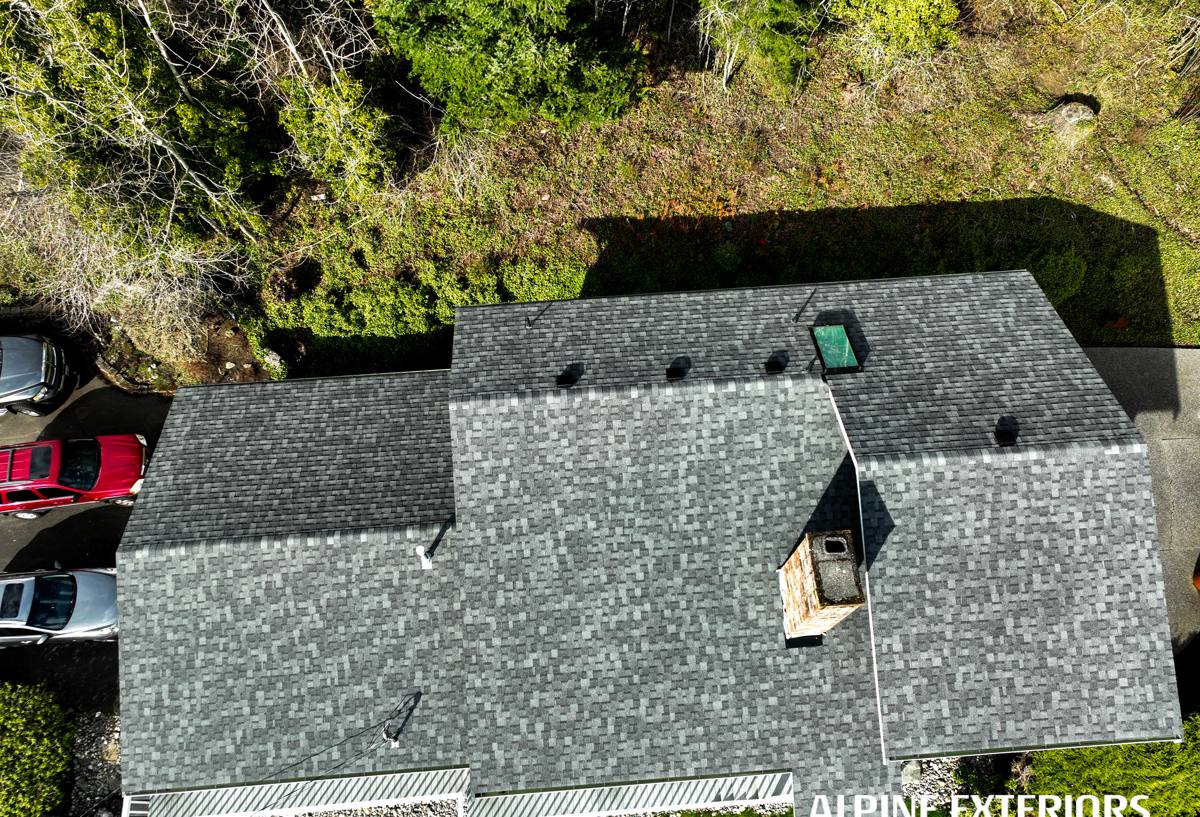
Signs a Custer Roof Needs Replacing, Not Just Patching
Plenty of roofs get repaired for years past the point where replacement would actually save money. In this climate, the signs worth taking seriously include:
- Granule loss heavy enough that you can see bare, shiny patches on asphalt shingles, especially on south- and west-facing slopes that take the brunt of wind-driven rain
- Moss that keeps coming back within a season or two of cleaning, even after treatment — a sign it's rooting into aging shingle mat, not just sitting on the surface
- Soft or spongy spots underfoot, which usually means the deck underneath has taken on moisture
- Rust streaking or pitting at metal flashing, vents, or fasteners, which shows up faster here than in drier parts of the state because of the salt air
- Daylight visible through the attic roof boards, or consistent damp smell in the attic during the wet months
- Shingles that are curling, cracking, or losing their seal — often the first thing to go once a roof passes 15–20 years in a coastal-influenced climate
If you're only seeing one or two of these and the roof is otherwise sound, a repair may still make sense. Once several show up together, or the roof is already past its expected service life, replacement is usually the more honest recommendation — repairs on a failing roof just delay the same conversation while spending money that doesn't carry forward into the new roof.
What a Correct Roof Replacement Actually Involves
A roof replacement is more than stripping old shingles and nailing down new ones. Done properly for a Custer home, it's really several layered systems working together.
Tear-Off and Deck Inspection
Full tear-off lets us actually see the roof deck, which a re-roof over old shingles never allows. This matters more here than in drier climates — any soft, delaminated, or moisture-damaged plywood or planking needs to be identified and replaced before anything new goes down. Roofing over a compromised deck just locks in a problem that will resurface, often as a leak, within a few years.
Underlayment and Ice-and-Water Protection
Given how much wind-driven rain this area sees, underlayment choice isn't a place to cut corners. Self-adhered ice-and-water membrane at eaves, valleys, and around every penetration gives a second line of defense when wind pushes rain up under the shingle edge — which happens regularly during winter storms off the water. Synthetic underlayment across the rest of the deck holds up better than old-style felt against the moisture cycling this climate produces.
Ventilation
Balanced intake and exhaust ventilation keeps the attic dry and the deck at a stable temperature, which slows moss growth from underneath and prevents condensation issues that show up as mystery "leaks" that are actually trapped moisture. A lot of older Custer-area roofs were under-ventilated by today's standards, and that's worth correcting during a replacement rather than reproducing the same setup.
Flashing and Edge Detail
Chimneys, skylights, valleys, and roof-to-wall transitions are where the vast majority of real leaks start — not the open field of the roof. New flashing, properly lapped and sealed, matters more in a high-rain climate than the shingle brand overhead. We treat flashing detail as the part of the job that actually determines whether the roof stays dry, not an afterthought.
Material Options for Salt Air and Moss Country
There's no single "right" material for every Custer home — it depends on budget, roof pitch, house style, and how much long-term maintenance the homeowner wants to take on. Here's how the common options actually compare in this climate:
| Material | Moss & Moisture Behavior | Salt Air Durability | Maintenance |
|---|---|---|---|
| Architectural asphalt shingle | Good with algae-resistant granules; still needs periodic moss removal | Solid — fasteners and flashing are the weak point, not the shingle itself | Low to moderate; occasional cleaning |
| Standing-seam metal | Excellent — moss struggles to grip a smooth metal surface | Very good with proper coated/coastal-rated panels and stainless fasteners | Low; occasional rinse |
| Cedar shake | Moss-prone without diligent upkeep; traps moisture in a wet climate | Weathers naturally but needs regular treatment | High; not our default recommendation here |
| Synthetic/composite shingle | Good moss resistance, consistent surface | Good; check manufacturer coastal warranty terms | Low to moderate |
We don't push cedar shake as a first recommendation for Custer roofs — not because it's a bad product, but because it demands a maintenance commitment that's tough to keep up with given how fast moss and moisture take hold here. If a homeowner wants that look and understands the upkeep, we'll install it correctly. For most Custer homes, architectural asphalt or standing-seam metal gives the better balance of appearance, cost, and long-term performance against this specific climate.
Our Roof Replacement Process
- On-site inspection and honest assessment of whether the roof needs replacement or can still be repaired
- Written estimate covering material options, scope, and timeline — no pressure, no surprise add-ons buried in fine print
- Permitting and material ordering
- Full tear-off and deck inspection, with any deck repairs reviewed with the homeowner before proceeding
- Underlayment, ice-and-water protection, and ventilation correction
- New roofing material installation, including all flashing and edge detail
- Full site cleanup, including magnetic sweep for stray fasteners
- Final walkthrough so you know exactly what was done and what to watch for going forward
Moss Prevention and Keeping a New Roof Performing
A correctly installed roof is the foundation, but a little ongoing attention keeps it performing for its full expected life in this climate. Worth doing on any Custer-area roof:
- Keep overhanging branches trimmed back — shade and falling debris are two of the biggest drivers of moss growth
- Clean gutters at least twice a year, more often if there's tree cover, since clogged gutters back water up under the shingle edge
- Have moss physically removed rather than just power-washed, which can force water and granules under the shingle line
- Consider zinc or copper strips near the ridge on shingle roofs — rain washing over them helps slow moss regrowth between cleanings
- Schedule a roof check after any major windstorm, since wind-driven rain off the water is one of the more common causes of hidden flashing damage
What Drives the Cost of a Roof Replacement
Every roof is different, so we're not going to throw out a number that doesn't apply to your house. What actually moves the price:
| Factor | Why It Matters |
|---|---|
| Roof size and pitch | Steeper roofs take longer and require more safety setup; more square footage means more material and labor |
| Material choice | Asphalt, metal, and composite options span a wide range in material cost and installed labor |
| Deck condition | Rot or soft decking found during tear-off adds material and labor that can't be known until the old roof is off |
| Number of penetrations | Chimneys, skylights, and vents each need individual flashing work, which adds time |
| Access and site conditions | Tight lots, tall trees, or difficult truck access can affect how efficiently a crew can work |
We give a firm written estimate after seeing the actual roof — not a ballpark over the phone — so you know what you're agreeing to before any work starts.
Why a Crew That Already Works in Custer Matters
Roofing crews who split time across drier, calmer climates sometimes underestimate what this stretch of Whatcom County actually throws at a roof. A crew that regularly works Custer and the surrounding Lynden area already knows how far to carry ice-and-water membrane at the eaves, how much ventilation a given attic realistically needs, and where moss tends to take hold first on a given roof orientation. That local familiarity shows up in fewer callbacks and a roof that's built for the conditions it's actually going to face, not a generic spec sheet.
It also means we're not guessing on permitting, disposal, or scheduling around the wetter months — we plan tear-offs around weather windows so your home isn't sitting exposed longer than it needs to be.
Get a Straightforward Estimate
If your roof is showing its age or you just want an honest read on whether it needs replacing, we're glad to take a look. The estimate is free, there's no pressure, and you'll get a clear answer about what your roof actually needs — not an upsell. Use the form below to get started.