 Lynden
 Why Siding Repair Looks Different in Deming
Deming sits back in the forested valley east of Lynden, and that changes what siding repair actually involves. Homes here get less direct sun than open properties closer to town, more shade from surrounding timber, and slower drying times after every storm that rolls through Whatcom County. The same marine air that brings salt and moisture off the Sound pushes inland through the valley too, and combined with driving rain and a moss season that can run most of the year in shaded spots, siding here takes a slower, quieter kind of beating than wind-driven coastal damage. It shows up as soft spots, discoloration, and failed caulk lines long before anyone notices a hole.
That means a repair crew working in Deming needs to think about drainage, shade patterns, and moisture cycling as much as the visible damage itself. Patching what you can see without understanding why it failed usually means doing the same repair again in two or three years.
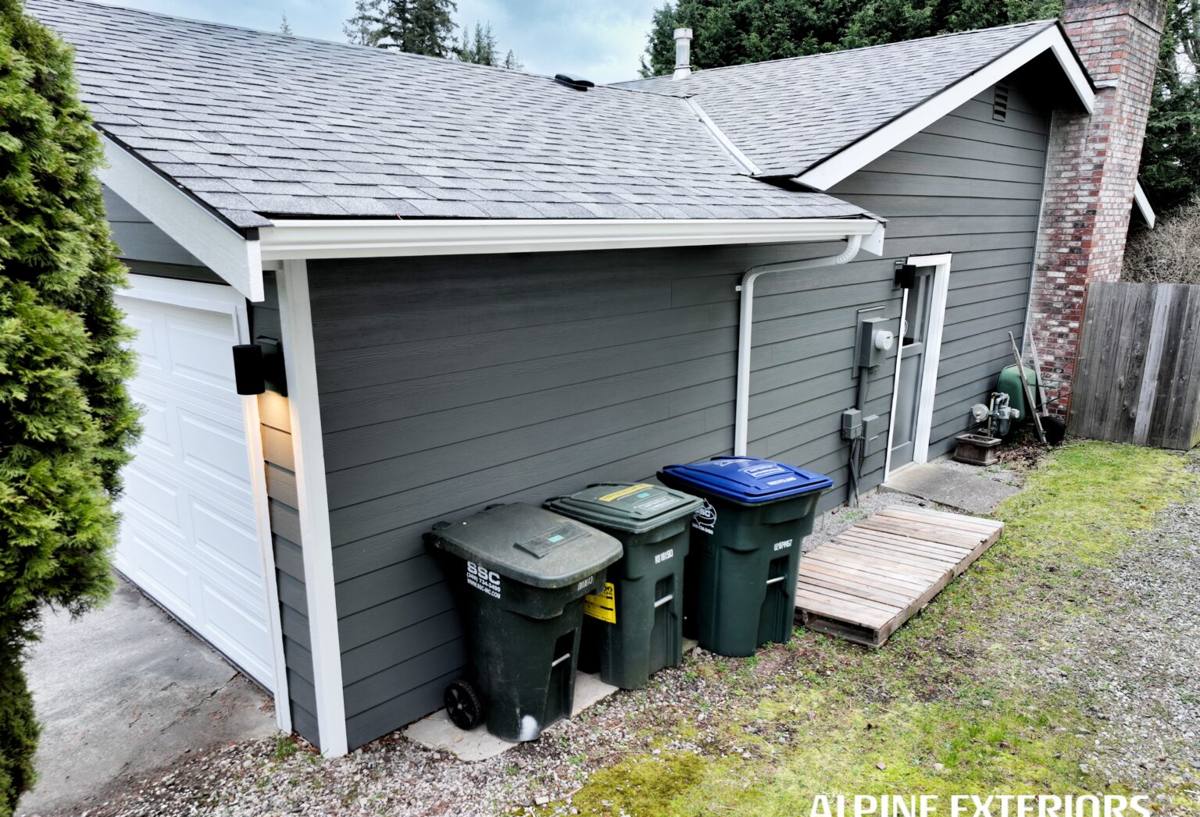
What "Repair" Should Actually Mean
Siding repair is not just swapping a cracked board for a new one. A correct repair starts with figuring out why that section failed in the first place — was it a flashing gap, a caulk joint that dried out and split, a sprinkler hitting the wall every day, or moss holding moisture against the surface for months at a time? Skip that step and you're just delaying the next failure.
Signs It's Time to Call Someone
- Soft or spongy spots when you press on siding near the bottom courses or under windows
- Paint that's bubbling, peeling, or chalking in a pattern that doesn't match sun exposure
- Visible moss or dark green-black staining that keeps coming back after cleaning
- Gaps opening up at seams, corners, or trim boards
- Warping or bowing panels, especially on north-facing or heavily shaded walls
- A musty smell or visible staining on interior walls that share an exterior wall with damaged siding
Any one of these on its own might be minor. Several together, especially on the shaded side of a house, usually points to a moisture problem that's been building for a while.
The Material Question: What We'll Repair, and How
We install and repair only James Hardie fiber cement siding. That's a deliberate standard, not a limitation we're apologizing for. When we repair Hardie siding, we're working with a non-combustible, engineered product that holds its ColorPlus factory finish and doesn't absorb water the way wood-based products do — which matters enormously in a valley that stays damp as long as this one does.
We won't patch a wall with mismatched materials just to save a homeowner money in the short term — piecing in vinyl trim next to fiber cement, or bridging a rotted section of wood siding with caulk and hoping it holds, creates a seam that will fail again, usually faster than the original problem did. If your home has old cedar, primed spruce, LP SmartSide, or vinyl siding with damage in a small area, we'll tell you honestly whether a like-for-like patch makes sense or whether that section (or wall) is better addressed with a proper transition to Hardie. We'd rather give you that honest read than sell you a repair we don't believe in.
Why Matching Matters More Than It Seems
Fiber cement, wood, and vinyl all expand, contract, and absorb moisture differently. Mixing them at a seam — even with good caulk — creates a joint that moves unevenly through the seasons. In a climate with this much rain and this many freeze-thaw swings, that joint is exactly where the next leak starts.
Common Problems We See on Deming Homes
| Problem | Likely Cause | Correct Fix |
|---|---|---|
| Moss and algae staining that returns after washing | Prolonged shade, tree canopy, poor airflow along the wall | Clean, treat, and address the moisture source (trimming back vegetation, improving drainage) — not just a one-time wash |
| Soft or delaminating boards near ground level | Splash-back from grade, missing or clogged gutters, siding installed too close to soil | Replace damaged sections, correct clearance and drainage, reset gutter flow |
| Cracked or gapped caulk joints | Original caulk reaching end of life (5-10 years typical), sun and moisture cycling | Remove and replace with proper exterior-grade sealant at all trim and butt joints |
| Paint failure or discoloration in patches | Water getting behind siding through a flashing or fastener gap | Trace and seal the entry point first, then repair or repaint the affected boards |
| Warped or bowed panels | Chronic moisture exposure in wood-based or engineered wood products | Section replacement with James Hardie fiber cement, which won't warp from moisture the same way |
How We Approach a Repair Job
1. Inspection Before Estimate
We walk the whole exterior, not just the section you called about. Moisture problems rarely stay contained to one board, and a wall that's failing on one corner often has a related issue — clogged gutter, missing kick-out flashing, grade sloping the wrong way — that needs fixing alongside the siding itself.
2. Diagnose the Cause
Before any board comes off, we identify what let water or moss get a foothold. That might mean checking flashing around windows and roof lines, looking at how close soil or mulch sits to the bottom of the wall, or checking whether nearby trees are keeping that section of wall wet longer than it should be.
3. Remove and Assess
Once damaged siding is off, we check the sheathing and house wrap underneath. If moisture has gotten past the siding into the wall assembly, that gets addressed before anything new goes back up — covering over a wet wall with new siding just hides the problem for a while.
4. Repair with Matching Material and Finish
Replacement sections are James Hardie fiber cement, matched to the existing ColorPlus finish where the product line allows, so the repair doesn't stand out as an obvious patch.
5. Correct the Root Cause
Gutters, flashing, grading, or vegetation clearance get corrected as part of the job — not treated as a separate problem for the homeowner to solve later.
Repair or Replace? What to Weigh
Not every damaged section needs a full re-side, and not every "small" repair should stay small. Here's how we help homeowners think through it:
| Factor | Leans Toward Repair | Leans Toward Replacement |
|---|---|---|
| Extent of damage | Isolated to one wall or a few boards | Recurring on multiple walls or spreading over time |
| Age of existing siding | Under 15-20 years, otherwise sound | Original material near or past its expected service life |
| Underlying cause | One-time or easily corrected (a clogged gutter, one bad caulk joint) | Systemic (chronic shade/moisture, poor original installation) |
| Material | Existing James Hardie siding in good condition elsewhere | Wood-based, primed, or vinyl siding showing widespread wear |
| Cosmetic match | Repair section can blend acceptably | Fading or discontinued color makes a seamless patch unlikely |
We'll walk you through where your home falls on that list and give you a straight answer, even when the honest answer is "this is a small fix" rather than a bigger job.
Why Hiring a Crew That Already Works This Area Matters
Deming's mix of heavy shade, valley moisture, and long moss seasons isn't the same problem set as a wide-open lot closer to town or a coastal property getting direct salt spray. A crew that regularly works this specific area already knows which walls tend to hold moisture longest, how local grading and drainage patterns typically behave, and what a Whatcom County winter does to a caulk joint that wasn't sealed correctly the first time. That familiarity shows up in fewer callbacks and repairs that actually hold.
It also means showing up prepared — knowing that a repair scheduled here may need to work around wetter ground conditions or a shorter dry-weather window than a job in a more open, sunnier part of the county.
What a Correct Repair Should Include
- A full inspection of the affected wall and adjacent areas, not just the one visible spot
- An honest explanation of what caused the failure, in plain language
- Correction of the underlying cause (drainage, flashing, clearance) alongside the siding fix
- Matching material and finish — no mixing product types at a single wall
- Proper fastening, caulking, and flashing detail at every seam and penetration
- A clear answer on whether the repair is expected to hold long-term or is a stopgap
Keeping Repaired Siding Sound Going Forward
Once a repair is done right, a little ongoing attention keeps it that way. In a moss-prone, shaded property like a lot of what we see around Deming, that mostly means managing moisture and growth before they take hold again:
- Keep gutters clear so water isn't overflowing onto walls below
- Trim back branches and shrubs that keep a wall shaded and damp
- Rinse moss and algae off before it gets a strong hold, rather than waiting for it to stain
- Walk the exterior once or twice a year and check caulk joints for cracking or gaps
- Address small issues — a lifted piece of trim, a hairline gap — before the next wet season sets in
If you're seeing soft spots, recurring moss, or gaps in your siding on a Deming property, we're glad to take a look and give you a straightforward read on what's going on and what it would take to fix it right. The estimate is free, there's no pressure attached to it, and you can use the form below to get started.