 Lynden
 Wiser Lake Homes Take a Different Kind of Weather Beating
Wiser Lake sits in the rural stretch of Whatcom County outside Lynden, and houses out here don't face quite the same conditions as a place downtown or on a fully cleared lot. Properties around the lake tend to have more tree cover, more shade, and more standing moisture in the air off the water. That combination — shade plus humidity plus limited afternoon sun on north- and east-facing walls — is exactly the recipe that grows moss and holds moisture against siding longer than it should sit there.
Add in what the rest of Whatcom County already deals with every winter: driving rain that comes sideways off multiple Pacific storm systems in a row, and a maritime air pattern that carries salt and moisture well inland from the Sound and the Strait. None of that is unique to Wiser Lake, but the lake and tree cover make the local version of it worse — longer drying times, more shaded siding, and a moss season that can run from early fall clear through spring if a wall never gets direct sun.
Siding that's rated for a dry inland climate, or installed the way a crew would install it in a drier part of the state, doesn't hold up the same way out here. The material and the installation details both have to account for how slowly a shaded, lake-adjacent wall actually dries out between storms.
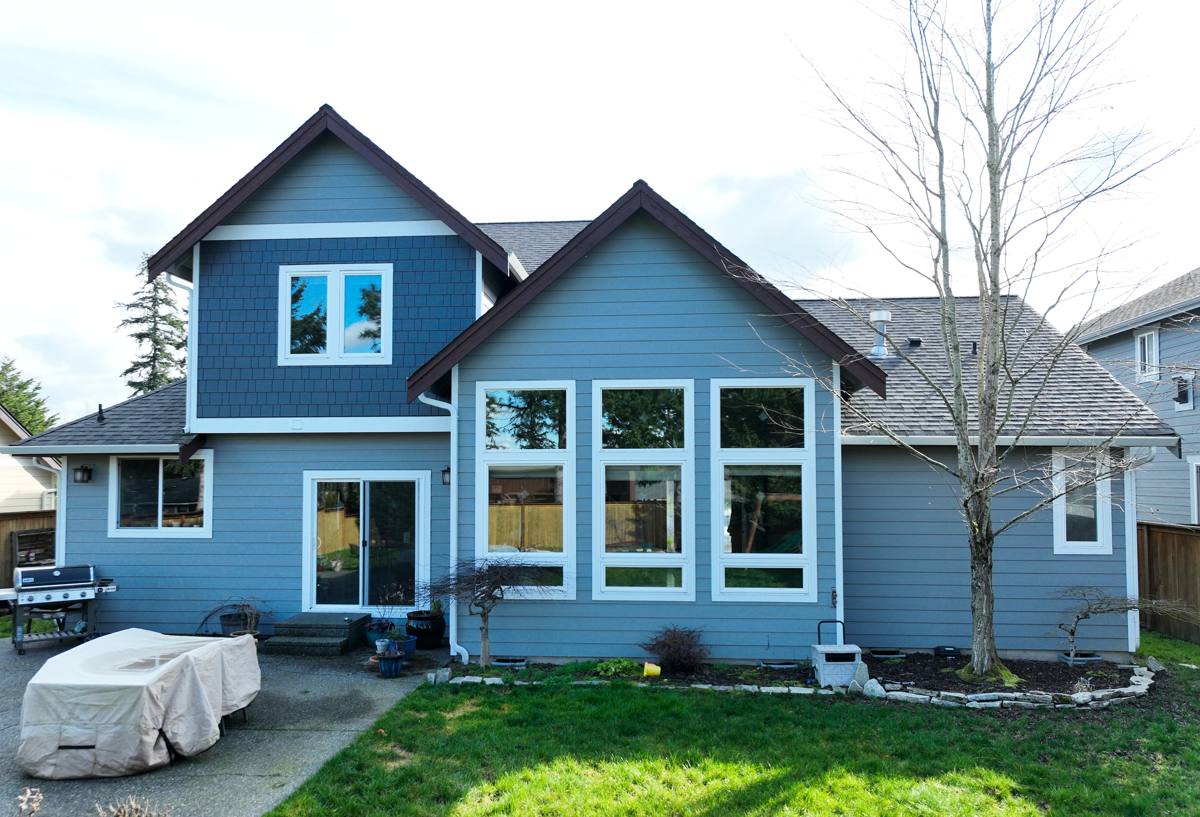
What Correct Fiber Cement Installation Looks Like Around a Lake
Moisture Management Starts Behind the Siding
The siding itself is only half the system. Behind every board there needs to be a continuous weather-resistive barrier, correctly lapped flashing at every window, door, and penetration, and enough of a gap for water that does get behind the cladding to drain and dry out instead of sitting against the sheathing. On a shaded Wiser Lake wall, that drainage gap matters more than it would on a wall that gets full sun most of the day, because there's less passive drying to fall back on if the details are wrong.
Fastening and Clearances Built for This Climate
James Hardie engineers its HardieZone system specifically for regional climate exposure, and Western Washington falls into the wetter HZ5 zone. That affects fastener spacing, the minimum clearance required between the bottom of the siding and the ground, deck, or roofline, and how joints get caulked and sealed. Skipping or fudging any of that is where a lot of siding failures around lakes and heavy tree cover actually start — not from the material, but from installation shortcuts that don't account for how long water sits against the wall before it dries.
Why This Crew Installs Only James Hardie Fiber Cement
We don't install vinyl, LP SmartSide, Cemplank, Allura, primed spruce, or cedar. That's a deliberate standard, not an oversight, and it's worth explaining honestly rather than just stating it.
Wood-based and engineered-wood siding products can look and perform well when everything goes right, but they're wood at their core — meaning they absorb moisture, and in a shaded, humid, moss-prone setting like Wiser Lake, that moisture absorption is the exact vulnerability the local climate is built to exploit. Vinyl sheds water fine but flexes, fades, and can crack in cold snaps, and it doesn't hold paint if a homeowner ever wants to change the color down the road. Cedar is a beautiful, genuinely traditional material, but it needs ongoing sealing and staining to keep performing in a wet climate, and that maintenance schedule gets harder to keep up with on a shaded lot where the wood never fully dries between coats.
James Hardie fiber cement is cement, sand, and cellulose fiber — it doesn't rot, and it isn't a food source for the moss and mildew that thrive in this microclimate the way organic wood fiber can be. It's factory-finished with the ColorPlus coating system, which is baked on under controlled conditions rather than field-painted, so it holds color and resists the fade and chalking that shaded, moisture-heavy walls tend to accelerate. It's non-combustible, which matters for insurance and peace of mind regardless of climate. And it carries a strong transferable warranty when it's installed to Hardie's specification — which is the whole reason we're strict about installation details in the first place. None of that is a knock on the alternatives; it's just why we standardized on one product and install it correctly every time instead of installing several products with varying track records in this climate.
Our Process on a Wiser Lake Project
- Site walk and moisture check. We look at sun exposure on each elevation, existing moss or staining patterns, tree cover, and the condition of the sheathing underneath the current siding before we quote anything.
- Product and color selection. We help you choose between Hardie's lap, panel, and shingle lines and walk through ColorPlus color options, factoring in which walls get shade year-round.
- Tear-off and sheathing inspection. Old siding comes off and we inspect the sheathing for rot before anything new goes up — covering a moisture problem instead of fixing it is how new siding fails early.
- Weather barrier and flashing. Housewrap, flashing, and drainage details go in first, matched to HZ5 requirements for this climate.
- Installation to spec. Fastener pattern, clearances, and joint treatment follow James Hardie's published installation guide, which is also what keeps the warranty valid.
- Final walkthrough. We review the finished job with you and register the warranty paperwork before we consider the project done.
Fiber Cement Compared to Other Siding Options
Here's how the materials most homeowners around Wiser Lake ask us about actually compare on the things that matter in this climate:
| Material | Moisture & moss resistance | Maintenance | Typical lifespan |
|---|---|---|---|
| James Hardie fiber cement | Excellent — non-organic, factory-finished | Occasional wash, no repainting cycle | Decades with correct install |
| Vinyl | Sheds water but can trap moisture behind it if not detailed correctly | Low, but color can't be changed later | Varies widely with quality |
| Cedar | Vulnerable to moisture and moss without upkeep | Regular sealing/staining, more in shade | Shorter without diligent maintenance |
| Engineered wood (e.g., LP SmartSide) | Treated to resist moisture, but wood-based core is still moisture-sensitive | Periodic repainting and edge sealing | Depends heavily on installation and exposure |
| Primed spruce | Least moisture-resistant of the group | Highest — repainting and moisture monitoring | Shortest without heavy upkeep |
What Drives the Cost of a Wiser Lake Siding Job
| Cost factor | Why it matters here |
|---|---|
| Home size and number of stories | More square footage and taller walls mean more material and labor time |
| Tear-off vs. install over existing siding | Removing failing siding to check sheathing adds labor but is often necessary |
| Hidden moisture or rot repair | Shaded, lake-adjacent walls are more likely to have sheathing damage discovered at tear-off |
| Trim and detail complexity | Homes with more corners, dormers, and window trim take longer to flash and finish correctly |
| Site access | Tree-lined lots and lake-adjacent driveways can slow material staging and setup |
| ColorPlus finish selection | Some premium colors and profiles carry a different price point than standard options |
We give a firm, itemized quote after the site walk rather than a rough number over the phone, because the moisture check often changes what the job actually needs.
Living With Fiber Cement Siding Near a Lake
Fiber cement is low-maintenance compared to wood and vinyl, but "low-maintenance" doesn't mean zero-maintenance in a climate like this one. A few habits keep it performing the way it's designed to:
- Rinse siding with a garden hose or soft wash setting once or twice a year, especially on shaded, north-facing walls where moss gets a foothold first
- Keep gutters and downspouts clear so overflow doesn't run down the face of the siding
- Trim back tree branches and shrubs that keep a wall shaded and damp longer than necessary
- Check caulking around trim, windows, and joints annually and re-seal any cracked lines before the wet season
- Touch up any scratches or chips with Hardie touch-up paint promptly, so bare edges don't take on moisture
- Avoid direct high-pressure washing aimed at joints and edges — a soft wash is enough and won't force water behind the boards
Why a Crew That Already Works Wiser Lake Matters
Siding installation is detail work, and the details that matter change depending on where a house sits. A crew that regularly works around Wiser Lake already has a feel for which elevations on a given lot type stay shaded longest, how much moss buildup is normal versus a sign of a bigger drainage problem, and what tree cover and lake proximity typically mean for a house's moisture load before we ever pull the old siding off. That's not something you can fully substitute with a generic quote from a crew that mostly works subdivisions in town.
There's also the practical side: familiarity with Whatcom County's permitting expectations, comfort working around septic systems and wells on the larger rural and lakefront lots common out here, and a shorter drive for the walkthroughs, inspections, and any warranty follow-up down the road. None of that replaces installing the product correctly, but it's part of why local experience is worth something on a job like this.
If you're planning a siding project on a home near Wiser Lake, we're happy to walk the property, look at how the sun and moisture actually move across your specific walls, and put together a straightforward, no-pressure estimate for James Hardie fiber cement siding built for this climate. Use the form below to get started.