 Lynden
 Siding Repair in Wiser Lake: A Different Set of Problems Than "In Town"
Wiser Lake sits just outside Lynden proper, and that changes what a siding repair call actually looks like. Homes here tend to sit closer to trees, closer to open water, and further from the wind-blocking effect of denser neighborhoods. That combination means more standing shade on north and east walls, more airborne moisture off the lake, and a longer window each year where siding simply doesn't get a chance to dry out between rains. Add in the marine air that moves through this whole corner of Whatcom County and you get a climate that's genuinely harder on exterior materials than a lot of homeowners realize until something starts failing.
A siding repair in this area isn't just "find the bad spot and patch it." Done right, it's a diagnosis of why that spot failed, a fix that addresses the cause, and a patch that matches the surrounding wall closely enough that it doesn't become the next thing that fails. That's the standard we hold every Wiser Lake repair call to.
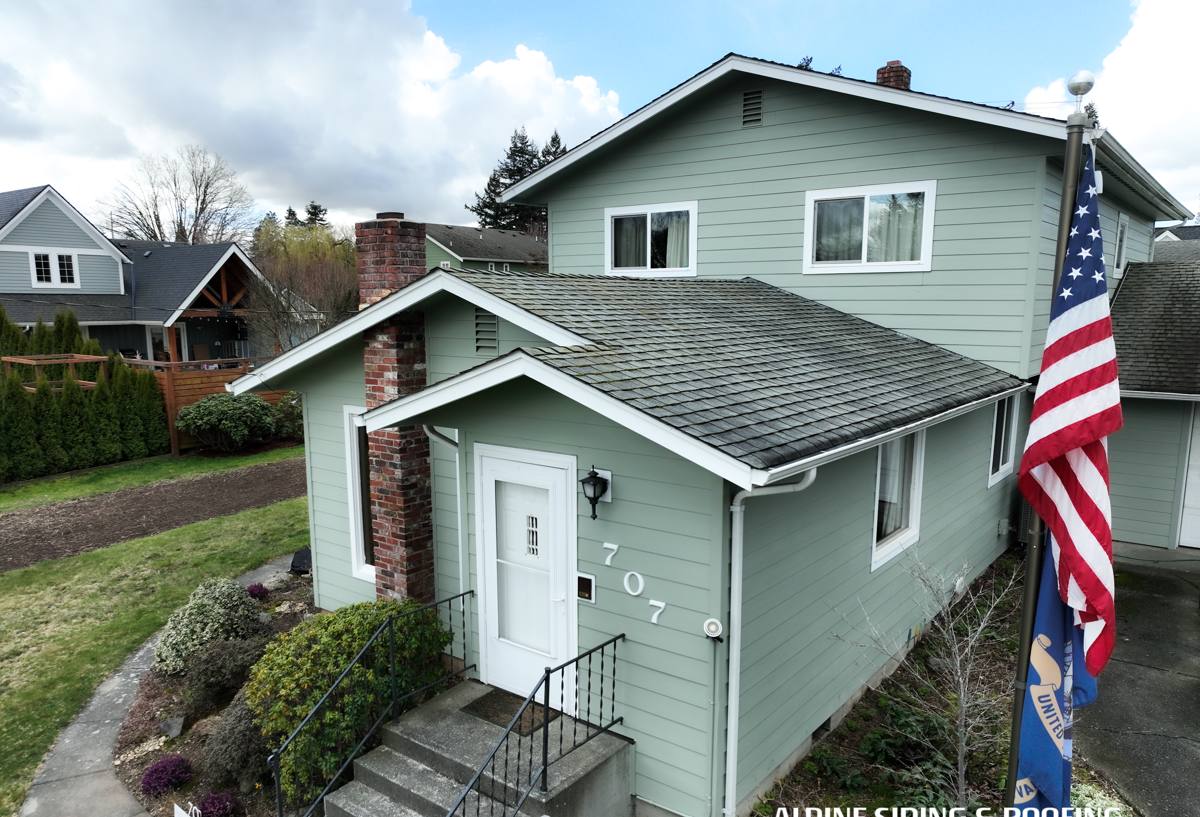
Why This Climate Is Hard on Siding
Three things drive most of the repair calls we get in this part of the county:
Driving rain and wind-blown water
Whatcom County storms don't just fall straight down — wind pushes rain sideways into wall assemblies, seams, and trim joints. Any gap in flashing or caulking becomes an entry point, and once water gets behind siding it can travel a surprising distance before it ever shows up as a visible stain.
A long moss and algae season
Shaded, damp walls near mature trees or close to the lake stay wet longer after every rain event. That extended damp window is exactly what moss and algae need to establish themselves, and once organic growth is holding moisture against a wall, whatever's underneath — wood trim, fiber cement, fasteners — starts to degrade faster than it would on a dry, sun-exposed elevation.
Salt-tinged marine air
Even away from open saltwater, this region sits under a marine air influence that carries fine salt content further inland than people expect. Over years, that air accelerates corrosion on fasteners, flashing, and any metal trim components — which is a big reason we pay close attention to what's holding a wall together, not just what's covering it.
What a Correct Siding Repair Actually Involves
Diagnosing the cause, not just the symptom
A stained, buckled, or soft section of siding is a symptom. The cause could be a failed kick-out flashing, a clogged gutter dumping water down a wall, a caulk joint that gave up years ago, or trim that was never properly back-primed. Replacing the visible damage without finding and correcting the cause means the same repair call comes back in two or three years — sometimes worse.
Getting the water management details right
Every repair is an opportunity to check and correct the flashing, house wrap, and drainage plane behind the siding in that section of wall. Skipping this step is the single most common reason repairs fail early. Reinstalling siding over an unaddressed leak point just hides the problem again.
Matching material, reveal, and finish
A patch that doesn't match the board profile, exposure, or paint sheen of the surrounding wall stands out immediately — and a mismatched, uncaulked seam is its own future leak point. Correct color and profile matching is part of the repair, not an afterthought.
Common Failure Points We See Near Wiser Lake
- North and east walls near mature trees: persistent shade keeps these elevations wet longer, encouraging moss and accelerating rot at butt joints and trim.
- Lower courses near grade or landscaping: splash-back from rain and irrigation keeps the bottom few feet of wall damp far more often than the rest of the house.
- Around windows and doors: failed caulking or original flashing mistakes show up here first, since these are the most penetration-heavy parts of any wall.
- Corners and butt joints: these seams take the most direct hit from wind-driven rain and are the first place gaps open up as materials age and move.
- Fastener heads and metal trim: corrosion from the marine air can cause staining and eventually loosen the fastening long before the siding material itself is compromised.
Repair or Replace? How We Help You Decide
Not every damaged section needs a full re-side, and not every repair is worth doing in isolation. We walk every Wiser Lake job through the same honest framework:
| Factor | Leans toward Repair | Leans toward Full Replacement |
|---|---|---|
| Extent of damage | Isolated to one or two wall sections | Recurring across multiple elevations |
| Underlying cause | Found and fixable (flashing, caulk, one leak point) | Systemic moisture behind large wall areas |
| Age & material of existing siding | Newer Hardie, still under warranty terms | Original material at or past expected service life |
| Material availability | Current color/profile still produced or close match achievable | Discontinued profile or heavily faded, mismatched panels |
| Cost over time | Repair cost is a small fraction of replacement cost | Repeated repairs are approaching replacement cost |
When damage is contained and the cause is fixable, repair is the right call and we'll say so. When we find rot spreading behind multiple sections of wall, or siding that's simply reached the end of its service life, we'll tell you that too — before any work starts, not after we're into the wall.
Our Process for a Wiser Lake Repair Call
- On-site inspection: we look at the damaged area and the wall assembly around it, not just the visible spot.
- Cause diagnosis: we identify what let water or damage in, whether that's flashing, caulk, grading, or a material issue.
- Written scope and quote: what we're repairing, why, and what it involves — no vague line items.
- Repair, matched to the existing wall: correct material, profile, and finish, with proper flashing and sealant detail work.
- Final walkthrough: we confirm the fix with you before we consider the job done.
Why We Repair Exclusively With James Hardie Fiber Cement
When a repair calls for new siding material — matching an existing Hardie wall, or replacing a failed section of another product — we install James Hardie fiber cement and nothing else. That's a company-wide standard, not a preference we apply case by case, and it's rooted in how this climate treats exterior materials over time.
Hardie's HZ5 product line is engineered for exactly the freeze-thaw, wind-driven rain, and humidity conditions common to the Pacific Northwest. It's non-combustible fiber cement, which doesn't absorb and swell with moisture the way engineered wood products can, and it holds up to the extended damp seasons this area sees without the same rot risk. The factory-applied ColorPlus finish is baked on and warranted against fading and peeling, which matters a great deal on walls that see long stretches of shade and moss exposure — those are exactly the conditions that expose weak field-applied paint jobs. Hardie also backs the product with a strong transferable warranty, which carries real value on a home you may eventually sell.
We don't install LP SmartSide, vinyl, Cemplank, Allura, or primed wood siding, and we won't patch a repair with any of those products either. That's not a knock on every homeowner who has one of those on their home already — it's simply the standard we hold our own installs to, and the material we trust enough to warranty our work behind.
Signs You Should Get a Repair Looked At
- Soft, spongy, or visibly swollen siding boards, especially near the bottom of a wall
- Persistent moss or algae growth that keeps returning after cleaning
- Staining or discoloration streaking down from a seam, window, or trim piece
- Visible gaps, cracked caulk, or separated joints between boards or at corners
- Nail heads popping out or rust streaks running down from fasteners
- A musty smell or interior wall staining that suggests moisture is getting in from outside
- Impact damage from storms, debris, or yard equipment that's gone unaddressed
Why It Matters to Hire a Crew That Already Works in Wiser Lake
Siding repair is diagnostic work as much as it's install work, and local experience shortens that diagnosis considerably. A crew that already knows how Whatcom County's rain patterns move across a wall, how shaded lots near water behave differently than open lots in town, and where moss and moisture problems tend to originate on homes in this area gets to the real cause faster — and fixes it right the first time instead of guessing.
There's also a practical side: local crews know current Hardie color and profile availability, so a repair actually blends into the existing wall instead of standing out as an obvious patch. And because we're not driving in from out of the area, follow-up if something needs a second look is straightforward, not a scheduling ordeal.
If you've got a section of siding near Wiser Lake that's showing damage, moss, or moisture staining, we're happy to take a look and give you a straight answer on repair versus replacement — no pressure, no upsell. Reach out for a free estimate using the form below.