 Lynden
 Why Window Replacement Looks Different in the Acme Area
Homes in and around Acme sit close to Whatcom County's marine air, and that changes what a window has to survive year after year. It isn't just rain — it's driving rain pushed sideways by wind, salt-laden moisture that finds its way into wood and metal, and a moss season that stretches longer here than almost anywhere else in the state. A window that would hold up fine in a drier inland climate can start failing here in half the time if it wasn't installed with this specific environment in mind.
We work on homes throughout the Acme area regularly, and the patterns repeat: foggy double-pane glass from failed seals, soft trim around window openings, and sashes that no longer sit square because the framing behind them absorbed moisture for years before anyone noticed. Window replacement done right here isn't a cosmetic upgrade — it's weatherproofing work first and an appearance improvement second.
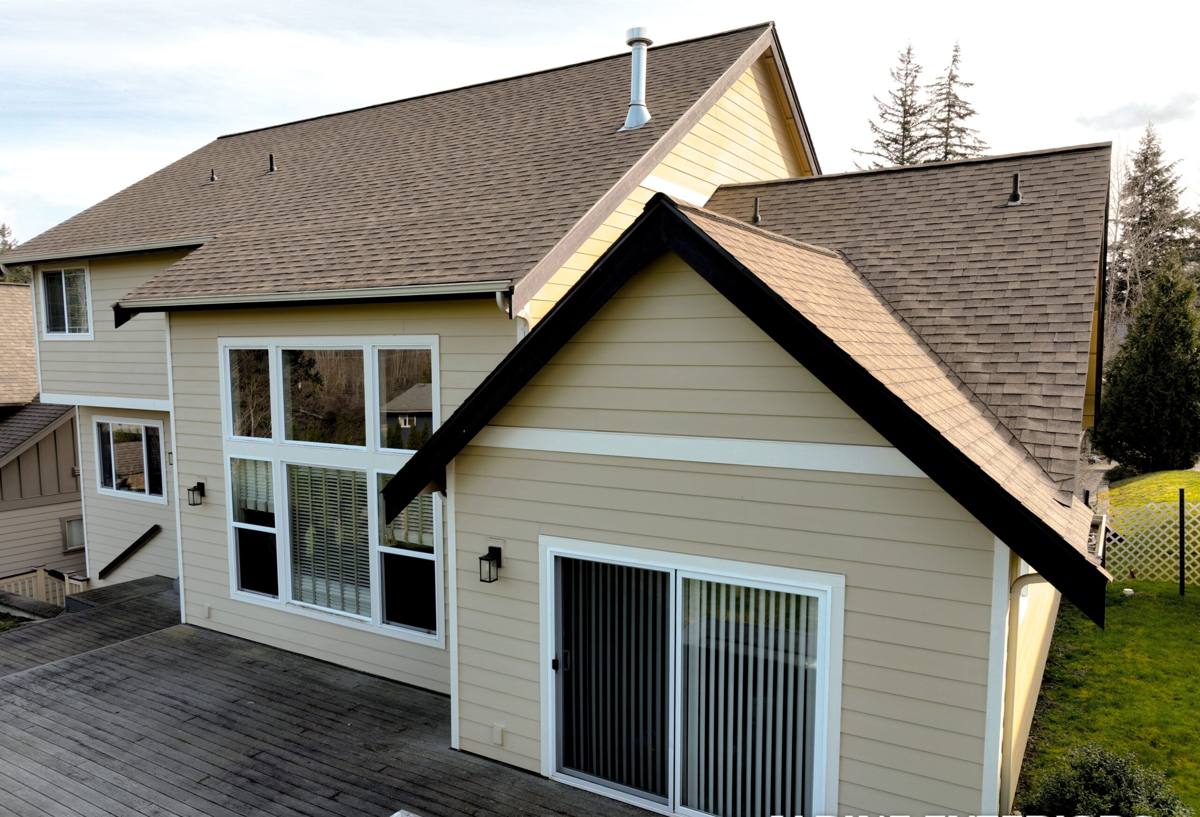
What Driving Rain, Salt Air, and Moss Do to Old Windows
Driving Rain
Wind-driven rain doesn't just fall on a window — it gets forced sideways and upward into gaps that would never see water in a calm rain. Over time, that pressure finds any weakness in the flashing, the sealant, or the sill pan. Once water gets behind the window unit instead of running off it, it's working on the framing where nobody can see it until the damage is significant.
Salt Air
Proximity to the Sound and the broader marine air pattern in Whatcom County means airborne salt settles on and around window components. It accelerates corrosion on metal hardware, fasteners, and some flashing materials, and it can degrade certain sealants faster than a dry-climate installation would ever experience. This is a big reason material choice and hardware quality matter more here than a spec sheet might suggest.
Moss Season
A long moss season means extended periods where moisture sits against exterior surfaces instead of drying out between rain events. Moss and algae growth around window trim and sills holds water against wood and paint far longer than a quick rain-then-sun cycle would. That constant low-grade dampness is what turns a small caulking gap into a rot problem over a few seasons.
What a Correct Window Replacement Job Actually Involves
Swapping glass into an old frame is not the same as a proper window replacement, and in a climate like this the difference shows up fast. A correct job addresses the opening itself, not just the product going into it.
- Full removal of the old unit and inspection of the framing and sill for rot or soft wood before anything new goes in
- Repair or replacement of any compromised framing — installing a new window into damaged framing just hides the problem
- Correct sill pan flashing so any water that does get past the window drains outward, not into the wall cavity
- Proper head flashing and integration with the existing weather-resistive barrier so water sheds over the window, not behind it
- Sealant and backer rod placement sized and rated for the gap, not just a bead of caulk around the perimeter
- Insulation of the gap between the new frame and the rough opening to stop both drafts and condensation points
- Interior and exterior trim reinstalled or replaced so the finished look matches the rest of the home
Skip any one of these steps and the window itself can be excellent quality and still leak, fog, or rot the surrounding wall within a few years — especially with the wind-driven rain this area sees regularly.
Full-Frame Replacement vs. Insert (Pocket) Replacement
There are two general approaches to window replacement, and the right one depends on the condition of the existing frame, not just cost.
| Approach | What It Involves | Best For |
|---|---|---|
| Insert (pocket) replacement | New window unit installed inside the existing frame, which stays in place | Frames that are still sound, dry, and square — faster, less disruptive |
| Full-frame replacement | Old frame removed entirely down to the rough opening, new flashing and framing installed | Any frame showing rot, soft wood, water staining, or square/level problems — common on older homes with moisture history |
Given how much moisture exposure this area sees, we check for hidden rot before recommending either approach. An insert replacement over a compromised frame is one of the more common ways a "new window" ends up with the same water problem within a few years — the frame underneath was never actually fixed.
Choosing Window Materials for This Climate
Material choice matters more here than in drier parts of the state, because the frame has to hold up to sustained moisture exposure and occasional salt air, not just occasional rain.
| Frame Material | Moisture Behavior | Maintenance |
|---|---|---|
| Vinyl | Does not absorb water or rot; performs consistently in wet climates | Low — periodic cleaning, no repainting |
| Fiberglass | Very stable in moisture and temperature swings, holds paint well if color changes are wanted | Low to moderate |
| Wood (unclad) | Can perform well but requires diligent sealing and finishing to resist rot in this climate | High — regular repainting/sealing |
| Wood-clad (exterior clad in vinyl/aluminum/fiberglass) | Good moisture resistance on the exterior face; interior wood look preserved | Moderate — clad exterior, interior wood still needs occasional attention |
We don't push unclad wood windows on exposed elevations in this area as a default recommendation — not because wood is a bad material, but because the maintenance schedule needed to keep it performing well against driving rain and salt air is a real ongoing commitment, and a missed year or two of upkeep is exactly when rot gets started. Clad or vinyl options simply ask less of the homeowner over the life of the window.
Signs a Window in the Acme Area Needs Replacing
Because the damage often starts inside the wall before it's visible on the surface, it helps to know what to check for before a small issue becomes a structural repair.
- Fogging or a visible film between panes on double-pane glass — the seal has failed and insulation value is gone
- Soft or spongy trim or sill when pressed with a finger
- Visible gaps between the window frame and the siding or trim
- Difficulty opening, closing, or locking a window that used to operate smoothly
- Noticeable drafts near the window even with it fully closed
- Paint that's bubbling, peeling, or discolored specifically around the window frame
- Moss or algae buildup on the sill or trim that keeps returning after cleaning
- A musty smell near a window, which can indicate moisture trapped in the wall cavity
Any one of these on its own isn't necessarily an emergency, but two or more on the same window is usually a sign the frame and flashing need a real look, not just a caulk touch-up.
Our Process for a Window Replacement Project
We keep the process straightforward and try to minimize surprises, since window work touches both the interior and exterior of the home.
- On-site assessment — we look at each window opening from both inside and out, checking framing condition, not just the glass and sash
- Honest scope discussion — if we find rot or flashing problems, we tell you before work starts, not after the wall is opened up
- Product selection — matched to the exposure of each elevation; a window facing prevailing wind and rain may warrant a different spec than a sheltered one
- Removal and prep — old units removed, opening inspected and repaired as needed
- Flashing and installation — sill pan, head flashing, and weather barrier integration done per manufacturer and building code requirements
- Sealing and insulation — perimeter gaps sealed and insulated correctly, not just caulked over
- Trim and finish — interior and exterior trim completed to match the home
- Final walkthrough — operation, sealing, and appearance checked with you before we consider the job done
What Drives the Cost of a Window Replacement
Costs vary project to project, but the main factors are consistent across most homes in the area.
| Factor | Why It Matters |
|---|---|
| Insert vs. full-frame replacement | Full-frame work takes more labor and materials when rot or framing damage is present |
| Frame material | Vinyl is typically the most cost-effective; fiberglass and clad-wood cost more upfront |
| Number and size of openings | Larger or custom-shaped windows and higher window counts increase total project cost |
| Exterior exposure | Elevations facing prevailing wind and rain may need more robust flashing and sealing detail |
| Existing damage found during removal | Rot repair, additional framing, or siding repair discovered mid-project add to scope |
| Trim and finish work | Matching existing trim profiles or repainting adds labor beyond the window unit itself |
We'd rather give you a broad, honest range up front and adjust once we've actually looked at your windows than quote a number that doesn't hold up once we see what's behind the trim.
Why It Matters to Hire a Crew That Already Works This Area
Window replacement in a marine climate isn't a one-size-fits-all install. A crew that regularly works homes around Acme and greater Whatcom County has already seen how driving rain behaves against different elevations, how salt air affects hardware over time, and how moss and moisture patterns show up in this specific area's building stock. That familiarity shows up in the details — where extra flashing attention is warranted, which materials hold up without excessive upkeep, and what early rot looks like before it's obvious.
It also means we're not guessing at local permitting or code requirements, and we're a known, findable crew if a question comes up after the work is done — not a traveling install team that's moved on to another region by the time any issue would surface.
After Installation: Keeping New Windows Performing
A correctly installed window in this climate still benefits from basic upkeep. Clear moss and debris from sills and surrounding trim before it has a chance to hold moisture against the surface. Check exterior caulking annually, since UV and moisture cycles will eventually wear any sealant down. Keep weep holes on vinyl and fiberglass frames clear so water draining out of the frame can actually exit. None of this is heavy maintenance, but skipping it in a climate this wet shortens the life of even a well-installed window.
If you're noticing drafts, fogging, or trim trouble on windows in your Acme-area home, we're happy to take a look and give you a straightforward, no-pressure assessment and estimate — just use the form below to get started.