 Lynden
 Windows Built for the Aldergrove Climate, Not a Catalog Photo
Aldergrove sits close enough to Lynden and the border that a lot of homes here were built to the same general Pacific Northwest standard — and they age the same way, too. Long wet winters, weeks of driving rain that hits west- and south-facing walls sideways, and a moss season that starts early and doesn't really let go until late spring. Windows in this area don't fail because of one big storm. They fail slowly, from years of moisture working into seals, frames, and the wall assembly around them.
Whatcom County and the surrounding Fraser Valley share a lot of the same weather patterns, and we've replaced windows on both sides of that line. The lesson is consistent everywhere we work: a window that's rated well on paper but installed without attention to local moisture behavior will underperform within a few years, no matter how good the glass is.
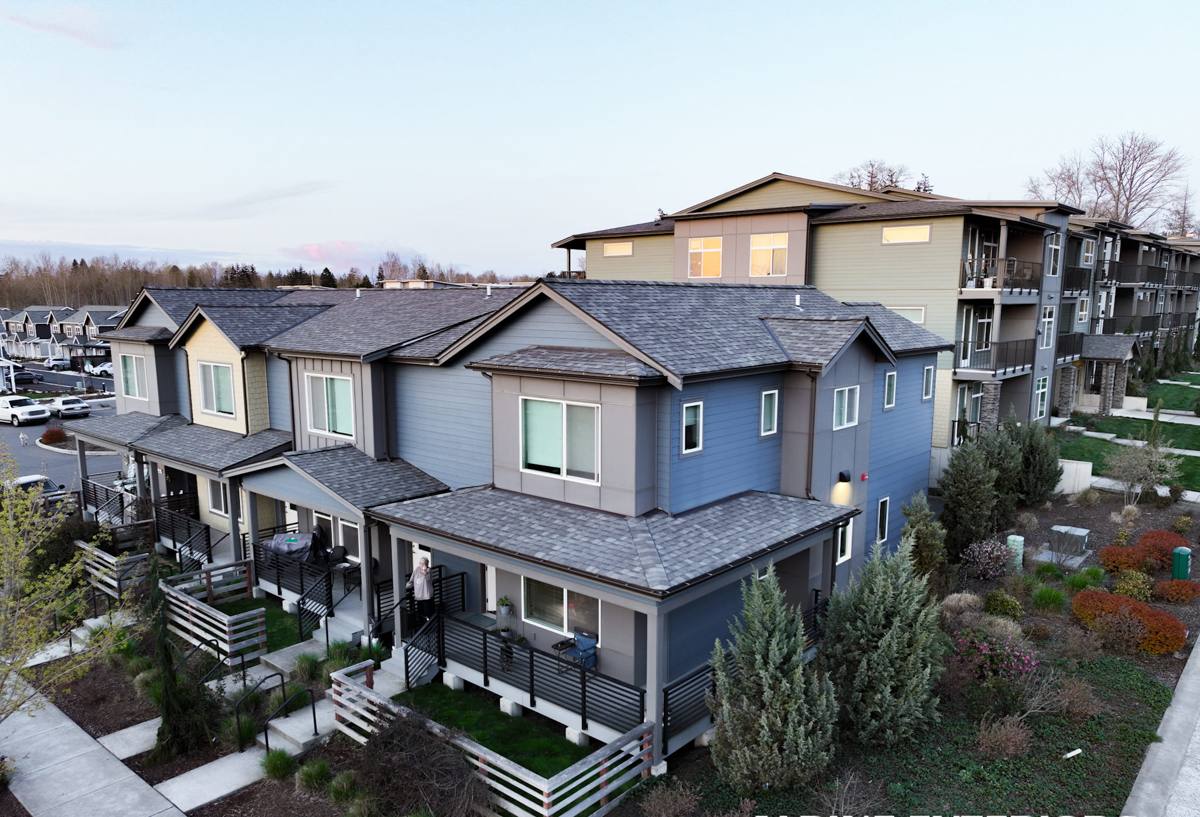
What "Energy-Efficient" Actually Means Here
Energy efficiency isn't one spec — it's a combination of glass, frame, and installation working together. For this climate, three numbers matter more than the marketing language on the box:
- U-factor — how well the window resists heat loss. Lower is better, and it matters more here than in drier climates because homes rely on heating for most of the year.
- Solar heat gain coefficient (SHGC) — how much solar heat passes through the glass. Aldergrove doesn't get much harsh direct sun, so this is a smaller factor than it would be somewhere hot, but it still affects comfort near south-facing glass.
- Air leakage rate — how much air moves through the assembly when it's closed. This is often the biggest real-world difference between a window that feels drafty in January and one that doesn't.
Double-pane windows with a low-E coating and an argon gas fill are the practical standard for this area. Triple-pane can make sense for a north-facing room that never gets sun or a house near a busier road, but for most Aldergrove homes it's a marginal energy gain for a real cost jump — we'll tell you honestly when it's worth it and when it isn't.
Frame Material Matters as Much as Glass
The frame is what actually sits in the wet wall assembly year-round, so its behavior under sustained moisture matters more here than in a dry climate.
| Frame Material | Moisture Behavior | Maintenance | Typical Fit |
|---|---|---|---|
| Vinyl | Doesn't rot or corrode; handles driving rain well | Low — occasional cleaning | Most homes, best value |
| Fiberglass | Very stable, minimal expansion/contraction | Low | Larger openings, higher-end remodels |
| Wood / wood-clad | Needs a sound exterior seal or moisture gets in | Higher — finish upkeep | Character homes, historic look |
| Aluminum | Conducts cold, prone to condensation without thermal break | Low | Not our default recommendation for this climate |
We install vinyl and fiberglass on the vast majority of Aldergrove-area jobs because they hold up to the specific combination of cool temperatures and near-constant moisture without the ongoing finish maintenance wood requires.
Signs Your Current Windows Are Costing You Money
Most homeowners don't notice window failure until it shows up as a comfort problem or a utility bill. Here's what to check before it gets worse:
- Condensation or fogging between the panes — the seal has failed and the gas fill is gone
- Visible gaps or you can feel a draft standing next to the window on a windy day
- Soft or discolored trim/sill, especially on walls that face prevailing wind and rain
- Moss or dark streaking on the sill or below the window — a sign water is sitting and not shedding properly
- Windows that are hard to open, close, or lock — frames can swell or shift with sustained moisture exposure
- Rooms that are noticeably colder near the window than the rest of the house
What a Correct Installation Actually Involves
Most window problems we get called out to fix aren't a bad window — they're a window that was installed without proper attention to the wall around it. This is where our siding background actually helps: we're already thinking about how water moves across a wall, not just how a window looks once it's in.
The parts that matter but don't show
- Flashing sequence — sill pan, side flashing, and head flashing installed in the correct order so water sheds outward at every layer, never inward
- Weather-resistant barrier integration — the window has to tie into the house wrap or building paper correctly, not just get caulked and hoped for
- Proper shimming and squaring — a window that's slightly out of square stresses the seals and hardware over time
- Insulation at the gap — the space between the window frame and rough opening needs to be filled correctly, not overpacked or left hollow
- Exterior sealant, done right — sealed where it should be sealed, and deliberately left open where the assembly needs to drain or breathe
Skip any one of these steps and you can end up with a window that's energy-rated well on paper but leaks moisture into the wall cavity behind it — a much more expensive problem than the window itself.
Our Process
- On-site assessment — we look at existing windows, framing condition, and any moisture or rot signs before recommending anything
- Honest product recommendation — frame material and glass package matched to the specific wall's sun/wind exposure, not a one-size answer for the whole house
- Written estimate — clear scope, materials, and timeline, no pressure to decide on the spot
- Removal and flashing prep — old windows out, opening checked and repaired if there's hidden rot or water damage before anything new goes in
- Installation — proper flashing sequence, shimming, insulation, and sealing as outlined above
- Final check and cleanup — operation tested, site cleaned, and we walk the job with you before we call it done
Why a Crew That Already Works Aldergrove Matters
Window replacement done by a crew unfamiliar with this specific climate tends to make the same mistake: treating it like a dry-climate job where the main goal is sealing everything airtight. Around here, an assembly that can't shed or dry out occasional moisture will eventually cause more damage than the draft it was meant to fix. Working regularly in Lynden, greater Whatcom County, and communities like Aldergrove means we're not guessing at how a wall performs under months of driving rain and a heavy moss season — we've seen what holds up and what doesn't, on homes with the same builders and building eras common to this area.
It also means practical things: we know typical window sizes and openings common to this area's housing stock, we're set up for the border-adjacent logistics of scheduling and material delivery, and we're not learning the region's weather behavior on your project.
What Affects the Cost of a Window Project
| Factor | Why It Matters |
|---|---|
| Number and size of windows | Larger openings and more units mean more material and labor |
| Frame material | Vinyl is typically the most budget-friendly; fiberglass and wood cost more |
| Glass package | Standard double-pane low-E vs. upgraded coatings or triple-pane |
| Condition of the existing opening | Hidden rot or water damage found during removal adds repair scope |
| Access and wall height | Second-story or hard-to-access windows take more time to do safely |
| Trim and finish work | Matching existing interior/exterior trim adds labor beyond the window itself |
We don't quote a per-window number until we've actually looked at your openings — a wall with hidden moisture damage behind the trim is a different job than one that just needs a clean swap.
Living With New Windows Through Moss Season
Even a correctly installed, well-flashed window benefits from a little seasonal attention in this climate:
- Clear debris and moss from sills and tracks before the fall rains set in
- Check that exterior caulking lines are intact each spring — small cracks let water in behind a window's protective seal
- Keep gutters and downspouts clear near windows so runoff isn't sheeting directly down the wall above them
- Wipe condensation off interior glass on cold mornings so it doesn't sit on the sill or trim
None of this is heavy maintenance — it's the same kind of upkeep any exterior surface needs around here — but it's worth doing, because it protects the installation quality you paid for.
If your windows are drafty, fogged, or just past their working life, we'll come take an honest look and give you a straightforward, no-pressure estimate — use the form below to get started.