 Lynden
 Why Bellingham Homes Need Siding Built for This Climate
Bellingham sits close enough to Bellingham Bay and the Salish Sea that salt-laden air is a real factor in how exterior materials age, even a few miles inland. Add Whatcom County's long wet season, driving rain off the water, and stretches of shade and humidity that keep moss and algae going most of the year, and you have a climate that is genuinely tough on siding. Products that perform fine in a dry climate can fail early here — not dramatically, but through slow moisture absorption, swelling, delamination, or paint breakdown that shows up as soft spots, streaking, or peeling within a handful of years.
We install James Hardie fiber cement siding exclusively, and Bellingham is exactly the kind of environment that explains why. Fiber cement doesn't absorb moisture the way wood-based or wood-fiber composite products do, it doesn't feed mold and algae growth the way some siding surfaces can, and it holds paint and factory finish far longer under sustained damp conditions. That matters more here than it would in a drier inland town.
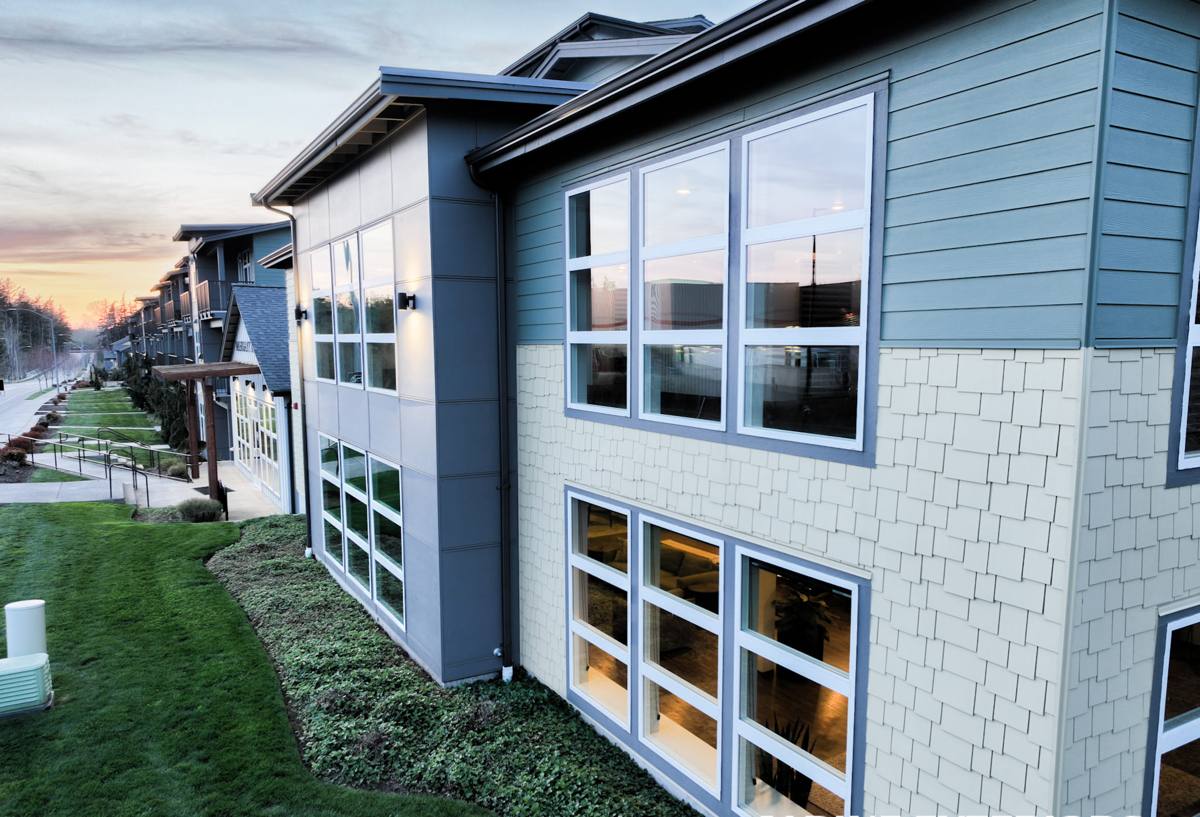
What Salt Air, Rain, and Moss Actually Do to Siding
Salt Air
Airborne salt doesn't just affect metal fasteners and flashing — it accelerates the breakdown of some paints and coatings, and it can work into porous or fibrous siding materials over time. Non-combustible fiber cement with a factory-applied finish resists this far better than field-painted wood or many composite products, whose finish is more vulnerable to salt exposure at the surface.
Driving Rain
Wind-driven rain off the water pushes moisture sideways into seams, laps, and fastener points — areas that a calm-weather installation might never test. This is why lap spacing, flashing details, and caulking at penetrations matter more in Bellingham than they would in a sheltered inland lot. A siding system that's marginal on moisture management in dry conditions becomes a real liability here.
Moss and Algae
Shaded north- and west-facing walls, gutters that stay damp, and mild temperatures year-round give moss and algae a long growing season in this part of Whatcom County. Porous or wood-based siding surfaces give organic growth something to hold onto and feed on. A dense, factory-finished fiber cement surface is much harder for moss to colonize and much easier to keep clean.
Why We Only Install James Hardie
We don't install LP SmartSide, vinyl, Cemplank, Allura, primed spruce, or cedar. Some of those products have real strengths — cedar looks good, vinyl is inexpensive, engineered wood products install quickly — but none of them match fiber cement's combination of moisture resistance, non-combustibility, and long-term finish durability, and in a climate like Bellingham's those trade-offs show up faster than they would somewhere drier. James Hardie's ColorPlus factory finish is baked on under controlled conditions, which gives it far better UV and moisture resistance than field-applied paint, and it comes with a longer, transferable warranty backing that finish. Standardizing on one product line also means our crews aren't relearning different installation quirks, flashing details, and warranty paperwork from job to job — we know this system cold.
James Hardie Product Lines for This Area
James Hardie makes climate-engineered HZ product lines, and for Whatcom County we work with the HZ5 formulation, which is designed for wetter, colder Pacific Northwest-type climates rather than the hot-dry HZ10 formulation used in the Southwest. The core products homeowners choose between are:
| Product | Look | Best For |
|---|---|---|
| HardiePlank lap siding | Traditional horizontal lap, smooth or woodgrain texture | Most Bellingham homes, classic and craftsman styles |
| HardiePanel vertical siding | Vertical panels, often with battens | Modern or farmhouse-style exteriors, accent walls |
| HardieShingle siding | Staggered or straight-edge shingle profile | Cottage and craftsman detail areas, gables |
| HardieTrim boards | Smooth trim and fascia boards | Window/door surrounds, corners, fascia |
Color selection matters here too. ColorPlus finishes come pre-matched to Hardie's trim and accessory colors, which keeps caulked seams and touch-ups looking consistent even after years of rain exposure — something that's harder to maintain with field-painted siding once weathering starts.
What Correct Installation Involves
Most siding problems we see on older homes in this area trace back to installation shortcuts, not the material itself. A correct James Hardie install in a climate like Bellingham's includes:
- Proper weather-resistive barrier and rainscreen or drainage plane behind the siding, so any moisture that gets past the surface can drain and dry out
- Correct lap spacing and fastener placement per Hardie's published install specs, not generic carpentry judgment
- Flashing integrated at every window, door, and roofline penetration — the details that matter most in driving rain
- Minimum ground clearance to keep the bottom edge of the siding away from splash-back moisture and soil contact
- Factory-cut edges caulked and sealed at all field cuts, since exposed raw fiber cement edges are more vulnerable to moisture intrusion
- Proper fastener type and spacing to avoid over-driving, which can crack the board or compromise the seal
Skipping any one of these doesn't usually cause an obvious failure right away — it shows up two, five, or ten years later as a soft spot, a stain, or a section that needs to be pulled and redone. That's part of why installation quality matters as much as the product choice itself.
Our Process for a Bellingham Siding Job
1. On-Site Assessment
We walk the exterior, check existing siding and sheathing condition, look at drainage around the foundation, and note problem areas like shaded walls prone to moss or spots that take the brunt of wind-driven rain.
2. Product and Color Selection
We help homeowners pick the right HardiePlank, panel, or shingle profile and ColorPlus finish for the home's style and exposure, factoring in which walls take the most weather.
3. Prep and Moisture Management
Before any siding goes up, we address the weather-resistive barrier and drainage plane. This step gets rushed on lower-quality jobs and it's the single biggest factor in how the siding performs over the next 20-30 years.
4. Installation to Spec
Boards, panels, or shingles go up per James Hardie's fastening and clearance specifications, with flashing detailed at every transition, window, and roofline.
5. Final Walkthrough
We review the finished job with the homeowner, covering care and cleaning recommendations suited to a wet, moss-prone climate.
Why Hiring a Crew That Already Works in Bellingham Matters
A contractor who mainly works drier inland regions may not think twice about drainage planes, ground clearance, or moss-prone shading — because those issues rarely bite them at home. A crew that regularly works Bellingham and the surrounding Whatcom County coastline treats those details as standard practice, not an afterthought, because we've seen what happens when they're skipped in this exact climate. That local pattern recognition — knowing which walls need extra attention, which flashing details matter most in wind-driven rain, how ColorPlus finishes hold up here over time — is hard to substitute with generic experience from a different part of the country.
Maintenance in a Wet, Mossy Climate
James Hardie siding is low-maintenance compared to wood, but "low-maintenance" doesn't mean "no maintenance," especially here. A simple annual routine goes a long way:
- Rinse siding with a garden hose or low-pressure wash to remove moss spores, pollen, and grime before they establish
- Keep gutters clear so overflow doesn't run down the siding face and keep it damp longer than necessary
- Trim back vegetation and tree cover that keeps specific wall sections shaded and slow to dry
- Inspect caulking at trim and penetrations every year or two and re-caulk where it's cracked or pulled away
None of this is heavy labor, but skipping it in a climate this wet lets moss and grime build up faster than it would elsewhere, and that buildup is what eventually stains or degrades even a good finish.
What This Means for Your Project
If you're planning a siding replacement or new construction project in Bellingham, the climate here isn't a minor detail — it's the reason product choice and installation quality both matter more than they would in a milder, drier area. James Hardie fiber cement, installed correctly with proper moisture management and flashing, is built to handle salt air, driving rain, and a long moss season without the early wear you'd risk with other materials.
If you'd like a straightforward look at your home's exterior and what a correctly installed James Hardie system would involve, we're happy to come take a look. There's a free, no-pressure estimate form below whenever you're ready.