 Lynden
 Building New in Deming? Get the Windows Right the First Time
Deming sits along the Nooksack River corridor east of Lynden, in the shadow of the foothills leading up toward Mount Baker. If you're framing a new home out here, you already know the building conditions are different from a subdivision lot in town. Tree cover holds moisture longer, the river valley traps humidity, and Whatcom County's marine-influenced weather brings long stretches of driving rain followed by a moss season that can run eight months or more. Add in the salt-tinged air that moves inland off Puget Sound during winter storm systems, and you have a climate that is genuinely hard on window assemblies that aren't installed correctly the first time.
New construction gives you one real advantage: the chance to get the window opening right before siding, trim, and interior finishes cover it up. Get it wrong, and you're looking at a repair years down the road that means cutting back into finished walls. We install new-construction windows across Whatcom County, and Deming builds specifically come with their own checklist because of the site conditions.
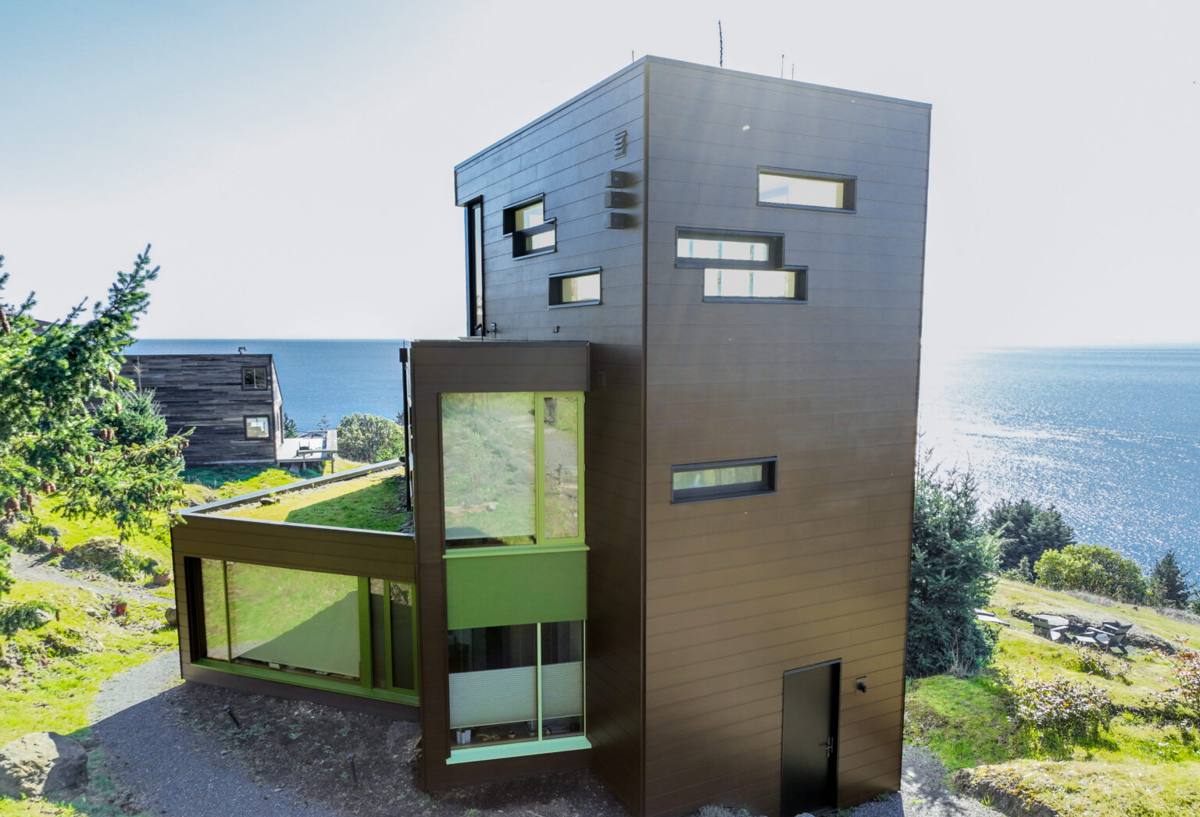
Why New-Construction Windows Are a Different Job Than Replacement
New-construction windows have a nailing fin around the perimeter of the frame that gets fastened directly to the sheathing before the weather-resistive barrier and siding go on. That's different from a replacement or "pocket" window, which gets inserted into an existing frame with no access to the rough opening. On a new build, we're working with bare sheathing and open framing, which means we control every layer of the water management system — not just the window itself.
That's a good thing, but it also means there's no room for shortcuts. A pocket window installer can sometimes get away with sealing gaps after the fact. On new construction, if the flashing sequence is wrong, the problem gets buried behind siding and won't show up until moisture has already worked its way into the wall assembly — often not until there's visible damage inside.
What This Means for a Deming Build
With the extra humidity this area holds onto and rain that can come sideways during a winter system, a new-construction opening needs a flashing and drainage plan that assumes water will reach the window — not one that just hopes it won't. We build every opening on that assumption.
What a Correctly Installed New-Construction Window Includes
There's a specific sequence that has to happen in order, every time. Skipping or reordering any of these steps is where most window failures we get called out to inspect actually start.
- Rough opening check — square, plumb, and sized correctly before the window ever gets set
- Sill pan flashing — a sloped, back-dammed pan under the window so any water that gets past the frame drains back out, not into the wall
- Window set and shimmed — level and plumb, with the nailing fin fastened per the manufacturer's schedule, not just "enough nails to hold it"
- Flashing tape at the jambs and head — installed shingle-style so every layer overlaps the one below it, directing water outward and down
- Head flashing — a drip cap or integrated head flashing that kicks water away from the top of the window before it can run down behind the siding
- Weather-resistive barrier integration — the house wrap gets cut, taped, and lapped into the window flashing correctly, not just stapled around the opening
- Interior and exterior sealant — a continuous air seal on the interior, and backer rod plus sealant on the exterior where code and manufacturer specs call for it
Every one of those steps matters more in a climate that sees this much sustained rain. A single skipped lap in the flashing sequence is the difference between a window that lasts thirty years and one that starts showing rot around the sill in eight.
Window Types and Materials That Hold Up in This Climate
Material choice matters for new construction, but installation quality matters more — a great window installed poorly will fail before a mid-range window installed correctly. Here's how the common frame materials compare for a Deming build.
| Frame Material | How It Handles Moisture & Moss Season | Maintenance | Typical Fit |
|---|---|---|---|
| Vinyl | Won't rot or corrode; performs well in sustained damp conditions | Low — occasional cleaning | Most new builds, value-focused and mid-range homes |
| Fiberglass | Very stable in wet/dry cycling, minimal expansion or contraction | Low | Homes wanting a narrower sightline or higher-end finish |
| Wood-clad | Exterior cladding sheds water well, but any breach in the clad exposes wood beneath | Higher — cladding seams need periodic inspection | Traditional or higher-end architectural styles |
| Aluminum | Durable, but prone to condensation without thermal breaks in a cool, damp climate | Moderate | Modern designs, typically with thermally broken frames only |
We don't push one brand or material on every job — the right choice depends on your architectural style, budget, and how exposed the elevation is to prevailing weather. What we won't do is install a product in a way that ignores its manufacturer's flashing and fastening requirements, because that's what voids warranties and causes early failures, regardless of how good the window itself is.
Our New-Construction Window Process
1. Plan Review and Rough-In Walkthrough
Before windows arrive, we walk the framing with you or your builder to confirm rough openings match the ordered window sizes and that headers, sills, and sheathing are ready.
2. Delivery and Staging
Windows get inspected on delivery for shipping damage and staged so installation moves in a logical sequence around the house, minimizing how long any opening sits unprotected.
3. Flashing and Installation
Each opening gets the full sill-pan, jamb, and head flashing sequence described above, with every window set level, plumb, and fastened to spec.
4. Integration With Siding and Trim
We coordinate the window install with the siding and trim schedule so the weather-resistive barrier and flashing tie in cleanly — no gaps where the window crew's work stops and the siding crew's work starts.
5. Final Inspection
Before we consider a job done, every opening gets checked for square operation, smooth locking, and a continuous seal — inside and out.
Common Mistakes We See in Deming-Area New Builds
Whether it's a crew unfamiliar with the local climate or just a rushed schedule, these are the issues that show up most often when we're brought in to inspect or fix a new build:
- No sill pan flashing, or a flat pan with no back dam to stop water from draining inward
- House wrap stapled over the nailing fin instead of properly lapped under the head flashing
- Reused or undersized fasteners that don't meet the window manufacturer's nailing schedule
- Gaps in flashing tape at the corners where laps don't overlap correctly
- Windows set out of plumb, causing hardware to bind or fail to lock fully within a year or two
- No interior air seal, leading to drafts and condensation on cold mornings
Any one of these is fixable if it's caught during framing. Once siding is up, fixing them means opening the wall back up — which is a far bigger job than doing it right the first time.
Cost Factors for New-Construction Windows
Every build is different, but these are the main variables that move the price on a new-construction window package in this area.
| Factor | How It Affects Cost |
|---|---|
| Window count and size | More openings and larger units (picture windows, sliders) raise material and labor cost directly |
| Frame material | Vinyl is typically the most budget-friendly; fiberglass and wood-clad run higher |
| Glass package | Double vs. triple pane, and low-E coatings, add cost but improve comfort and condensation resistance |
| Elevation exposure | Walls facing prevailing wind and rain may warrant upgraded flashing details, adding some labor time |
| Site access and staging | Rural or wooded lots with limited access can add time for material handling |
We'll always give you a straightforward, itemized number before work starts — no surprise add-ons once the crew is already on site.
Why Hire a Crew That Already Works Deming
A window installer who mostly works dry-climate jobs or dense in-town lots isn't necessarily thinking about back-dammed sill pans or extended head flashing as a default — because in a lot of places, they can get away without it. Out here, with the rain volume and moss season Whatcom County sees, those details aren't optional upgrades; they're the baseline for a window that's still performing well in fifteen years.
We've installed and repaired windows across Lynden and the surrounding county long enough to know which details matter on a river-valley lot like Deming versus a more sheltered in-town site. That's not a sales pitch — it's just the difference between a crew that treats every job the same and one that adjusts the install to the site.
Get a Straightforward Estimate
If you're framing a new home in Deming and want windows installed right the first time, we're happy to walk the plans with you, answer questions about material choices, and give you a clear, no-pressure estimate. Use the form below to get started.