 Lynden
 Windows Built for a Salt Air Coastline
Birch Bay sits right on the water, and that changes what a window has to survive. A few miles inland in Lynden, wind-driven rain and moss are the main enemies. Out at the bay, you add salt-laden air off the Strait of Georgia, near-constant onshore wind, and homes that often sit with very little tree cover to break the weather. Windows here take a harder hit than windows almost anywhere else in Whatcom County, and they show it faster when the wrong materials or a rushed install get used.
Salt air is corrosive to a lot of the hardware inside a window that homeowners never see — screws, cranks, balance systems, and cheaper aluminum components. It also accelerates the breakdown of exterior caulking and finishes. Combine that with regular gale-force gusts and horizontal rain, and you get a much shorter window lifespan on a house that wasn't specified or installed with the coast in mind.
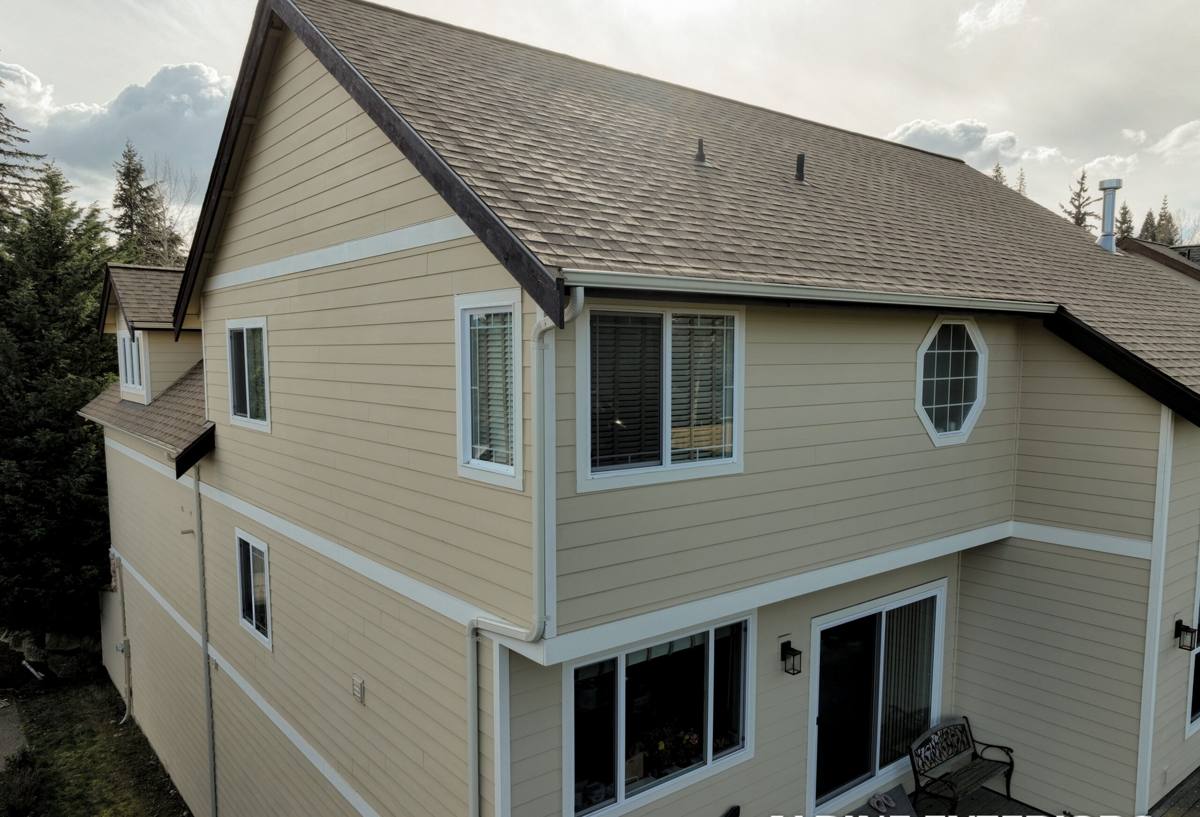
What Coastal Exposure Actually Does to a Window
It helps to understand the specific failure patterns we see on Birch Bay homes, because it shapes every recommendation we make.
Salt Corrosion
Fine salt spray settles on glass, frames, and hardware even on homes set back from the water. Over years, it pits and corrodes untreated or lower-grade metal hardware — hinges, cranks, locks — and can degrade certain aluminum finishes faster than the manufacturer's rated lifespan would suggest inland.
Wind-Driven Rain Intrusion
Ordinary rain falls straight down. Wind-driven rain at the bay comes in at an angle, sometimes nearly sideways during a winter blow, and it tests a window's flashing and seal design in ways calm-weather rain never does. A window that's technically watertight in a lab test can still leak on a Birch Bay wall if the flashing detail around it isn't done correctly.
Moss and Sustained Moisture
Whatcom County's long wet season means moss and algae get a foothold anywhere moisture lingers — on sills, in corners, and in any spot where water isn't shedding cleanly away from the frame. Moss holds moisture against wood and trim far longer than open air would, which is exactly the condition that leads to rot around window openings over time.
UV and Temperature Cycling
It's a smaller factor here than in sunnier climates, but frames and seals still expand and contract with our seasonal swings, and that cycling stresses caulk joints and weatherstripping over the years.
Choosing Materials That Hold Up at the Bay
Not every window product sold in the Pacific Northwest is a good fit for a direct coastal location. This is one of the few places in our service area where we actively steer homeowners away from certain options — not because a product is bad everywhere, but because it isn't the right match for salt air and sustained wind exposure.
| Frame Material | How It Holds Up at Birch Bay | Our Take |
|---|---|---|
| Vinyl | Won't corrode or rust from salt exposure; performs consistently in coastal moisture | Our default recommendation for most Birch Bay homes — low maintenance and stable long-term cost |
| Fiberglass | Very stable in temperature swings and wind load; strong seal retention over time | Worth the upgrade cost for homes with the most direct water and wind exposure |
| Wood (unclad) | Attractive but needs consistent upkeep to resist moisture and moss in this climate | Only for owners committed to a real maintenance schedule — we'll say so plainly |
| Aluminum (standard) | Can be more prone to corrosion and pitting in salt air over time versus vinyl or fiberglass | We generally don't recommend standard aluminum for direct coastal exposure at the bay |
Hardware matters as much as the frame. We spec corrosion-resistant hardware and fasteners for Birch Bay jobs as a standard practice, not an upsell — it's simply what holds up out here.
What a Correct Custom Window Install Involves
Custom windows means the units are built to the exact rough opening rather than forcing a stock size to fit, which matters even more on a coastal home where a sloppy fit is an invitation for wind-driven rain to find a gap. A correct install at Birch Bay includes:
- Removing the old window and inspecting the opening for hidden rot or moisture damage before anything new goes in
- Repairing and priming any compromised framing or sheathing found during that inspection
- Installing house wrap and flashing tape in a shingled, water-shedding sequence — not just caulk alone
- Setting the window level, plumb, and square, then securing it per manufacturer fastening specs
- Sealing the interior and exterior with the correct sealants for our climate, including backer rod where gaps call for it
- Insulating the gap between the frame and rough opening properly, without over-packing it
- Installing exterior trim and interior casing with sightlines that match the rest of the home
- A final water and operation check before we consider the job done
Skipping or rushing any one of these steps is usually where coastal window failures start — and it's rarely visible until a few winters have passed.
Our Process, Start to Finish
1. On-Site Assessment
We look at each opening individually — sun and wind exposure, current condition, any signs of past moisture issues — because even on the same house, a window facing the water needs different attention than one on the sheltered side.
2. Product Selection
We walk through frame material, glass package, and hardware options against your budget and how exposed the specific opening is. For Birch Bay, we'll tell you plainly where spending more on frame material is worth it and where it isn't.
3. Precise Measurement and Ordering
Custom units are ordered to the actual opening, not a nearby stock size, which is part of what makes a tight, weather-resistant fit possible in the first place.
4. Removal and Opening Inspection
Old windows come out carefully so we can inspect the framing underneath before anything new is installed — this is the step that catches hidden rot early instead of years later.
5. Install and Weatherproofing
New windows go in following the sequence above, with flashing and sealing done to handle sideways rain, not just vertical rain.
6. Final Walkthrough
We check operation, seals, and trim with you before we call the job finished.
Glass and Ventilation Considerations for a Coastal Home
Birch Bay homes often benefit from glass packages built for wind noise and thermal performance, since the bay tends to be breezier than inland Lynden. Double- or triple-pane insulated glass with a quality gas fill and low-E coating helps on both counts — cutting down on drafts and tempering the noise of steady coastal wind. Operable styles matter too: casement windows tend to seal tighter against wind-driven rain than sliding styles, which is worth weighing for the most exposed walls of a bay-front or near-shore home.
Maintenance That Actually Matters at the Bay
Coastal homes need a slightly different upkeep routine than a typical Lynden property, mainly to stay ahead of salt residue and moss before they cause problems.
- Rinse frames and glass periodically to clear salt residue, especially after storms with onshore wind
- Check weep holes and sills for debris or moss buildup, particularly heading into the wet season
- Inspect exterior caulking annually and re-seal any joints that have cracked or pulled away
- Operate hardware a few times through the year so cranks and locks don't seize from disuse
- Watch for soft spots in exterior trim, which can signal moisture getting in behind it
Why a Crew That Already Works Birch Bay Is Worth Choosing
A lot of window problems on the coast don't come from bad products — they come from installers applying an inland approach to a coastal opening. Flashing sequences, hardware choices, and even how tightly a window can be sealed without trapping moisture all shift once salt air and driving rain are part of the equation. We work throughout Whatcom County, and jobs at Birch Bay specifically get treated as coastal work from the first site visit, not a standard install with extra caulk. That's the difference between a window that still operates smoothly in ten years and one that's fighting corrosion and leaks by year five.
If you're weighing a window replacement or a custom install for a Birch Bay home, we're happy to take a look and walk you through what your specific openings actually need. Reach out for a free, no-pressure estimate using the form below.