 Lynden
 Why Bellingham Roofs Wear Differently Than Roofs Inland
Bellingham sits close enough to the water and far enough into the Pacific storm track that its roofs face a combination of stresses most inland Whatcom County homes never see. A roof in Bellingham isn't just shedding rain — it's dealing with salt-tinged air, wind that drives moisture sideways instead of straight down, and a moss season that can run most of the year. None of these things individually destroys a roof overnight. What they do is speed up the small failures — a lifted shingle tab, a cracked pipe boot, a clogged valley — that eventually turn into leaks, rot, and interior damage if nobody catches them.
Salt Air and Marine Exposure
Homes closer to Bellingham Bay and the surrounding shoreline pick up airborne salt that settles on roofing metal, fasteners, and flashing. Over time this accelerates corrosion on exposed nail heads, cheap flashing, and lower-grade metal vents. It's rarely dramatic — usually it shows up as rust streaking, pitted metal, or a fastener that's lost its grip. On its own, salt exposure is manageable. Combined with constant moisture, it's one of the more common reasons we find hardware failing years before the roofing material around it does.
Driving Rain and Wind-Driven Moisture
Whatcom County storms don't always drop rain straight down. Wind off the water pushes rain sideways and up under laps, flashing edges, and shingle tabs that would stay dry in a calmer climate. This is why so many Bellingham roof leaks show up at penetrations — chimneys, skylights, vent pipes, and wall-to-roof transitions — rather than in the open field of the roof. Those are the spots where wind-driven rain finds the smallest gap and works it wider.
The Long Moss Season
Bellingham's shade, humidity, and mild temperatures give moss a long window to establish itself, especially on north-facing slopes and under tree cover. Moss doesn't just look bad. As it grows, it lifts shingle edges, holds water against the roofing material far longer than bare shingles would, and traps organic debris that feeds more moss. Left alone through a few wet seasons, moss growth is one of the most common reasons a roof that still has years of material life left starts leaking anyway.
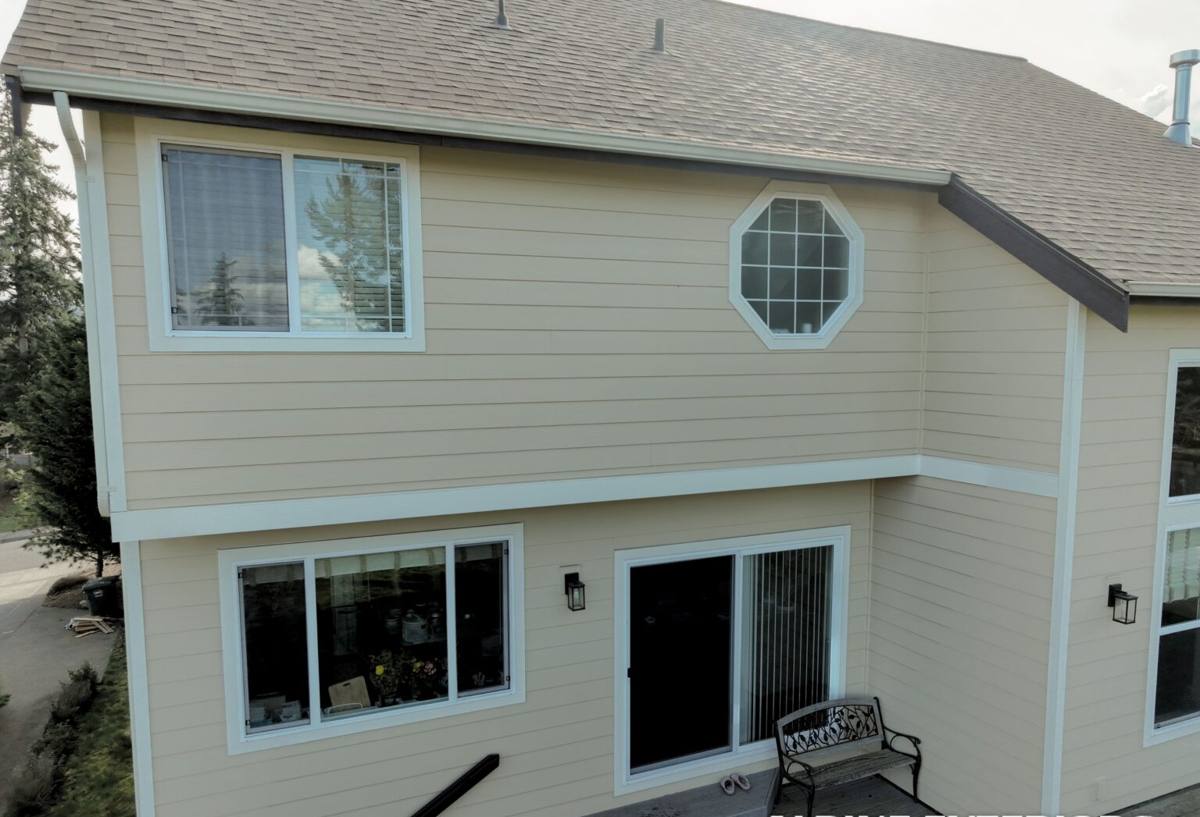
Common Roof Repair Issues We See in Bellingham
Most of the repair calls we run in this area fall into a handful of categories. None of these are exotic problems — they're the predictable result of this climate working on a roof year after year.
- Curling, cracked, or missing shingle tabs from wind and age
- Moss and organic buildup lifting shingles along the butt edges
- Failed or corroded flashing around chimneys, skylights, and sidewalls
- Cracked rubber pipe boots letting water track down vent pipes
- Clogged or undersized valleys backing water up under the roofing
- Nail pops and fastener corrosion, more common closer to the shoreline
- Gutter and roof edge damage from ice, debris, or wind
- Interior staining or attic moisture with no obvious exterior source
That last one deserves a note: a fair number of leaks we're called out for in Bellingham don't show an obvious hole or missing shingle from the ground. Wind-driven rain can enter at a flashing lap and travel along the roof deck before it ever shows up as a ceiling stain, sometimes several feet from where the water actually got in. That's a big part of why a proper diagnosis matters more than a quick patch.
What a Correct Roof Repair Actually Involves
Diagnosis Before Any Repair
The single biggest difference between a repair that lasts and one that fails again in a season is whether the actual water path was found before anything got patched. Chasing a visible symptom — a stain, a curled shingle — without tracing it back to the entry point usually means the repair looks fine and still leaks. On a Bellingham roof, that means checking flashing laps, penetrations, valleys, and moss-affected areas together, not just the spot directly above the stain.
Matching Materials and Techniques
A repair should use materials and installation methods consistent with what's already on the roof, or a documented, deliberate upgrade — not whatever's easiest to grab. Mismatched shingle types, incompatible flashing metals, or the wrong sealant for the substrate all shorten the life of a repair. On older roofs, matching exact shingle color or profile isn't always possible, and we'll tell you that honestly rather than promise an invisible patch we can't deliver.
Addressing the Cause, Not Just the Symptom
If moss caused the lifted shingles, a correct repair also deals with the moss and the conditions that let it grow back — not just the individual shingles it damaged. If a valley is undersized for the water volume it handles in a heavy Whatcom County storm, patching the leak without addressing the valley just delays the next call.
Roof Repair vs. Replacement: How to Tell
Not every roof problem in Bellingham needs a full replacement, and not every roof is a good candidate for another round of patching. Here's how we generally think through it:
| Factor | Repair usually makes sense | Replacement usually makes sense |
|---|---|---|
| Age of roofing material | Well within expected service life | At or past expected service life |
| Extent of damage | Isolated to one area or a few spots | Widespread across multiple slopes |
| Decking condition | Solid, no soft spots or rot | Soft, spongy, or visibly rotted |
| Leak history | First occurrence, clear single cause | Recurring leaks in different spots |
| Moss/organic growth | Surface growth, shingles intact underneath | Growth has degraded shingle granules broadly |
We'll always give you a straight answer on which side of that line your roof falls on. A roof with isolated damage and sound decking almost always gets a repair recommendation from us — there's no reason to sell a full replacement when a targeted fix will hold.
Our Roof Repair Process
- Inspection. We walk the roof (or inspect from a lift/ladder when pitch or safety requires it) and check attic access where possible, looking at flashing, penetrations, valleys, and moss-affected areas together rather than just the reported leak spot.
- Finding the actual water path. Especially on wind-driven leaks, we trace where water is entering versus where it's showing up inside, since those aren't always the same location.
- Honest scope and options. We explain what we found, whether it's a repair or replacement situation, and what a correct fix involves — in plain language, before any work starts.
- The repair itself. Removing damaged material back to sound decking, correcting the underlying cause (moss, undersized flashing, failed boot, etc.), and reinstalling with materials appropriate to the existing roof.
- Cleanup and check. Debris cleared, work area checked, and a walkthrough of what was done and what to watch for going forward.
Materials and Methods We Use
For most Bellingham repair work, that means asphalt shingle systems matched to what's already installed, corrosion-resistant flashing metals appropriate for a marine-influenced climate, and pipe boots and sealants rated for sustained wet exposure rather than budget-grade parts that harden and crack within a few seasons. We don't push a specific manufacturer as a cure-all — the right material choice depends on your existing roof system, your roof's exposure, and what's actually failing. Where a repair calls for flashing work, we favor metal and installation details that hold up to years of wind-driven rain over the cheapest option that will pass on day one but fail early.
Keeping Moss and Debris From Undoing the Repair
A repair is only as good as the roof's ability to shed water afterward, and in Bellingham that means staying ahead of moss and debris buildup. A few habits go a long way between service visits:
- Keep overhanging branches trimmed back to reduce shade and debris on north-facing slopes
- Clear needles and leaf litter from valleys and behind chimneys before they compact
- Have moss treated or removed before it establishes under shingle edges, not after
- Check and clear gutters at least twice a year so water isn't backing up under roof edges
- Have the roof looked at after any major windstorm, even if nothing looks obviously wrong from the ground
What Roof Repair Costs Depend On
We don't quote a flat number without seeing the roof, but the following factors are what actually drive the cost of a repair up or down on most Bellingham homes:
| Cost factor | Why it matters |
|---|---|
| Roof pitch and access | Steep or hard-to-reach roofs take longer and require more safety setup |
| Extent of hidden damage | Rotted decking found once shingles come off adds material and labor |
| Material match | Older or discontinued shingle profiles can be harder to match closely |
| Number of penetrations involved | Each chimney, vent, or skylight flashing repair adds its own labor |
| Moss or debris remediation | Removing established growth adds time beyond the shingle repair itself |
Generally speaking, straightforward repairs — a section of damaged shingles, a failed pipe boot, a flashing reseal — run in the low hundreds to low thousands of dollars, while repairs involving rotted decking, multiple penetrations, or extensive moss damage run higher. We'll always walk you through what's driving the number before we start, not after.
Why a Crew That Already Works in Bellingham Matters
Roofing crews that work primarily in drier or more sheltered parts of the country don't always build the same instincts for wind-driven rain, marine-air corrosion, and moss behavior that a crew working Whatcom County year-round develops. Knowing which roof orientations in this area hold moisture longer, which flashing details tend to fail first in a coastal wind, and how aggressive the moss season really gets here changes how a repair is diagnosed and executed — not just how it's marketed. A crew familiar with Bellingham's specific conditions is more likely to catch the actual cause of a leak on the first visit instead of chasing symptoms across multiple return trips.
It also matters for follow-through. A roof repair isn't a one-and-done transaction in a climate like this — it's part of an ongoing relationship with a home that will need moss management, gutter checks, and the occasional flashing touch-up for as long as you own it. Working with a crew that's local and plans to still be here next storm season is worth more than a marginally lower bid from a company that isn't.
Get a Straight Answer on Your Roof
If you're seeing a stain on a ceiling, moss creeping up a north-facing slope, or you just want a second opinion before winter storms roll in, we're happy to take a look. We'll give you an honest read on whether your roof needs a repair, and if so, what that actually involves — no pressure, no upsell. Fill out the form below to request a free estimate for your Bellingham home.