 Lynden
 Siding Replacement in Bellingham: What the Climate Actually Demands
Bellingham sits close enough to the water that salt air is a real factor in how siding ages, and far enough into Whatcom County's marine weather pattern that driving rain off the Sound and long, gray moss seasons are just part of the deal. Homes here don't fail because owners neglected them — they fail because the siding product wasn't built for this specific combination of moisture, wind-driven rain, and shaded, damp exposures that never fully dry out between fall and spring.
We're a Lynden-based crew that works Bellingham regularly, not a company that treats it as a drive-by market. That matters for siding replacement specifically, because the right approach here isn't generic — it's shaped by lot orientation, tree cover, and how close a given property sits to salt-influenced air moving in off Bellingham Bay.
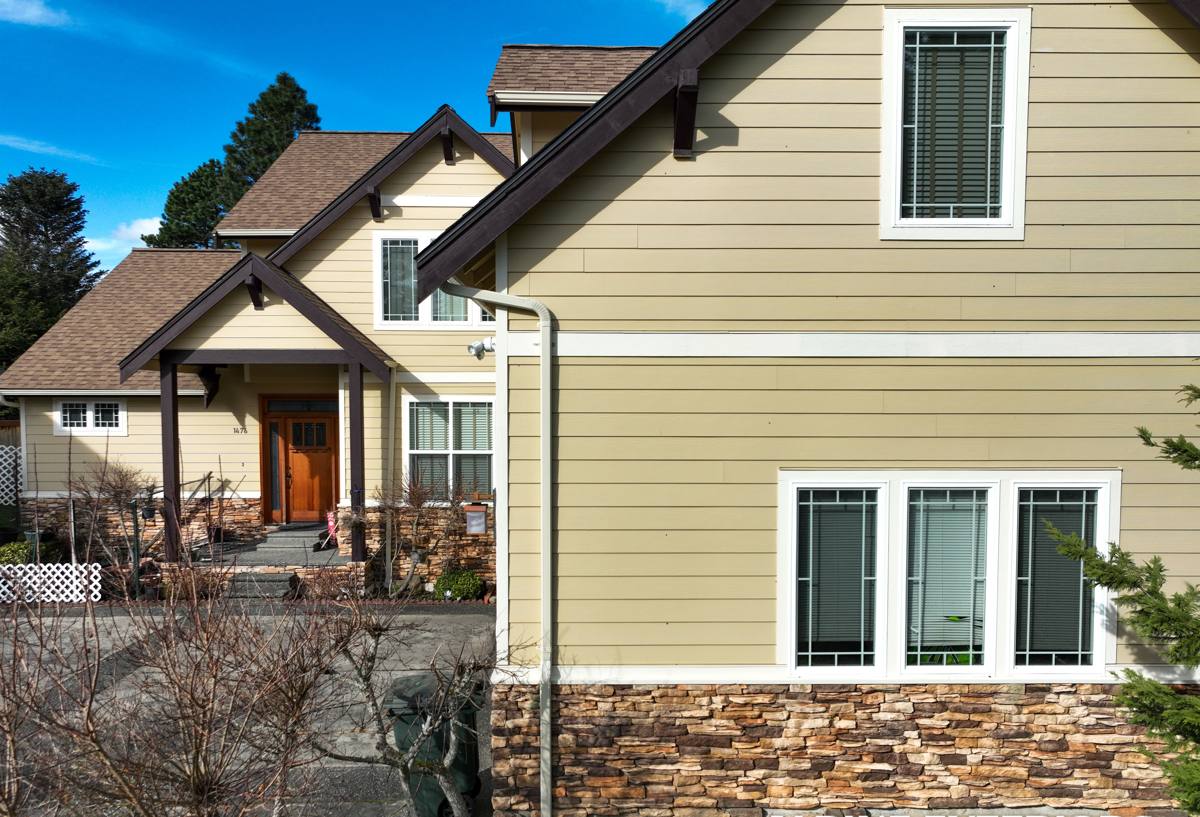
Why Bellingham Homes Wear Out Siding Faster Than the Manufacturer's Brochure Suggests
Salt Air and Fastener Corrosion
Proximity to the water means airborne salt settles on exterior surfaces and accelerates corrosion of exposed metal — trim flashing, fasteners, and any hardware that isn't rated for coastal exposure. Siding itself can look fine while the fasteners and flashing behind it are quietly degrading, which is why material choice and installation hardware both matter more here than in a drier inland town.
Driving Rain and Wall Assembly Moisture
Wind-driven rain doesn't just wet a wall — it pushes moisture sideways, testing every seam, lap, and penetration in the siding system. A wall assembly that isn't properly flashed and drained will trap that moisture behind the cladding, where it does slow, invisible damage to sheathing and framing long before anything shows on the surface.
Moss Season and Constant Surface Dampness
Whatcom County's long, wet, low-light stretch of the year keeps north-facing and tree-shaded walls damp for extended periods. That's exactly the environment moss, algae, and mildew need to establish on siding surfaces — and it's a much bigger problem for products that absorb moisture into their surface than for those engineered to shed it.
Why We Only Install James Hardie Fiber Cement
We don't offer vinyl, LP SmartSide, Cemplank, Allura, primed spruce, or cedar as options — not because those products have no merit anywhere, but because after years of exterior work in this specific climate, we don't think they hold up to Bellingham's combination of salt air, driving rain, and sustained dampness as well as James Hardie's fiber cement does. Here's the honest breakdown:
| Material | Where it struggles in this climate | Trade-off we weren't willing to make |
|---|---|---|
| Vinyl | Can warp or become brittle with temperature swings; seams are a moisture entry point | Lower up-front cost, but shorter realistic service life near salt air |
| LP SmartSide (engineered wood) | Wood-based substrate is vulnerable to sustained moisture exposure at cut edges and seams | Good workability, but higher long-term maintenance risk in a wet climate |
| Cedar | Requires ongoing sealing/staining to resist moisture and moss; natural wood is an organic food source for mildew | Attractive natural look, but the maintenance schedule is demanding here |
| Primed spruce | Primer is a maintenance layer, not a permanent seal; end grain and cut edges are moisture-prone | Lower material cost, but shortest realistic lifespan without diligent upkeep |
| James Hardie fiber cement | Non-combustible, dimensionally stable, factory-cured finish resists moisture absorption | Higher install skill required, but matches this climate's demands |
James Hardie's fiber cement doesn't absorb water the way wood-based products do, it's non-combustible, and its ColorPlus factory finish is baked on rather than field-applied — which means the surface that has to resist Bellingham's moss season and salt air was engineered and tested for exactly that kind of exposure, not just painted and hoped for.
What a Correct Siding Replacement Actually Involves
Swapping old siding for new isn't just a surface job — the parts nobody sees from the street are what determine whether the new siding lasts 10 years or 40. For a Bellingham home, a correct replacement includes:
- Full removal of old siding and inspection of the sheathing underneath for hidden rot or moisture damage
- Repair or replacement of any compromised sheathing before new material goes up
- Installation of a weather-resistant barrier (house wrap) with correctly lapped and taped seams
- Proper flashing at every window, door, and penetration — the single most common failure point in wind-driven rain climates
- Rain-screen or drainage gap detailing where wall assembly and exposure call for it
- Corrosion-resistant fasteners appropriate for coastal-influenced air
- James Hardie panels or planks installed to the manufacturer's specified nailing pattern, gapping, and clearance from grade
- Sealed, caulked transitions at trim, corners, and penetrations using products rated for exterior exposure
Skip any one of these steps and the visible siding can still look correct for a year or two while moisture works on the assembly behind it. That's the failure pattern we see most often when we're called out to look at a home with siding that's underperforming its expected lifespan.
Our Process for Bellingham Siding Replacement Jobs
1. On-Site Assessment
We walk the exterior and identify problem areas specific to the property — shaded walls prone to moss, wind exposure, existing moisture damage, and any trim or flashing that needs attention beyond the field siding itself.
2. Scope and Product Selection
We talk through James Hardie's product lines and finish options for the home, and explain what the HZ5 climate-engineered formulation means for a marine environment like Bellingham's compared to standard fiber cement.
3. Tear-Off and Sheathing Check
Old siding comes off and we inspect what's underneath before anything new goes up. This is the step that gets skipped by crews trying to move fast, and it's the step that determines whether the job actually solves the underlying moisture problem.
4. Weather Barrier and Flashing
House wrap, flashing, and drainage detailing go in before a single piece of Hardie siding is installed. This is invisible in the finished product but does most of the work of keeping wind-driven rain out of the wall assembly.
5. Installation to Spec
Hardie panels or lap siding go up following the manufacturer's installation requirements — correct nailing, gapping, and clearances — which is also what keeps the warranty intact.
6. Final Walkthrough
We review the finished job with the homeowner, including basic care guidance for keeping ColorPlus finishes looking right through Bellingham's moss season.
Why a Lynden-Based Crew Matters for This Job
Siding replacement isn't a one-size-fits-all task, and Bellingham's exposure varies block by block — a home with heavy tree cover and a north-facing wall has a different moisture profile than one closer to open water with more wind and salt exposure. A crew that works Whatcom County regularly recognizes these patterns on sight instead of learning them on your project. Being based in Lynden means we're not driving in from out of the region for a single job and disappearing — we're set up to service, warranty-support, and answer questions on work we do in Bellingham for years afterward.
What This Costs, Realistically
Siding replacement pricing depends on the size and complexity of the home, how much sheathing repair is needed once old siding comes off, the Hardie product line chosen, and site access. We don't publish blanket per-square-foot numbers because they're rarely accurate until we've actually seen the property and the condition of what's underneath the existing siding. What we can tell you upfront: sheathing damage discovered mid-project is the most common reason a quote and a final cost diverge, which is exactly why our process checks for it before we commit to a scope.
Signs a Bellingham Home Needs Siding Replacement Now
- Soft or spongy spots when pressing on siding, especially near the bottom of walls or below windows
- Persistent moss or algae growth that returns quickly after cleaning
- Visible warping, buckling, or gaps between siding panels or boards
- Paint that's peeling or bubbling repeatedly in the same spots, which often signals moisture trapped behind the surface
- Rising energy bills with no other explanation, which can point to a compromised weather barrier
- Visible rot at corners, trim, or anywhere siding meets a window or door
If you're seeing any of these, it's worth getting an actual look rather than waiting — moisture problems behind siding compound quietly and get more expensive the longer they run.
If you're in Bellingham and dealing with aging, damaged, or moss-prone siding, we're happy to take a look and give you a straightforward, no-pressure estimate. Use the form below to get started.