 Lynden
 Birch Bay's Climate Is Not the Same as Inland Lynden
Birch Bay sits right on the water, and that changes what siding has to survive. A few miles inland in Lynden, homes deal with Whatcom County's wet winters and moss pressure, but they're not getting salt spray off Puget Sound driven sideways by wind. Birch Bay properties are. Salt air accelerates corrosion on fasteners, trim, and anything metal on the exterior of a house, and it works on siding surfaces too — softening paint film, drawing moisture into seams, and speeding up the breakdown of anything not built to take it.
Add in driving rain that comes off the water horizontally instead of falling straight down, and you've got a wall assembly that gets tested at the joints and laps far more than a similar house set back from the shoreline. Then there's the moss. Whatcom County's marine climate keeps exterior surfaces damp for long stretches of the year, and shaded, north-facing walls near the water can stay wet almost continuously through fall, winter, and spring. Moss and algae don't just look bad — they hold moisture against the siding surface and, on the wrong product, that moisture finds its way behind it.
None of this means Birch Bay homes need exotic materials. It means the installation has to be done correctly, with the right product, or the climate will find every shortcut within a few years.
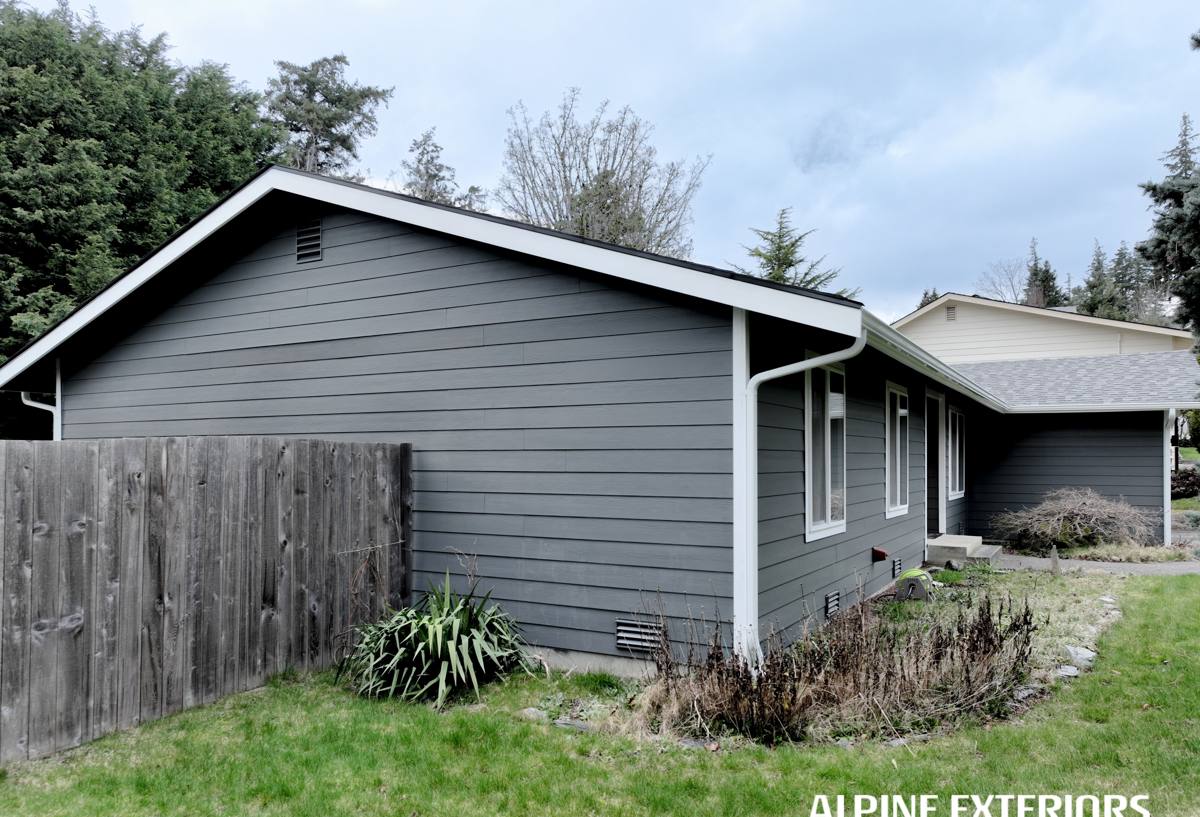
What Salt Air, Rain, and Moss Actually Do to Siding Over Time
Salt and Metal Components
Fasteners, flashing, and trim accessories corrode faster in a salt-air environment than they would a few miles inland. Once a fastener starts to rust, it can bleed through the siding face and weaken its hold over time. This is why fastener selection and flashing material matter more here than on a typical Lynden job.
Driving Rain and Water Intrusion
Horizontal rain pushes water into laps, seams, and any gap around windows, doors, and penetrations. A wall system that relies on caulk and paint alone to stay dry will eventually fail at these points. Correct flashing and drainage details behind the siding matter more than the siding material itself when it comes to keeping water out of the wall.
Moss, Algae, and Sustained Moisture
Extended dampness feeds moss and algae growth, especially on shaded or north-facing elevations near the water. Beyond appearance, sustained moisture at the siding surface stresses paint film and, on moisture-sensitive substrates, can lead to swelling or softening at the edges and butt joints where water collects.
Why We Install Only James Hardie Fiber Cement
We made a decision as a company to install James Hardie fiber cement siding exclusively — not vinyl, not LP SmartSide, not Cemplank, not Allura, not primed spruce or cedar. That's not a marketing position; it's a standard we hold because of what we've seen play out on homes in this climate over years, not just at installation.
Fiber cement is non-combustible and doesn't rely on an engineered-wood core, which matters in a marine environment where sustained moisture is the norm rather than the exception. Hardie's HZ5 product line is specifically engineered for climates that see extended damp and freeze-thaw cycling, which describes Whatcom County's coastal edge well. The factory-applied ColorPlus finish is baked on under controlled conditions, which gives it better resistance to fading and moisture-related failure at the surface than a field-applied paint job, and it comes with its own finish warranty separate from the substrate warranty.
We're not going to tell you every other siding product is unusable — that's not honest, and it's not our call to make about someone else's home. What we will say is that after years of installing and later re-inspecting siding jobs across Whatcom County, fiber cement done right has consistently outperformed the alternatives in exactly the conditions Birch Bay throws at a house: salt air, driving rain, and long stretches of damp shade.
What a Correct Installation Involves Here
The material is only half the equation. A Hardie installation that's done to spec in a coastal environment involves several details that get skipped more often than they should:
Weather-Resistive Barrier and Drainage Plane
Every wall needs a continuous weather-resistive barrier behind the siding, lapped correctly from the bottom up so water sheds outward instead of working its way in. On a Birch Bay home, we treat this layer as non-negotiable, not an afterthought under the siding.
Flashing at Every Penetration
Windows, doors, hose bibs, vents, and any other penetration in the wall need proper flashing integrated with the weather-resistive barrier — not caulk used as a substitute for flashing. Caulk fails; flashing sheds water by design and keeps working after the caulk eventually cracks.
Fastener and Trim Selection
In a salt-air setting, fastener quality is not a place to cut costs. We use fasteners and trim accessories rated for the exposure, not just whatever is standard on an inland job.
Clearance from Grade and Hard Surfaces
Hardie siding needs proper clearance from the ground, roof lines, and decks to avoid sustained wicking and splash-back moisture. This is a common area where older installations on Birch Bay homes fall short, and it's one of the first things we check on an existing house.
Caulking and Joint Treatment
Butt joints and edges get treated according to Hardie's published installation instructions, using compatible sealants at the points designed to be sealed — not everywhere, and not as a substitute for flashing.
Our Process for a Birch Bay Siding Job
- On-site assessment — we look at the existing siding, wall assembly, moisture staining, and any problem areas specific to the home's exposure to wind and water.
- Scope and product selection — we determine which Hardie plank profile, panel, or trim combination fits the home and confirm the HZ line appropriate for the site's exposure.
- Tear-off and wall prep — old siding comes off, sheathing is inspected for hidden moisture damage, and any repairs happen before anything new goes on.
- Weather barrier and flashing installation — this is the step that determines whether the wall stays dry for the next several decades, and we don't rush it.
- Siding installation — installed to Hardie's fastening and clearance specifications, not generic siding practice.
- Trim, caulking, and final detailing — joints, corners, and penetrations get finished per spec.
- Final walkthrough — we go over the finished job with the homeowner before calling it done.
Cost Factors on a Birch Bay Home
Every home is different, but a few factors consistently move the price on jobs near the water:
| Factor | Why It Affects Cost |
|---|---|
| Home size and wall complexity | More corners, dormers, and cutouts mean more labor and trim work |
| Condition of existing sheathing | Hidden moisture damage found during tear-off requires repair before siding goes on |
| Exposure level | Homes with direct water-facing exposure may need upgraded flashing and fastener detailing |
| Siding profile chosen | Lap width, panel style, and trim details vary in material and labor cost |
| Access and site conditions | Waterfront lots, retaining walls, and tight setbacks can affect staging and labor time |
We give straightforward, itemized estimates rather than a single lump number, so homeowners can see exactly where the cost is coming from.
Why It Matters That We Already Work Birch Bay
A crew that only occasionally works this close to the water can miss details that a coastal-familiar crew treats as routine — proper flashing sequencing for wind-driven rain, fastener choices that account for salt exposure, and clearance details that keep moss and moisture from building up on shaded elevations. We're based out of Lynden and work across Whatcom County, including Birch Bay regularly enough that these aren't special-case decisions for us — they're standard practice on every job out here.
That familiarity also shows up in smaller ways: knowing which elevations on a typical Birch Bay lot take the worst of the weather, and adjusting detailing accordingly before it becomes a problem five years down the road.
Maintenance Checklist for Homeowners Near the Water
- Rinse siding periodically to remove salt residue, especially on elevations facing the water
- Inspect caulk joints annually and re-caulk where cracking or gaps appear
- Keep gutters clear so water doesn't overflow and run down the siding face
- Trim back vegetation and landscaping that keeps siding shaded and damp
- Watch for moss buildup on north-facing or shaded walls and address it before it spreads
- Check fastener heads and trim pieces for early signs of corrosion or staining
- Confirm clearance from grade, decks, and roof lines hasn't been reduced by landscaping changes over time
Signs an Existing Birch Bay Home Needs New Siding
Not every problem shows up right away. A few signs worth taking seriously on a home in this location:
- Soft or swelling spots at butt joints or bottom edges of siding
- Persistent moss or algae that returns quickly after cleaning
- Peeling or bubbling paint that keeps recurring in the same spots
- Visible rust streaks running down from fasteners or trim
- Warping, cupping, or visible gaps opening up between boards
If you're seeing any of these, it's worth having someone look at the wall assembly underneath, not just the surface — by the time siding shows damage, moisture has often already reached the sheathing.
If you own a home in Birch Bay and want a straight answer on what your siding needs, we're happy to take a look. Reach out for a free, no-pressure estimate using the form below.