 Lynden
 Why Siding Wears Out Faster in Blaine Than a Few Miles Inland
Blaine sits right on the water at the northwest corner of Whatcom County, and that location changes what siding has to deal with compared to homes further inland around Lynden or Everson. Salt-laden air off the bay works its way into fasteners, trim seams, and any exposed cut edge. Wind-driven rain off the water hits west- and south-facing walls with more force and more frequency than the regional average. And because so many Blaine lots sit close to the water with mature trees and fog that lingers into the morning, siding stays damp longer than it does in drier, more open parts of the county. None of this means siding is a lost cause in Blaine — it means the material and the installation details matter more here than they do in a lot of other towns we work in.
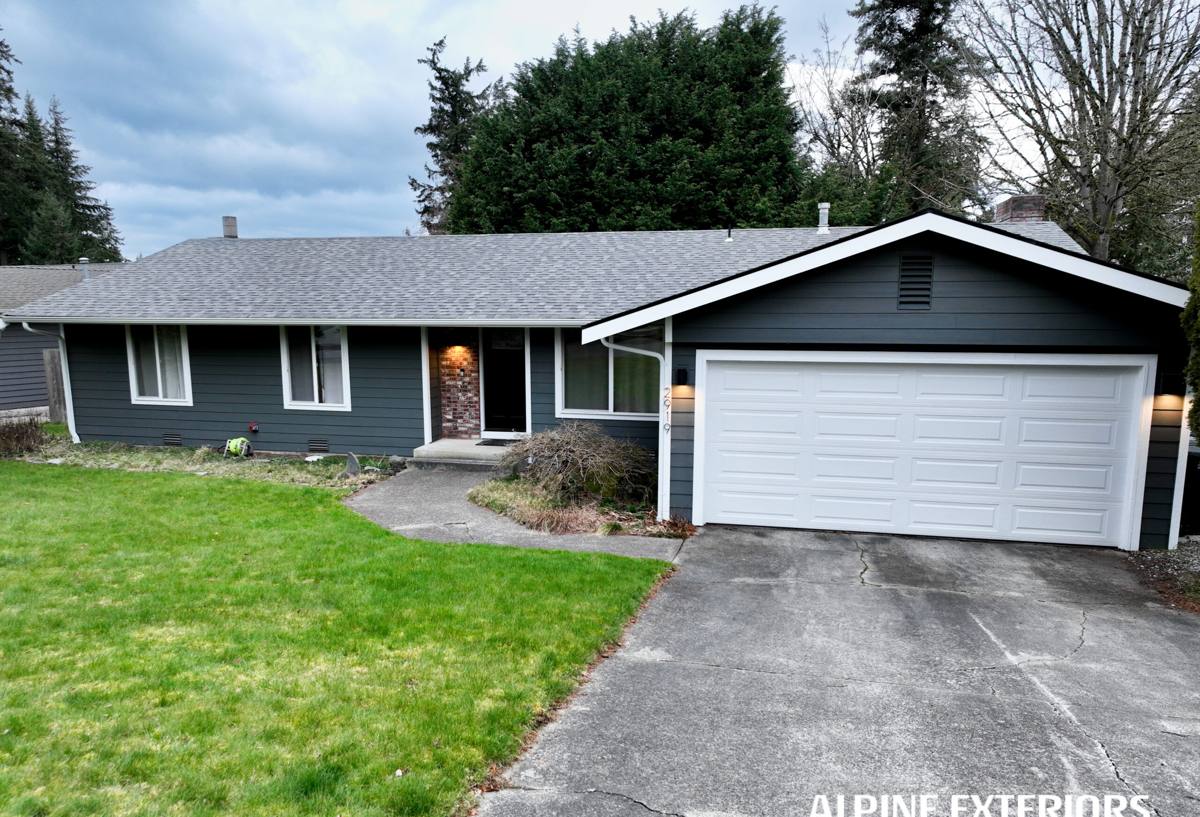
Three Things Working Against Your Siding Here
Salt Air
Airborne salt doesn't just sit on the surface — it accelerates corrosion on fasteners, hinges, and any metal flashing that isn't rated for a marine-adjacent environment. Over years, a siding job built with the wrong fasteners or unprotected metal trim will show rust streaks and loosening long before the siding panels themselves are worn out.
Driving Rain
Water that hits a wall horizontally, pushed by wind off the strait, finds every gap a calm rain would never reach. Butt joints, window and door flashing, and the bottom starter course are the places driving rain exploits first. A siding job that looks fine on a dry inspection can still be letting water behind the cladding if those details weren't done right.
A Long Moss Season
Between the marine humidity and the amount of shade on many Blaine properties, moss and algae have a long window to take hold — often close to nine months of the year rather than the shorter season inland areas see. Moss holds moisture against the wall surface, which is exactly what you don't want sitting on any siding material long-term, painted wood especially.
Why We Standardize on James Hardie for Homes Like These
We only install James Hardie fiber cement siding, and a coastal town like Blaine is a big part of why. Hardie's HZ5 product line is engineered specifically for climates like the Pacific Northwest — colder, wetter, with real freeze-thaw cycles — rather than being a one-formula-fits-everywhere product. Fiber cement itself is dimensionally stable in a way that wood-based and vinyl products aren't: it doesn't swell, cup, or warp when it takes on moisture the way engineered wood siding can, and it doesn't soften or distort in direct sun the way vinyl can over time. It's also non-combustible, which matters more every year as wildfire smoke seasons stretch further north.
The ColorPlus factory finish is another reason we standardized on this product. It's baked on in a controlled environment through multiple coats, which holds color and resists fading and chipping far better than field-applied paint — a real advantage on a wall that's taking direct salt spray and UV reflection off the water. Between the engineered product line, the finish, and a strong transferable warranty backing it, Hardie gives us a system we can install once and stand behind, rather than a product we know we'll be back to patch or repaint in a few years.
What a Correct Installation Actually Requires Here
Fiber cement siding is only as good as the details underneath it, and in a coastal environment those details carry more weight than they would in a drier inland install.
- Sealed cut edges — every field cut needs to be primed or sealed before it goes up, since a raw edge is the fastest place for moisture to wick into the board.
- Corrosion-resistant fasteners — stainless steel or hot-dip galvanized fasteners belong on a job this close to salt water; standard fasteners will show rust bleed years before the siding itself has any problem.
- Correct flashing and weather-resistive barrier — window heads, door tops, and any horizontal trim need flashing that actually sheds water outward, layered correctly behind the weather barrier, not just caulked over the top.
- Proper clearances — Hardie's installation requirements call for specific gaps at grade, roofline, and abutting trim so the board can shed water and dry rather than wick moisture from standing contact.
- Joint and butt-seam treatment — every horizontal and vertical seam is a place driving rain will test; these need to be caulked or flashed per spec, not left to chance.
Skip any one of these and you can end up with a wall that looks correct from the street but is trapping moisture behind it — the kind of problem that doesn't show up until years later as rot in the sheathing, not just a cosmetic siding issue.
How Different Siding Materials Actually Hold Up on a Blaine Property
| Material | Response to Salt Air & Driving Rain | Typical Ongoing Maintenance |
|---|---|---|
| James Hardie fiber cement | Dimensionally stable, non-combustible, factory finish resists salt and UV fading | Occasional rinse; repaint only if ever needed decades out |
| Vinyl siding | Can warp or distort under sustained heat/UV reflection off water; seams are a moisture entry point | Panels can crack or come loose over time; hard to spot-repair invisibly |
| Cedar or primed wood | Absorbs moisture readily; prone to cupping, checking, and rot without diligent upkeep in a wet marine climate | Regular re-staining or repainting, caulk maintenance, moss/mildew treatment |
| Engineered wood (e.g. LP SmartSide) | Wood-based core is more moisture-sensitive at cut edges and seams than fiber cement | Careful edge sealing and monitoring required, especially in a coastal setting |
Our Process for a Blaine Fiber Cement Job
- Site walk and estimate — we look at wall exposure, existing moisture damage, trim condition, and which elevations take the worst of the wind-driven rain before we quote anything.
- Tear-off and sheathing check — once the old siding is off, we inspect the sheathing and weather barrier underneath for any hidden rot or moisture damage before covering it back up.
- Weather barrier and flashing — this is where most long-term failures actually start, so it gets done to spec before a single piece of Hardie board goes up.
- Installation — panels, fasteners, gaps, and joints installed to Hardie's specifications for our climate zone, not generic guidelines.
- Final walkthrough and cleanup — we go over the finished job with you, including care specifics for a waterfront property.
What Actually Drives Cost on a Job Like This
| Cost Factor | Why It Matters in Blaine |
|---|---|
| Existing wall condition | Hidden rot or moisture damage under old siding adds sheathing repair before new siding can go on |
| Home size and number of stories | More wall area and more difficult access both add labor time |
| Siding profile and trim detail | Lap, shingle, or board-and-batten profiles and trim complexity change material and labor needs |
| Flashing and detail work | Waterfront-facing elevations often need more careful flashing work than a sheltered inland wall would |
| Site access | Tight lots, slopes, or landscaping close to the house can slow tear-off and staging |
Living With Fiber Cement Siding in a Salt-Air Climate
A correctly installed Hardie system is genuinely low-maintenance, but "low-maintenance" isn't "no-maintenance" a few blocks from the water. A little seasonal attention keeps it performing the way it's designed to.
- Rinse the siding periodically to clear salt film buildup, especially on walls that face the water directly.
- Keep gutters and downspouts clear so water isn't sheeting down the wall face during heavy rain.
- Trim back vegetation and branches that shade the siding and slow drying — this is the single biggest factor in how fast moss takes hold.
- Check shaded, north-facing sections for early moss or algae growth and address it before it spreads.
- Inspect caulking at trim, window, and door joints every year or two and have any cracked sections redone.
Why It's Worth Hiring a Crew That Already Works Blaine
A siding crew that's only ever worked drier, inland jobs can install a technically correct system and still miss the details that matter most on a waterfront property — the extra attention to fastener choice, the flashing sequence on a wall that takes rain from an angle instead of straight down, or how much clearance to leave knowing moss season runs most of the year. We work throughout Whatcom County, including Blaine, and we bring that same coastal-specific approach to every job here rather than treating it as a standard inland install. That also means we're not far away if a warranty question comes up years down the road.
If you're thinking about re-siding a home in Blaine, we're happy to take a look and walk you through what your specific walls need. Reach out for a free, no-pressure estimate — there's a form right below to get started.