 Lynden
 Building Decks for Custer's Coastal Climate
Custer sits close enough to the water that homes here deal with a different set of conditions than a deck builder would plan for further inland. Salt-laden air moves in off the bay, driving rain comes through sideways for months at a stretch, and the shoulder seasons bring a moss and algae bloom that coats anything horizontal. A deck built without those three factors in mind will show it within a few years — corroding fasteners, cupped boards, and a green film that never fully goes away no matter how often it's pressure washed.
We build decks for homes in and around Custer with those realities as the starting point, not an afterthought. That means specific fastener grades, specific drainage details, and a board selection conversation that's honest about maintenance rather than just upselling the most expensive product on the shelf.
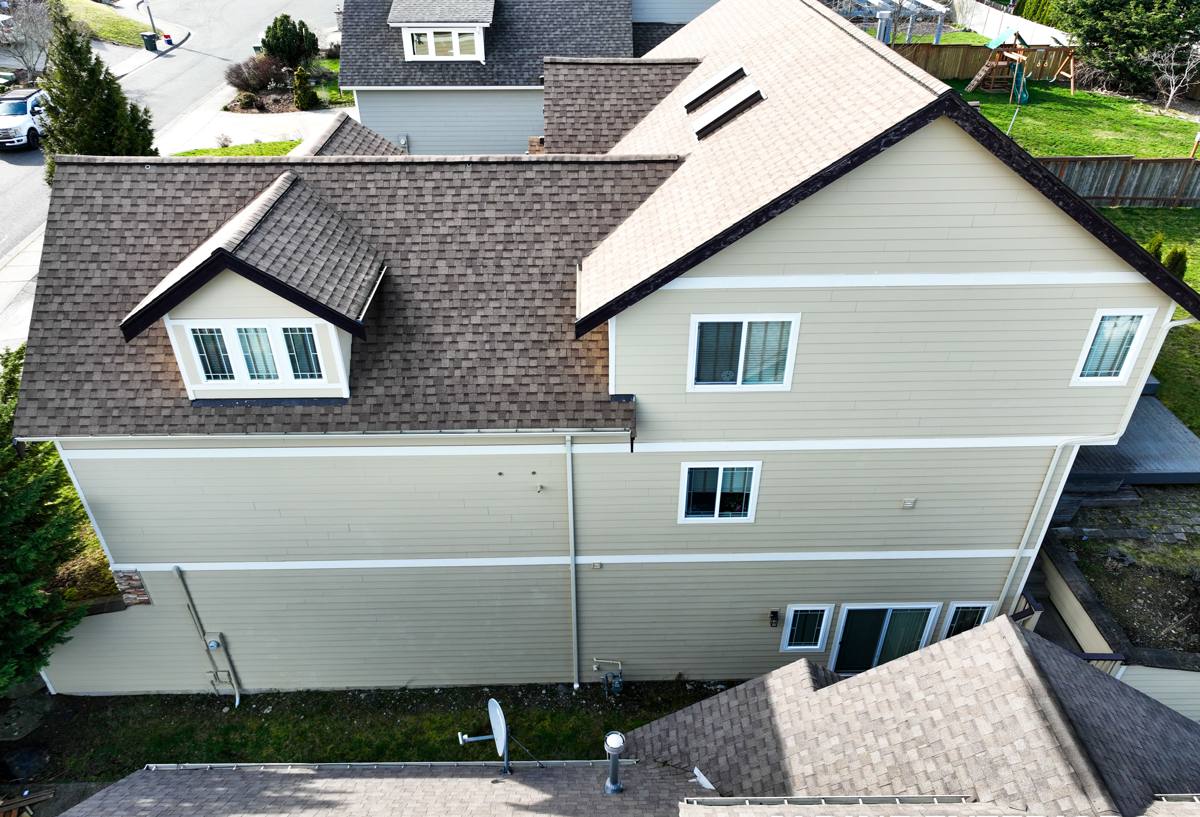
What Salt Air Does to a Deck Over Time
Salt air is corrosive to metal, full stop. It doesn't take direct ocean spray to matter — coastal Whatcom County air carries enough salt content that unprotected or under-rated fasteners, brackets, and hardware will start rusting years before they would in a drier, inland location. Once a structural fastener starts corroding, it loses holding strength long before it looks bad enough for a homeowner to notice.
Where this shows up first
- Nail heads and screw heads bleeding rust streaks down the decking
- Corroded joist hangers that lose their load rating from the inside out
- Railing post hardware that seizes or weakens at connection points
- Pitting on any exposed steel, even galvanized products rated for standard use
The fix isn't complicated, it's just a matter of not cutting corners: stainless steel or high-grade coated fasteners rated for coastal or salt exposure, hot-dip galvanized (not just electro-galvanized) structural hardware, and connectors sized and coated to the manufacturer's coastal-use spec. It costs more up front. It's also the difference between a deck that's still structurally sound at year fifteen and one that needs a hardware overhaul at year seven.
Designing for Driving Rain, Not Just Rain
Most of the Pacific Northwest gets a lot of rain. What makes Custer and the surrounding coastal stretch of Whatcom County different is how often that rain comes in at an angle, pushed by wind off the water. Driving rain finds its way into gaps and connections that would stay dry in a straight downpour — ledger board attachments, stair stringers, any spot where framing meets siding.
The details that actually keep water out
- Proper ledger flashing that directs water away from the house band board, not just a bead of caulk
- Board spacing calculated for the specific decking product's expansion and drainage needs
- Joist tape on top of all structural framing, so any water that does get through doesn't sit against exposed wood
- Post bases that hold posts up off standing water instead of sitting flush on a wet slab or footing
- A slight, consistent slope away from the house across the whole deck surface
None of this is visible once the deck is finished, which is exactly why it matters who builds it. A deck can look identical to one built correctly and still be trapping water against the house framing where you can't see it until there's a repair bill.
Moss Season and Surface Maintenance
Custer gets a long stretch of cool, damp, low-sun months where moss and algae get a real foothold on any horizontal wood or composite surface. It's not just cosmetic — moss holds moisture against the deck surface, and on wood decking that constant damp contact accelerates rot at the board surface and around fastener heads.
We can't eliminate moss season, but we can build a deck that sheds it better and makes cleaning it manageable instead of miserable:
- Board spacing and orientation that lets airflow and drainage work instead of trapping moisture between boards
- Decking materials with a documented track record for algae and mildew resistance in wet PNW conditions
- Avoiding low, shaded, poorly-ventilated deck areas wherever the site design allows it
- A realistic maintenance conversation up front, so you know what a yearly cleaning routine looks like before you pick a material
Choosing the Right Decking Material for This Climate
There's no single "best" decking material — there's a best material for a given budget, look, and maintenance appetite, and in a climate like Custer's that decision matters more than usual. Here's how the common options actually perform under salt air, driving rain, and heavy moss exposure, based on how these products behave in the field, not marketing claims.
| Material | Moisture & Moss Resistance | Maintenance | Typical Lifespan Here |
|---|---|---|---|
| Pressure-treated wood | Moderate — needs sealing to hold up | Annual cleaning and periodic re-sealing | 10-15 years with upkeep |
| Cedar | Naturally decay-resistant, but surface grays and hosts moss without upkeep | Regular cleaning, occasional oiling | 15-20 years with upkeep |
| Capped composite | Strong — non-porous cap resists moisture and algae staining | Periodic washing, no sealing needed | 25-30+ years |
| Uncapped/older-generation composite | Weaker — porous surface can hold moisture and stain | More frequent cleaning | 15-20 years |
For most Custer homeowners, we steer conversations toward capped composite when the budget allows it, precisely because it holds up against algae and moisture with the least ongoing effort. That said, plenty of homeowners have good reasons to want real wood, and we'll build a wood deck correctly and tell you honestly what the maintenance schedule needs to look like to get the lifespan above.
Structural Considerations Specific to This Area
Beyond material choice, a few structural decisions matter more in this location than they might elsewhere:
- Footing depth and drainage — footings need to account for local soil drainage patterns so water doesn't pool against posts and footings through the wet months
- Ledger attachment — the connection to the house is the single most important structural and moisture point on any attached deck, and it gets extra attention given how much wind-driven rain hits exterior walls here
- Railing hardware — anything holding a railing post needs to be rated for the corrosion exposure discussed above, since a failed railing connection is a safety issue, not just a cosmetic one
- Stair stringers — a common weak point for rot because they're vertical, exposed, and often under-flashed on older decks
Our Process for Custer Deck Projects
Every deck we build in the Custer area follows the same process, adjusted for the specific home and site:
- On-site assessment — we look at drainage, sun exposure, existing structure if it's a rebuild, and how the deck ties into the house
- Material and design conversation — an honest look at options within your budget, with the maintenance trade-offs explained up front
- Permitting — we handle the local permit process so the deck is built to code, which also protects your home insurance and resale value
- Construction — proper flashing, coastal-rated hardware, correct drainage slope, and joist protection as standard practice, not an upsell
- Final walkthrough — we go over the finished deck with you, including what maintenance to expect for the specific material you chose
Repair, Rebuild, or New Build
Not every project starts from bare ground. A lot of what we do in Custer is evaluating an existing deck that's showing its age — soft boards, rusted hardware, a railing that's gotten wobbly — and giving a straight answer about whether it needs a repair, a partial rebuild, or a full replacement. Salt air and driving rain tend to hit hardware and connection points hardest, which sometimes means the decking looks fine while the structure underneath doesn't. We'll tell you which situation you're actually in before recommending a scope of work.
Signs it's worth having a deck looked at
- Rust staining around fastener heads or hardware
- Boards that feel soft, springy, or spongy underfoot
- Persistent moss or algae that comes right back after cleaning
- Railing posts that move or flex when pushed
- Gaps or separation where the deck meets the house
Why Local Experience Matters for This Job
A deck built to a generic national standard will pass inspection and look fine on day one. The problems show up two, five, ten years in, and by then they're usually hidden behind decking boards or inside a connection you can't see without pulling something apart. Building decks specifically for Whatcom County's coastal conditions — the salt exposure, the driving rain, the long moss season — means making a set of small decisions correctly the first time: the right fastener grade, the right flashing detail, the right material for how much upkeep you actually want to do. That's the difference between a deck that needs real attention at year seven and one that's still solid at year twenty-five.
If you're planning a new deck or want a straight assessment of an existing one, we're happy to take a look and put together a free, no-pressure estimate — just fill out the form below.