 Lynden
 Custer's Climate Puts Real Demands on Exterior Siding
Custer sits close enough to the water that homes here deal with a different mix of weather stress than siding a few miles inland. Salt-laden air off the nearby coastal waters works into seams, fastener heads, and any exposed wood fiber over time. Add Whatcom County's long, driving rain seasons and the shaded, damp conditions that let moss and algae take hold on north-facing walls, and you've got a climate that will expose every weak point in a siding system within a few years, not a few decades.
This isn't a reason to panic about your home's exterior — it's a reason to be specific about material choice and installation detail. Siding that's marginal in a dry inland climate can fail outright in a wet, salt-exposed one. We install James Hardie fiber cement siding on Custer homes because it's engineered for exactly this kind of exposure, and because we know what the installation has to get right to actually deliver on that engineering.
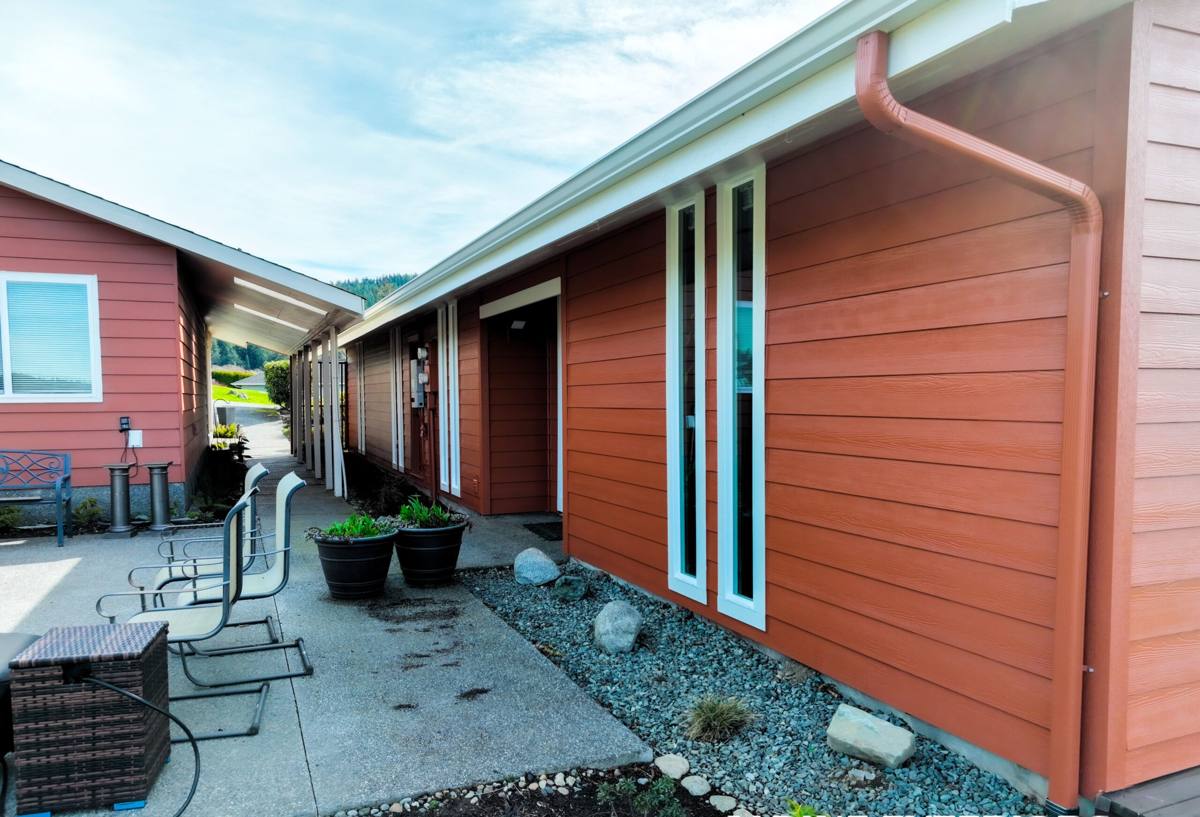
Why Salt Air, Rain, and Moss Matter More Here Than the Brochure Suggests
Salt Air
Airborne salt is corrosive to metal fasteners, flashing, and trim, and it accelerates the breakdown of coatings that aren't formulated to handle it. Siding with a weak factory finish will chalk, fade, or lose adhesion faster in a salt-exposed environment than the same product would fifty miles inland.
Driving Rain
Wind-driven rain doesn't just fall on a wall — it gets pushed sideways and upward into laps, joints, and penetrations. A siding system is only as good as its drainage plane and flashing details. Caulk and paint alone don't keep water out of a wall assembly; the water has to have somewhere to go once it gets behind the cladding.
Moss and Algae Season
Shaded exterior walls, gutters that drain slowly, and long stretches of damp weather give moss and algae a head start on organic siding materials. Wood-based products need consistent maintenance to resist this. Fiber cement doesn't feed moss growth the way wood fiber does, but even Hardie siding needs periodic washing if it's tucked under trees or against a north wall that rarely sees direct sun.
Why We Install Only James Hardie Fiber Cement
We don't install LP SmartSide, vinyl, Cemplank, Allura, primed spruce, or cedar. That's not a marketing position — it's the result of watching how different materials actually hold up in this specific climate. Wood-based composite sidings depend on their factory coating and careful field sealing at every cut edge to keep moisture out; once that coating is compromised, the wood substrate underneath is vulnerable to swelling and rot, and Custer's rain and salt exposure gives it plenty of opportunities to fail. Vinyl expands and contracts with temperature swings and can warp or crack over time, and it offers no fire resistance. Cedar is a beautiful, legitimate material, but it's an ongoing maintenance commitment — staining, sealing, and monitoring for moisture — that most homeowners underestimate when they choose it.
James Hardie fiber cement is non-combustible, doesn't swell or rot from moisture the way wood does, and its ColorPlus factory finish is baked on and warranted against fading and peeling in a way field-applied paint can't match. Hardie also engineers specific product formulations (their HZ climate zone system) for different exposure conditions, so the plank going on a Custer wall is built for a wetter, harsher climate than the version sold in dry regions of the country.
James Hardie Product Options for This Area
| Product | Best Use | Why It Fits Custer |
|---|---|---|
| HardiePlank lap siding | Most exterior walls | Classic profile, factory-finished, strong track record in wet coastal climates |
| HardieShingle | Accent gables, dormers | Cedar-shingle look without the moisture maintenance burden |
| HardiePanel | Modern/board-and-batten styles | Fewer horizontal laps for water to work into on exposed walls |
| HardieTrim | Corners, window and door surrounds | Matched engineered trim resists the swelling that plagues wood trim in damp corners |
ColorPlus finishes come in a range of factory-baked colors that hold up to UV and salt exposure far better than field-applied paint, and they carry a longer finish warranty than most homeowners get from a repaint.
What a Correct Installation Actually Involves
The material is only half the equation. We've seen Hardie siding installed poorly enough to undercut every advantage the product offers. In a climate like Custer's, these details aren't optional extras — they're what separates siding that lasts thirty-plus years from siding that causes problems in five:
- A proper drainage gap (rain screen) behind the siding so any water that gets past the cladding can drain and dry instead of sitting against the wall sheathing
- Correct fastener type, spacing, and placement per Hardie's published installation instructions — under- or over-driven nails compromise both the seal and the warranty
- Flashing at every window, door, and roof-to-wall intersection, installed to shed water downward and outward, not caulked as a substitute for flashing
- Proper clearance between the bottom of the siding and grade, decks, or roof lines so splashback and standing moisture don't sit against the material
- Factory-cut edges used wherever possible, and field cuts sealed per Hardie's specifications, since an unsealed cut edge is the one place fiber cement can absorb water
- Caulking used correctly and sparingly — as a secondary seal, not as the primary defense against water intrusion
Any one of these done wrong can lead to moisture problems behind the siding years down the road, regardless of how good the material itself is. This is the piece of the job that separates a crew that occasionally installs Hardie from one that installs it as its core business.
The Building Envelope Around It
Before new siding goes up, we check the house wrap or building paper, the condition of the sheathing underneath, and any signs of prior moisture damage. In a wet climate, siding installed over compromised sheathing just hides a problem instead of fixing it. If we find soft spots or rot during tear-off, we address them before anything new goes on the wall — that's not an upsell, it's the point of doing the job right the first time.
Our Process for a Custer Siding Job
- On-site assessment. We look at your home's exposure — how much salt air and driving rain hit each wall, which sides stay shaded and damp, where moss is already established — and walk you through what that means for the job.
- Product and color selection. We help you choose the right Hardie product line and ColorPlus color for your home's style and exposure, including where HardieShingle or HardiePanel accents make sense.
- Tear-off and prep. Existing siding comes off, the sheathing and house wrap get inspected and repaired as needed, and we correct any drainage or flashing issues we find before new material goes up.
- Installation to spec. Rain screen, fastening, flashing, and clearances are installed to Hardie's requirements and manufacturer warranty conditions — not shortcuts to save a day of labor.
- Final walkthrough and cleanup. We review the finished work with you, confirm everything is sealed and finished correctly, and leave the site clean.
What Drives Cost on a Job Like This
| Factor | Why It Matters |
|---|---|
| Home size and wall complexity | More corners, gables, and dormers mean more cutting, trim, and labor time |
| Extent of tear-off and repair | Rot or sheathing damage found underneath the old siding adds material and labor |
| Product mix | Plank-only jobs cost less than jobs adding HardieShingle accents or HardieTrim detail work |
| Access and site conditions | Tight lots, multi-story walls, or landscaping close to the house can add setup time |
| Color and finish selection | Standard ColorPlus colors versus premium or custom options can shift material cost |
We give straightforward, itemized estimates rather than vague lump-sum numbers, so you can see exactly what you're paying for.
Living With Hardie Siding in a Salt-Air, High-Moss Climate
Once it's installed correctly, James Hardie siding in this climate is genuinely low-maintenance compared to wood or composite alternatives — but "low-maintenance" doesn't mean "no maintenance." A rinse with a garden hose once or twice a year knocks down salt residue and slows algae and moss growth, especially on shaded walls. Keep gutters clear so water isn't overflowing down the siding face, and trim back vegetation that's holding moisture against the wall. These are simple habits, not a maintenance schedule, and they go a long way toward protecting the finish over the decades the material is built to last.
Why Hiring a Crew That Already Works This Area Matters
Whatcom County's coastal-influenced microclimates aren't uniform — a wall facing prevailing weather off the water needs different attention than a sheltered inland wall a few miles away. A crew that regularly works Custer and the surrounding Lynden area has already seen how local exposure plays out on real homes: which walls take the worst of the driving rain, where moss establishes fastest, and what installation details actually hold up here versus what looks fine on paper. That local pattern recognition shows up in better flashing decisions, better product recommendations, and fewer callbacks.
Before you hire anyone for a siding project, it's worth checking a few things:
- Are they a certified or established James Hardie installer, or is this an occasional add-on to other siding work?
- Do they carry current liability insurance and, if required, bonding for exterior work in Washington?
- Will they walk you through the actual installation details — rain screen, flashing, fastening — or just quote a square footage price?
- Can they explain why they recommend a specific Hardie product line for your home's exposure, rather than a one-size-fits-all answer?
- Do they provide a written, itemized estimate you can compare against other bids?
Get a Straight Answer for Your Home
Every Custer home carries a different mix of sun, shade, wind, and rain exposure, and that affects both product choice and installation detail. If your siding is showing moss, fading, soft spots, or you're just planning ahead for a home in a demanding coastal climate, we're glad to take a look and give you a straightforward, no-pressure estimate — no obligation, just an honest read on what your home needs.