 Lynden
 Why Custer Homes Wear Out Siding Faster Than You'd Expect
Custer sits close enough to the water and open farmland that homes here take a different kind of beating than siding was originally designed for on paper. It's not one dramatic event that ruins a wall of siding — it's the slow, repeated cycle of salt-laden air off the Strait, wind-driven rain that gets pushed sideways under eaves and around trim, and a moss season that can run from October clear through April in a wet Whatcom County year. Any one of those is manageable. All three, year after year, is what shortens the life of siding that wasn't built or installed to handle it.
Salt air is corrosive to exposed metal fasteners and flashing, and it accelerates the breakdown of paint film on wood and composite products. Driving rain doesn't just wet the surface of your siding — it tests every seam, joint, and penetration, and it finds the ones that weren't sealed or lapped correctly. Moss and algae thrive in the shaded, damp north and west walls that are common on Custer lots with mature trees or close-set fencing, and they hold moisture against the siding surface long after a storm has passed. Siding replacement done right in this neighborhood has to account for all three, not just look good on installation day.
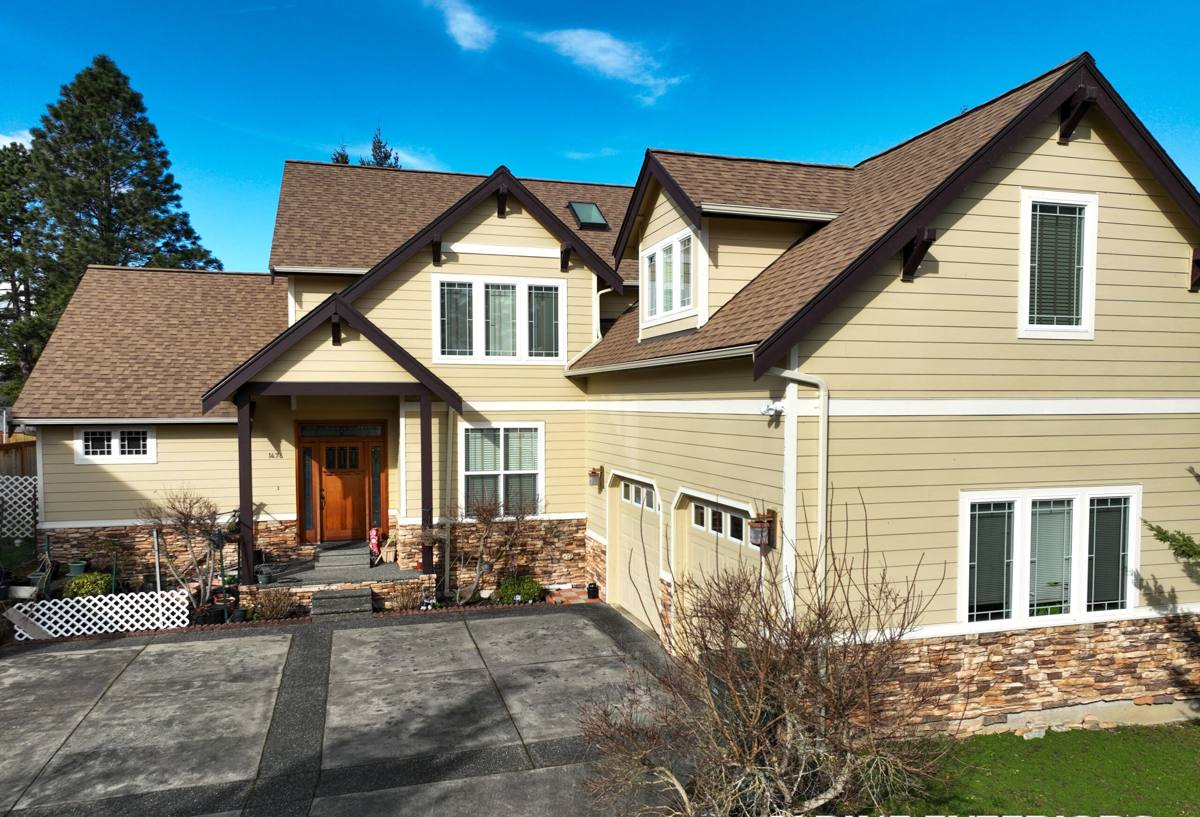
Signs a Custer Home Needs Siding Replacement, Not Just a Patch
Homeowners often call us after a repair attempt didn't hold, or after a home inspection flagged something they hadn't noticed from the ground. Here's what we actually look for during a walk-around, and what tends to mean the siding has reached the end of its useful life rather than needing a spot fix:
- Soft or spongy spots when you press on the siding, especially near the bottom courses and around window sills
- Paint that's bubbling, peeling, or chalking heavily on south- and west-facing walls
- Persistent moss or dark streaking that comes back within a season of cleaning
- Visible gaps, warping, or buckling at panel seams and butt joints
- Cracked or split boards, particularly around corners and trim
- Rising utility bills or noticeably drafty rooms along exterior walls
- Rust staining below nail heads or fasteners
- Rot found during a window, door, or deck project that traces back into the wall assembly
Any one of these can sometimes be repaired locally. When several show up together, or when the underlying weather-resistive barrier has been compromised, replacement is the honest recommendation — patching over a failing system just delays a bigger repair bill.
What Correct Siding Replacement Actually Involves
It Starts Underneath the Siding, Not With It
The siding itself is the visible layer, but the work that determines whether it lasts happens underneath: a continuous weather-resistive barrier, correctly lapped house wrap or building paper, properly integrated flashing at every window, door, and penetration, and back-priming or factory-sealed edges where cuts are made. On a Custer home exposed to driving rain, this layer is what actually keeps water out — the siding sheds the bulk of it, but the barrier behind it is the backup plan for the water that gets past.
Fastening and Clearance Matter More Here Than in Drier Climates
Fastener spacing, type, and placement affect how well siding resists wind-driven rain and how it performs over decades of expansion and contraction. Ground clearance and clearance from roof lines, decks, and grade also matter — too little clearance traps moisture against the bottom edge of the siding and is one of the most common causes of premature rot we find on older Whatcom County homes, Custer included.
Ventilation Behind the Cladding
A rainscreen gap or proper ventilation behind the siding lets any moisture that does get through dry out instead of sitting against the wall sheathing. This is a detail that's easy to skip and impossible to see once the job is finished — which is exactly why it matters who's doing the installation.
Why We Install Only James Hardie Fiber Cement
We standardized on James Hardie fiber cement siding for every home we work on, including here in Custer, and we don't install vinyl, LP SmartSide, primed wood, or other fiber cement brands. That's a deliberate choice, not a sales preference. Fiber cement is non-combustible, doesn't expand and contract with moisture the way wood-based products do, and holds its factory finish far longer than field-painted alternatives — all things that matter directly in a climate with this much sustained moisture exposure.
James Hardie's ColorPlus factory finish is baked on under controlled conditions, which gives it better adhesion and UV resistance than a coat of paint applied on site, and it comes with its own finish warranty separate from the product warranty. Hardie also makes climate-engineered HZ product lines — HZ5 is formulated for regions with more moisture and temperature swing, which fits Whatcom County's wet winters. The combination of the product itself and a warranty that's transferable to a future buyer is why we put it on homes instead of the alternatives.
| Material | How It Handles Salt Air & Moisture | Maintenance Over Time |
|---|---|---|
| James Hardie fiber cement | Non-combustible, dimensionally stable, factory finish resists fading and moisture-driven paint failure | Occasional cleaning; repainting only if ever desired, not required on the ColorPlus schedule |
| Vinyl | Doesn't rot, but can warp or become brittle with temperature swings and UV exposure over years | Low, but color is baked into the material and cannot be refreshed if it fades or chalks |
| Wood or primed spruce | Absorbs moisture, especially in shaded, moss-prone areas; prone to swelling and splitting | Regular repainting and caulking to keep ahead of moisture intrusion |
| LP SmartSide (engineered wood) | Treated to resist moisture, but any breach in the finish exposes wood substrate to swelling | Finish maintenance required to keep the moisture barrier intact |
Our Siding Replacement Process for Custer Properties
- On-site assessment: We walk the full exterior, check clearances, look for existing moisture damage, and note shaded or moss-prone walls that need extra attention to ventilation and drainage.
- Tear-off and inspection of the wall assembly: Old siding comes off in sections so we can inspect sheathing and framing underneath before anything new goes up — this is where hidden rot from years of trapped moisture usually shows up.
- Repair of any damaged sheathing or framing: Addressed before the new weather barrier goes on, not covered over.
- Weather-resistive barrier and flashing: Installed continuous and correctly lapped, with flashing integrated at every window, door, and penetration.
- James Hardie installation to manufacturer spec: Correct fastener type and spacing, proper clearances from grade and roof lines, and factory-caulked or sealed joints.
- Final walkthrough: We review the finished work with the homeowner before calling the job complete.
Cost Factors on a Custer Siding Replacement
| Factor | Why It Changes the Price |
|---|---|
| Extent of hidden damage found during tear-off | Rotted sheathing or framing has to be repaired before new siding goes on |
| Home size and wall complexity | More corners, dormers, and trim details mean more labor and material cuts |
| Siding profile and finish selection | Lap width, texture, and color options within the James Hardie lineup vary in material cost |
| Access and site conditions | Mature landscaping, fencing, or tight lot lines common on Custer properties can add setup time |
| Trim, fascia, and flashing scope | Full replacement of trim alongside siding costs more upfront but avoids mismatched materials later |
We don't quote a number without seeing the home — anyone who does is guessing. What we can tell you honestly is that the biggest cost swings come from what we find once the old siding is off, which is exactly why a careful tear-off and inspection process matters more than a fast one.
Why Hiring a Crew That Already Works Custer Matters
Siding installation is detail work, and the details that matter most are the ones tied to local conditions — how much clearance to leave given the rainfall this area gets, which walls typically need extra attention to moss and shade, how flashing needs to be handled around the window and door styles common in this part of Whatcom County. A crew that's replaced siding on other homes in and around Custer and Lynden has already seen how those details play out over years, not just on installation day. That experience shows up in fewer callbacks and siding that's still performing well a decade later.
Keeping New Siding Looking Right in a Moss-Heavy Climate
Even the right product installed correctly still lives in Custer's climate, so a little homeowner maintenance goes a long way:
- Rinse siding annually, focusing on shaded north- and west-facing walls where moss and algae tend to establish
- Trim back vegetation and landscaping that keeps siding shaded and damp longer than it needs to be
- Keep gutters clear so overflow isn't running down the face of the siding
- Check caulking at trim and penetrations every couple of years and have gaps resealed promptly
- Avoid pressure washing at close range or high pressure, which can force water behind joints
None of this is heavy maintenance — it's the kind of upkeep that protects the investment you've already made rather than work that's required to keep the siding from failing.
Get a Straightforward Look at Your Siding
If you're seeing any of the warning signs above, or you just want an honest read on how much life is left in your current siding, we're glad to come take a look. There's no pressure and no sales script — just a clear assessment of what your Custer home actually needs, and what a correct James Hardie installation would involve. Use the form below to request a free estimate.