 Lynden
 Building a Deck That Holds Up on Birch Bay's Shoreline
Birch Bay sits right on the water, and that changes what a deck has to survive. A deck built to a generic spec — the kind you'd put up twenty miles inland — will show its age fast out here. Salt-laden air off the bay works on metal fasteners and connectors year-round. Driving rain off the Strait finds every gap in flashing and framing. And Whatcom County's long, wet, low-sun stretch from fall through spring keeps horizontal surfaces damp long enough for moss and algae to take hold. None of that means you can't have a great deck in Birch Bay. It means the material choices, the fastener spec, and the framing details all need to account for a marine environment from day one, not get patched later.
This page covers what actually matters for a deck built to last in Birch Bay: what the climate does to different materials, how we frame and flash for it, what code requires, and what upkeep looks like once it's built.
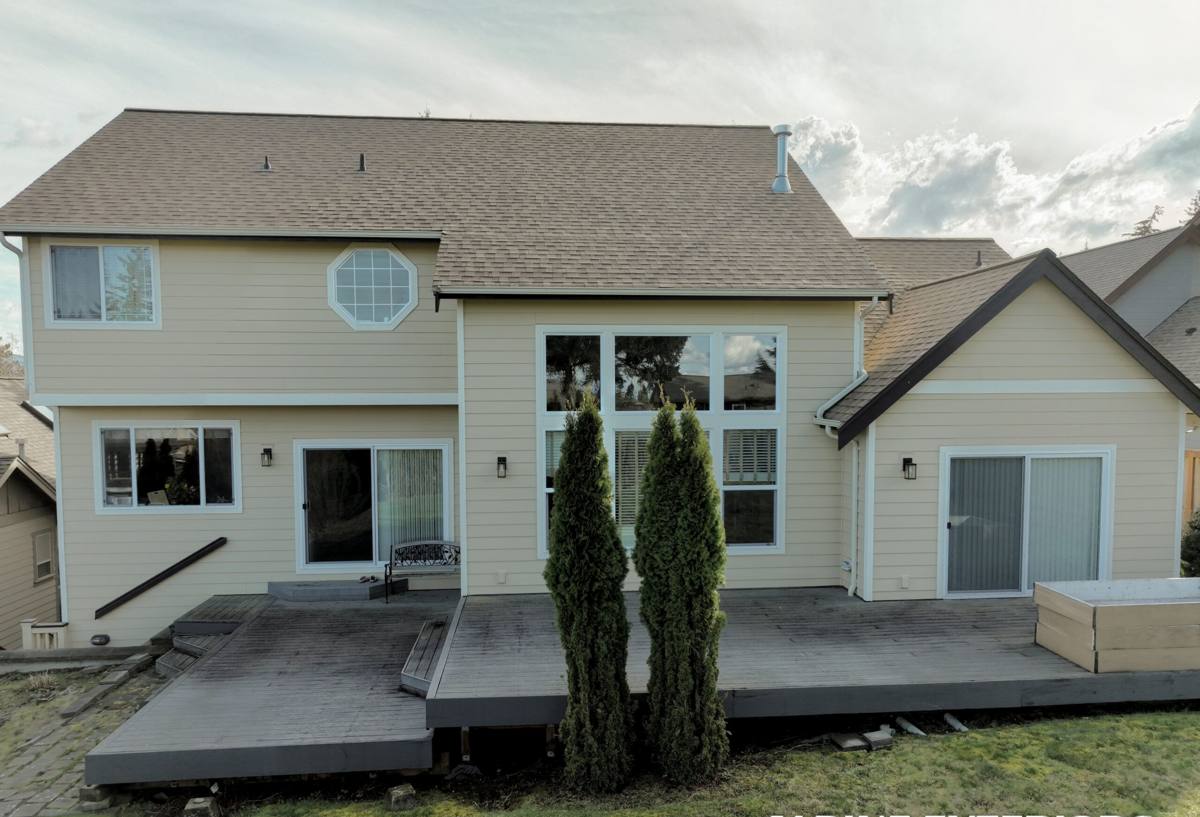
What Salt Air, Rain, and Moss Actually Do to a Deck
Salt Air and Metal
Airborne salt accelerates corrosion on anything ferrous. Standard galvanized nails, screws, and joist hardware that would last decades in a dry inland yard can start rusting and staining within a few seasons this close to the water. Once a fastener starts corroding, it loses holding strength before it ever looks obviously bad — and rust streaks bleeding down decking boards are usually the first visible sign something underneath is already compromised.
Driving Rain and Wind-Driven Moisture
Birch Bay gets weather that comes in sideways off the water, not just straight down. That matters for ledger board flashing, post base connections, and any spot where the deck meets the house. Water that would simply run off in a calmer setting gets pushed into seams and gaps here, so flashing details that are "good enough" elsewhere need to be tighter in Birch Bay.
Moss and Algae Season
Western Whatcom County's wet season runs long, and shaded or low-sun decks stay damp for extended stretches. Moss and algae aren't just cosmetic — a slick, moisture-holding layer on decking traps water against the board surface, which is exactly the condition that rots wood and degrades composite capping over time. Decks with poor airflow underneath, tight board spacing, or heavy tree cover are the ones that struggle most.
Choosing Decking Material for a Birch Bay Home
There's no single "best" decking material — there's a best material for this location, this budget, and how much upkeep you actually want to do. Here's an honest comparison for a marine climate like Birch Bay's.
| Material | Upfront Cost | Maintenance | Behavior in Salt Air & Rain |
|---|---|---|---|
| Pressure-treated pine | Lowest | Needs re-staining/sealing every 1-2 years near the water | Durable if maintained, but end grain and fastener holes are entry points for moisture if coating lapses |
| Cedar | Mid-range | Regular sealing to hold color and resist moisture uptake | Naturally rot-resistant but softer; benefits from a breathable finish rather than a heavy film coating |
| Composite / capped composite | Highest | Occasional washing, no staining or sealing | Doesn't absorb moisture like wood, resists rot and insect damage, but still needs airflow underneath to shed algae growth |
We'll walk through the trade-offs honestly rather than push whatever has the best margin. A lot of Birch Bay homeowners land on composite for the decking surface specifically because they don't want a re-sealing routine on top of everything else a waterfront property already demands — but a well-maintained wood deck is a perfectly sound choice if you're willing to keep up with it.
Framing and Structure Built for the Conditions
The part of a deck nobody sees is the part that determines whether it's still solid in fifteen years. A few details we treat as non-negotiable on Birch Bay builds:
- Ledger board flashing that sheds water away from the house, not just a bead of caulk over a gap
- Post bases and joist hangers spec'd for corrosion resistance, not the cheapest galvanized option on the shelf
- Footings sized and set to local frost and soil conditions, not guessed at
- Joist spacing tightened up under composite decking, which can need closer support than solid wood
- Deliberate airflow gaps and clearance under the deck so the structure can actually dry out between rain events
Skipping any of these doesn't show up on day one. It shows up in year five or six as soft spots, rust bleed, or a railing post that's gone spongy at the base — problems that are expensive to fix after the fact and cheap to prevent during framing.
Fasteners and Hardware: Where Corners Get Cut
This is the single biggest difference between a deck built for Birch Bay and a deck built for somewhere fifty miles inland. Standard galvanized fasteners are rated for general outdoor use, not sustained salt air exposure. On a shoreline build we spec stainless steel or marine-grade coated fasteners and hardware at connection points that matter most — ledger attachment, post bases, and joist hangers — because that's where a failure actually threatens structural integrity, not just appearance. It costs more up front. It's also the difference between hardware that's still sound at year twenty and hardware that's staining and weakening by year five.
Railings, Guardrails, and Permitting
Any deck built above a certain height off grade needs a code-compliant guardrail, and Whatcom County has specific requirements on rail height, baluster spacing, and load. Permitting requirements also kick in based on the deck's size and height — some smaller, low-to-grade decks may not need one, but attached decks and anything elevated generally do. We handle the permit process as part of the job rather than leaving it for the homeowner to sort out, and we build to code the first time so there's no surprise at final inspection.
Our Deck Building Process
We keep the process straightforward and communicate at each stage, since a deck build touches your yard and your daily routine for a stretch of time.
- On-site assessment — we look at sun/shade exposure, existing drainage, soil, and how exposed the site is to wind and rain off the bay
- Material and layout discussion — honest trade-offs on decking material, footprint, and railing style based on your budget and how much maintenance you want to take on
- Permit handling — we pull what's required through Whatcom County so the build is fully compliant
- Framing and flashing — built to the marine-climate details above, not a generic spec
- Decking, railing, and finish work — including fastener placement and any sealing or capping appropriate to the material chosen
- Final walkthrough — we go over the deck with you and explain what upkeep, if any, it needs going forward
Keeping a Birch Bay Deck in Good Shape
Even a well-built deck needs some seasonal attention in this climate. Here's what we recommend to owners after the build:
- Sweep or hose off debris and standing moisture regularly through fall and winter, when the wet season is longest
- Check for moss or algae buildup in shaded sections and clean it before it gets a foothold, rather than after
- Inspect fasteners and hardware annually for rust staining, especially at ledger and post connections
- Re-seal or re-stain wood decking on schedule — don't wait until the finish has visibly failed
- Keep gutters and downspouts near the deck clear so runoff isn't dumping extra water onto or under it
- Confirm underdeck airflow isn't blocked by stored items, planters, or overgrown landscaping
Why It Matters to Hire a Crew That Already Works This Area
A contractor who mostly builds decks inland will often use the same fastener spec, the same flashing detail, and the same material recommendations everywhere, because that's what works where they usually build. In Birch Bay, that approach is how you end up with rust streaks and soft framing years before you should. We build in this part of Whatcom County regularly, so the salt-air fastener spec, the flashing approach for wind-driven rain, and the moss-resistant layout choices aren't an upgrade we mention — they're just how we build here. That familiarity with the local conditions is worth more than any single material choice.
If you're planning a new deck or replacing one that hasn't held up to Birch Bay's climate, we're happy to take a look and give you a straightforward, no-pressure estimate. Use the form below to get started.