 Lynden
 Wiser Lake's Climate Is Hard on Decks
A deck out at Wiser Lake takes a different kind of beating than one downtown or a few miles inland. The lake keeps the air around it damp longer into the day, tree cover along the shoreline shades boards so they never fully dry out, and Whatcom County's marine-influenced air carries moisture that settles into wood grain, fastener heads, and post bases year-round. Add in driving winter rain that comes in sideways off the water and a moss season that can run from October well into spring, and you've got a structure that's rarely given a real chance to dry between wet cycles.
None of that means a deck near Wiser Lake is doomed — it means it needs to be built and repaired with that reality in mind instead of treated like a deck in a dry climate. That's the difference between a repair that lasts a few seasons and one that lasts the life of the structure.
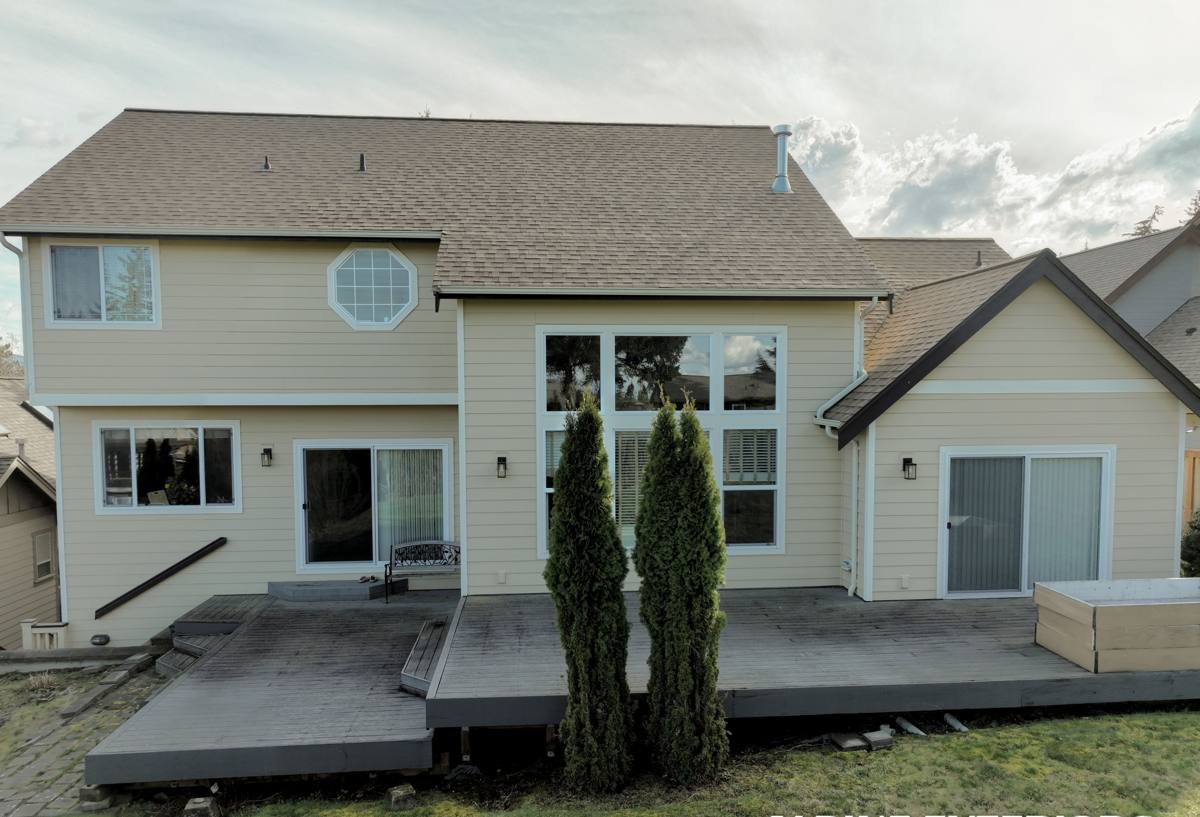
The Deck Problems We See Most Often Near Wiser Lake
Ledger Board and Rim Joist Rot
The ledger board — where the deck attaches to the house — is the single most common failure point we find. If it wasn't flashed correctly when the deck was built, or the flashing has failed over the years, water gets trapped between the ledger and the house siding and rots both from the inside out. This is invisible from a normal walk-around inspection; you usually only see it once boards start to feel spongy near the house or the deck develops a slight sag where it meets the wall.
Post Base and Footing Deterioration
Posts that sit in standing water or damp mulch, or that were never set on proper post bases, rot from the bottom up. Near the lake, low spots that hold water after rain are common, and a post base that looked fine when the deck was installed can be compromised years later.
Corroded Fasteners and Hardware
Screws, nails, and joist hangers that aren't rated for the moisture exposure they're actually getting will rust, weaken, and eventually stain the wood around them or lose their holding strength. This is a quieter problem than rotten wood — the fastener can be failing structurally while still looking intact from a few feet away.
Moss, Algae, and Slick Decking
Shaded, damp decking near water grows moss and algae faster than open, sun-exposed decks in town. Beyond being a slip hazard, moss holds moisture against the board surface and accelerates the wood decay underneath it — it's not just cosmetic.
Cupped, Split, or Soft Boards
Constant wet-to-dry cycling — rain soaking a board, then a few hours of sun pulling moisture back out — causes boards to cup, crack, and eventually go soft. This is the most visible sign of deck aging and often what actually gets a homeowner to call, even though it's usually a symptom of a wetter problem underneath.
What a Correct Deck Repair Actually Involves
A proper deck repair isn't just pulling bad boards and screwing down new ones. It starts with a structural read of the whole deck, because surface damage and framing damage don't always show up in the same place.
- Checking the ledger board attachment and flashing for water intrusion behind the siding
- Probing joists, beams, and posts for soft or rotten wood, not just visual inspection
- Confirming post bases and footings are stable and not sitting in standing water
- Verifying joist hangers and structural fasteners are rated for exterior/wet use and haven't corroded
- Checking guardrail height and baluster spacing against current code if the guardrail is being repaired or replaced
- Confirming stair stringers are sound and properly supported, since stairs take repeated point-loading
Any repair that skips the structural check and only replaces what's visible from the top is a cosmetic fix, not a repair — and it tends to fail again in the same spot within a couple of seasons because the underlying moisture problem was never addressed.
Repair or Replace? How We Help You Decide
Not every deck problem near Wiser Lake needs a full rebuild, but not every deck should be patched either. The honest answer depends on how much of the framing is affected versus the decking surface.
| Situation | Usually Repair | Usually Replace |
|---|---|---|
| Rot location | Isolated to a few boards or one section | Spread through multiple joists, the ledger, or several posts |
| Framing condition | Structurally sound underneath | Framing is undersized, rotted, or built without proper flashing |
| Age of structure | Under 15-20 years, built to a reasonable standard | Older deck nearing the end of typical service life |
| Code compliance | Already meets current guardrail/stair requirements | Guardrails, stairs, or ledger attachment are out of code |
| Cost pattern | Repair cost is a fraction of rebuild cost | Repairs would need to be repeated across most of the deck |
We'll always tell you honestly which category your deck falls into. A repair that's really a stopgap on a deck that needs to be rebuilt isn't a good use of your money, and we'd rather say that upfront than sell you a patch job.
Decking and Framing Material Options
When we do replace boards, posts, or framing members during a repair, the material choice matters more near Wiser Lake than it would in a drier part of the county, simply because everything spends more time wet.
| Material | Moisture Resistance | Maintenance | Typical Lifespan |
|---|---|---|---|
| Pressure-treated lumber | Good when properly rated for ground/near-ground contact | Needs periodic sealing/staining to look and perform its best | 15-25 years with upkeep |
| Cedar | Naturally rot-resistant heartwood, but sapwood is not | Regular sealing to prevent graying and moisture uptake | 15-20 years with upkeep |
| Composite decking | Very good; doesn't absorb water like solid wood | Low; periodic cleaning, no sealing/staining | 25-30+ years, manufacturer-dependent |
For framing members specifically — joists, beams, posts — we hold to properly rated pressure-treated lumber with corrosion-resistant, exterior-rated hardware, because that's the part of the deck you can't see or easily inspect once it's closed up. Cutting corners on framing hardware to save a small amount up front is the kind of decision that turns into a much bigger repair bill in five to ten years.
Our Deck Repair Process
- Inspection. We walk the deck top to bottom, probing suspect areas, checking the ledger and flashing, and looking at posts, footings, and hardware — not just the decking surface.
- Moisture and damage mapping. We identify exactly which framing members and boards are compromised versus which are sound, so you're not paying to replace wood that doesn't need it.
- Written repair plan and estimate. You get a clear scope: what's being replaced, what's being reinforced, and why, in plain language.
- Permitting if the repair is structural. Work that touches framing, footings, or guardrails may require a permit depending on scope — we handle that conversation rather than leaving you to figure it out.
- Repair execution. Rotted framing and decking are removed and replaced with properly rated materials and corrosion-resistant fasteners, with attention to flashing and drainage so water doesn't pool in the same spots again.
- Cleanup and walkthrough. We clear debris and walk the finished repair with you so you know exactly what was done and what to watch for going forward.
Maintenance Checklist Between Repairs
A little seasonal attention goes a long way toward stretching the years between repairs, especially with the moss and moisture load a Wiser Lake property deals with.
- Sweep leaves and debris off the deck surface regularly, especially in fall — trapped debris holds moisture against boards
- Clean moss and algae off decking before it builds up, using a deck-safe cleaner rather than a pressure washer on full blast
- Check that gaps between boards aren't clogged with debris, which blocks drainage and airflow underneath
- Look at the area where the deck meets the house once or twice a year for staining, gaps, or soft wood
- Reseal or restain wood decking on the schedule the product calls for — don't wait until it's visibly gray and dry
- Confirm gutters and downspouts near the deck aren't dumping extra water onto or under it
- Address soft or spongy spots as soon as you notice them rather than waiting for them to spread
Why Hire a Crew That Already Works in Wiser Lake
Deck repair advice that works for a dry, open lot doesn't always translate to a shaded, lake-adjacent property. A crew that already works this area knows which parts of a Wiser Lake deck tend to fail first — usually the shaded north side, the ledger connection, and post bases in low spots — and inspects those areas first instead of guessing. We're also familiar with Whatcom County's permitting process for structural deck work, so that step doesn't stall your project.
Just as important is timing: sealing or staining wood during the wettest stretch of the year doesn't hold up, and we plan repair work around the weather windows that actually let materials cure and seal properly instead of trapping moisture in.
Get an Honest Look at Your Deck
If your deck near Wiser Lake has soft spots, rusted hardware, persistent moss, or just feels less solid than it used to, it's worth having someone look at the framing before it becomes a bigger repair. We offer free, no-pressure estimates — fill out the form below and we'll take a look and give you a straight answer on what it actually needs.