 Lynden
 Deming's Climate Is Harder on Siding Than It Looks
Deming sits up the Mount Baker Highway corridor along the Nooksack River, close enough to the coast to pick up salt-tinged marine air off the Sound and close enough to the foothills to catch heavier, more persistent rain than homes closer to Bellingham. That combination is rough on exterior siding. Salt-laden moisture accelerates corrosion on fasteners and trim, driving rain finds every gap in a poorly flashed wall, and the deep shade from surrounding tree cover keeps north- and west-facing walls damp long after a storm has passed. Add a moss season that can stretch from October through May in a wet year, and you have a climate that punishes any siding product or installation that isn't built for sustained moisture exposure.
None of this means Deming homes need something exotic. It means they need siding installed correctly, with the right material, the right water management behind it, and a crew that understands why those details matter here specifically — not just siding that looks fine on the day it goes up.
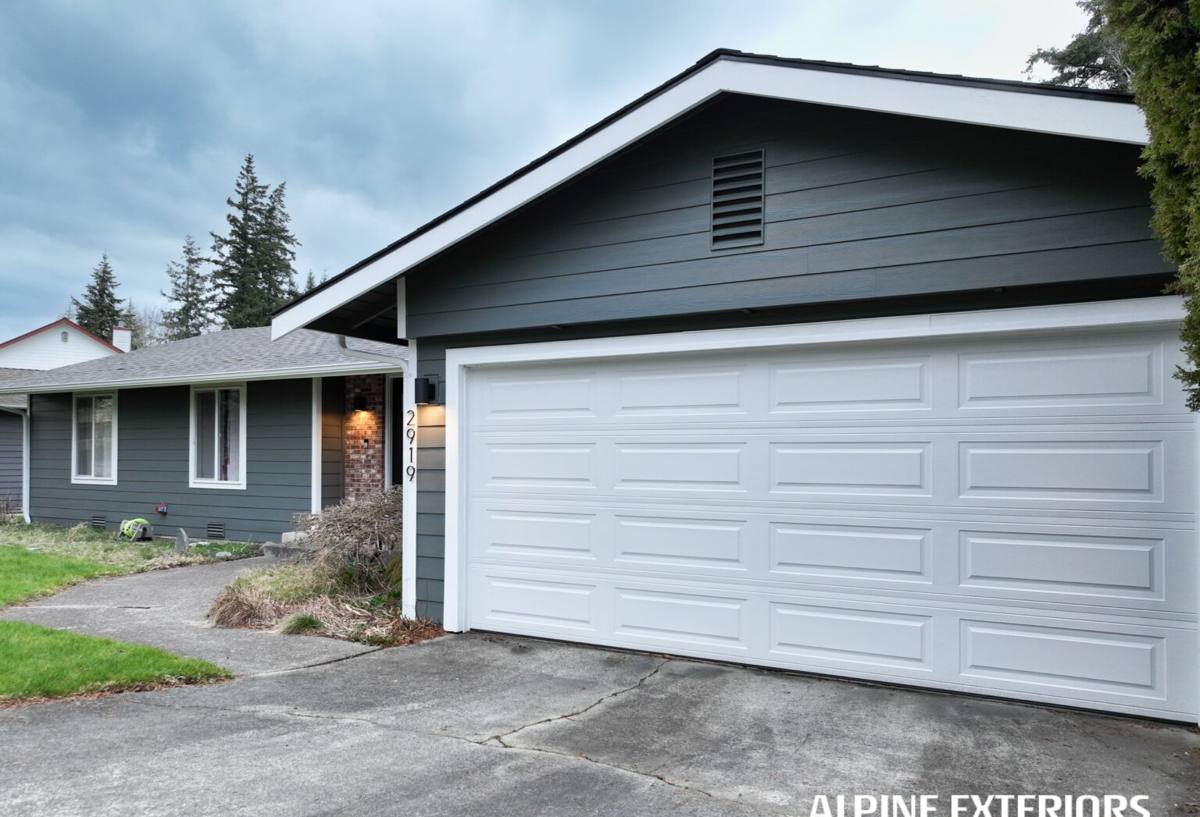
What Moss, Rain, and Salt Air Actually Do to a Wall
Moss and Organic Growth
Moss doesn't just grow on roofs. Given enough shade and standing moisture, it takes hold in siding seams, behind trim, and along the bottom courses closest to the ground or landscaping. Once established, it holds water against the wall surface far longer than open air would, which is exactly the condition that leads to rot in wood-based products and staining or coating breakdown in others.
Driving Rain
Wind-driven rain in this part of Whatcom County doesn't fall straight down — it gets pushed sideways into laps, corners, and window trim. Siding that relies on caulk or paint film alone to keep water out, rather than a properly lapped and flashed drainage system, eventually lets water behind the cladding. Once water gets behind siding, the problem is almost never visible until the sheathing or framing underneath is already compromised.
Salt Air and Humidity
Even well inland from the water, marine air carries moisture that keeps humidity levels elevated for more of the year than most regions of the country. That constant low-grade dampness is what makes moss and mildew a year-round maintenance issue rather than a seasonal nuisance, and it's why fastener and flashing material matter as much as the siding itself.
Why We Install Only James Hardie Fiber Cement
We install James Hardie fiber cement siding exclusively, and in a climate like Deming's that's a deliberate call, not a brand preference. Fiber cement doesn't absorb and swell with moisture the way wood-based products can, and it doesn't degrade under UV and damp cycling the way vinyl can over a long enough timeline. Hardie's HZ5 product line is engineered specifically for climates with freeze-thaw cycling and sustained moisture exposure, which describes this part of Whatcom County well. The ColorPlus factory finish is baked on rather than field-applied, so the color layer holds up against the humidity and organic growth that strip paint faster in shaded, damp settings.
That's not to say fiber cement is maintenance-free — moss can still grow on any exterior surface if debris and shade are left unchecked. The difference is what happens underneath: fiber cement doesn't rot, and it doesn't provide the same food source or moisture-holding structure that makes wood-based siding vulnerable to long-term damage from that growth. We stopped installing wood, engineered-wood, and vinyl products because in this climate, the maintenance burden and failure modes of those materials showed up faster than we were comfortable putting our name behind.
What a Correct Siding Installation Involves
The siding itself is only part of the job. What's behind it determines whether the installation lasts twenty years or fails in five. A correct installation on a Deming home includes:
- A continuous weather-resistive barrier installed shingle-style so water always drains outward and down, never inward
- Properly flashed windows, doors, and any wall penetrations, with flashing that integrates with the barrier rather than just caulked over it
- Correct starter strip and first-course height to keep the bottom edge of the siding clear of grade, decks, and landscaping
- Fastener placement and spacing that match Hardie's published installation specifications, not generic nailing patterns
- Proper clearances at roof lines, chimneys, and dissimilar materials so water has somewhere to go instead of pooling
- Caulking used only where Hardie's instructions call for it — not as a substitute for correct flashing and lap sequencing
Skipping or rushing any one of these is how a siding job looks right for a year or two and then starts showing problems that trace back to water intrusion rather than the siding material itself. Manufacturer warranties on fiber cement siding are also tied to installation meeting spec, so cutting corners here can void coverage before it's ever needed.
Signs Your Deming Home's Siding Needs Attention
Because moisture damage develops behind the wall before it's visible on the surface, it helps to know what early warning signs actually look like:
- Soft or spongy spots when you press on siding, especially near the bottom courses or under windows
- Persistent moss or dark staining that returns quickly after cleaning, particularly on shaded or north-facing walls
- Paint that's peeling, bubbling, or chalking well before the age of the product would suggest
- Visible gaps, warping, or separation at seams and corners
- Rising energy bills with no other clear cause, which can point to compromised insulation or air sealing behind failing siding
- Interior signs like musty smells, staining on interior walls, or window trim that feels damp to the touch
Any one of these on its own isn't necessarily an emergency, but a few together on an older wood or vinyl-clad home usually means the underlying water management has failed and it's worth a proper look before it spreads.
How We Approach a Siding Job in Deming
Assessment
We start by looking at the whole wall system, not just the visible siding — checking for soft sheathing, existing moisture damage, and how the current installation handled flashing and drainage. This tells us whether it's a straightforward re-side or whether there's repair work to do first.
Product and Line Selection
We spec the Hardie product line and ColorPlus finish that fits the home's style and exposure, paying particular attention to walls that take the most direct rain and the least sun.
Tear-Off and Prep
Old siding comes off, damaged sheathing gets replaced, and the weather-resistive barrier goes on correctly the first time — this stage is where most long-term performance is decided, well before the new siding is visible.
Installation to Spec
Siding, trim, and flashing go in following Hardie's fastening and clearance specifications, not shortcuts learned from other products.
Final Walkthrough
We walk the finished exterior with the homeowner, checking seams, caulking, and trim details before calling the job complete.
What Drives the Cost of a Siding Installation
Every home is priced individually, but the same handful of factors move the number up or down on most Deming projects:
| Factor | Why It Matters |
|---|---|
| Home size and wall complexity | More square footage, dormers, and corners mean more material and labor time |
| Condition of the existing sheathing | Rot or moisture damage found during tear-off adds repair work before new siding can go on |
| Siding removal and disposal | Full tear-off of old wood or vinyl costs more than installing over a properly prepared surface, but it's the only way to inspect and fix what's underneath |
| Trim and accent details | Custom trim boards, batten details, and multiple colors add labor beyond a flat lap-siding install |
| Access and site conditions | Steep grades, dense tree cover, or limited equipment access common on rural Deming lots can add time |
| Hardie product line selected | Lap, panel, shingle-style, and different ColorPlus finishes carry different material costs |
Anyone who quotes a firm number before seeing the home and checking behind the existing siding is guessing. A real estimate involves walking the property.
Why a Crew That Already Works This Area Matters
Deming isn't downtown Bellingham. Lots tend to be larger, tree cover is heavier, and driveways and setbacks are laid out differently than in-city construction. A crew that already works this stretch of Whatcom County — including the surrounding Lynden area — knows how local moisture patterns behave on wooded, rural lots, understands what county permitting and inspection expects for exterior work, and isn't guessing at material logistics for a job that's further from a supply yard than an in-town project. That familiarity shows up in fewer surprises mid-project and a finished wall system that's actually built for how water moves through this specific stretch of the county, not a generic installation transplanted from a drier climate.
Maintenance After Installation
Correctly installed fiber cement siding is low-maintenance, not no-maintenance. In a climate like this, that means periodically clearing debris and moss from siding, trim, and anywhere water can pool, keeping gutters clear so overflow doesn't run down the wall face, and doing a visual check after major storms for any damaged caulking or trim. None of this is heavy work, but skipping it entirely lets moisture problems get a foothold even on a well-installed wall.
If your Deming home's siding is showing its age, or you're planning ahead of a renovation, we're happy to walk the property, take a real look at what's underneath the current siding, and put together a straightforward, no-pressure estimate using the form below.