 Lynden
 Everson's Climate Is Harder on Siding Than Most Homeowners Realize
Everson sits inland from the Salish Sea, but the marine air that moves through Whatcom County doesn't stop at the coastline. It carries a fine load of salt and moisture well into the valley, and it settles on everything outside your house — including your siding. Combine that with the driving rain that comes through on a wind, and a moss season that can stretch from fall through spring, and you get a set of conditions that punishes the wrong siding material and rewards the right one. When we get a call for siding repair in Everson, we're not troubleshooting a generic problem. We're troubleshooting a problem this specific climate created.
Salt Air and Slow Corrosion
Salt-laden air accelerates corrosion on anything metal — fasteners, flashing, trim edges, even the cut ends of siding panels if they weren't sealed properly at installation. On a lot of homes, the first sign of trouble isn't a big crack or a missing panel. It's a rust streak bleeding down from a nail head, or a soft spot where a fastener has backed out and let water behind the cladding. By the time it's visible, the damage underneath is usually further along than it looks.
Driving Rain and Water Intrusion Points
Wind-driven rain doesn't just fall on siding — it gets pushed sideways and upward, into laps, seams, and any gap around windows, doors, or utility penetrations. Siding systems are designed to shed water downward and outward, but that only works if every joint, seam, and piece of flashing was installed correctly in the first place. A lot of the repair calls we get in Everson trace back to one of these entry points, not to the siding panel itself failing.
Moss, Shade, and Sustained Moisture
Everson's tree cover and river-valley humidity mean a lot of homes hold shade and moisture longer than an open, sun-exposed lot would. Moss and algae don't just look bad — they hold water against the siding surface for extended periods, which is exactly the condition that causes rot in wood-based products and coating failure on lower-grade materials. A siding material's ability to shrug off sustained dampness matters more here than it does in drier parts of the state.
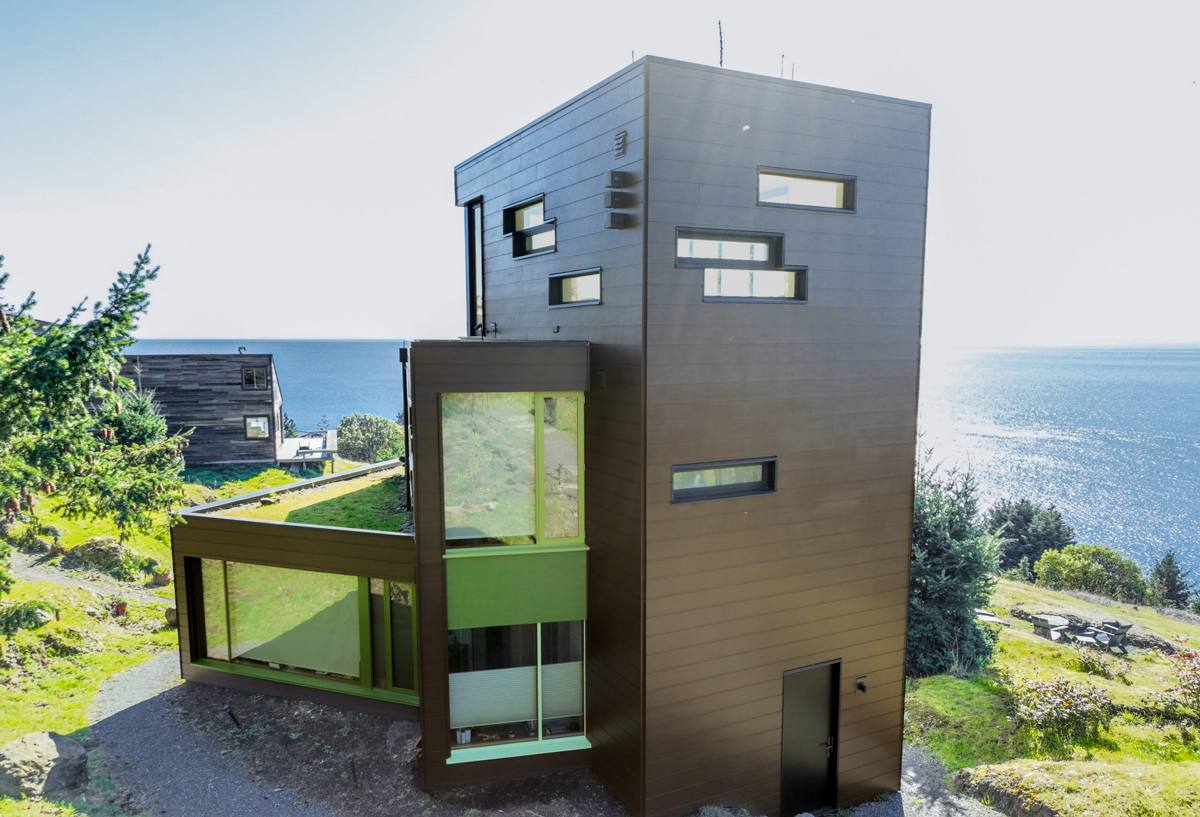
Common Siding Damage We See on Everson Homes
Repair calls in this area tend to fall into a handful of recurring categories. Recognizing which one you're dealing with helps you describe the problem accurately when you call a contractor, and it helps set expectations for what the fix will actually involve.
- Fastener failure and rust bleed — nails or screws that have corroded, backed out, or were never rated for the exposure, leaving rust trails and loose panels.
- Impact damage — cracked or dented panels from storm debris, fallen branches, or equipment contact.
- Moisture intrusion around penetrations — soft or discolored siding near window trim, hose bibs, vents, and light fixtures where flashing or sealant has failed.
- Moss and algae staining — surface growth on shaded elevations that's cosmetic on some materials and a structural warning sign on others.
- Coating and caulk failure — chalking, peeling, or gapping at seams that lets water behind the surface, most common on painted wood or lower-grade composite products.
- Base rot near grade — deterioration at the bottom courses of siding, usually from splashback, poor drainage, or ground contact that was never corrected.
What a Correct Repair Actually Involves
Diagnosing the Cause, Not Just the Symptom
Replacing a damaged panel without figuring out why it failed just buys you a few more years before the same spot fails again. A proper repair starts with pulling back enough material to see what's happening behind the siding — the house wrap, the flashing details, the framing underneath. If the underlying cause is a flashing gap or a chronic moisture source, that gets corrected as part of the repair, not left in place under new siding.
Matching Materials the Right Way
Patchwork repairs done with mismatched material, wrong fastener types, or shortcuts on flashing tend to fail faster than the original problem did. On James Hardie fiber cement, that means using Hardie-rated fasteners, correct lap and clearance dimensions, and either factory ColorPlus-matched panels or a properly prepared, compatible touch-up so the repair doesn't stand out or become its own weak point down the road.
Repair vs. Replacement: How We Decide
Not every problem calls for a full re-side, and not every problem should be patched. We walk homeowners through the actual condition of the siding rather than defaulting to the more expensive option. Here's roughly how the decision breaks down:
| Factor | Favors Repair | Favors Full Replacement |
|---|---|---|
| Extent of damage | Isolated to one or two elevations or sections | Recurring failures across multiple elevations |
| Age and material | Newer Hardie siding, good condition elsewhere | Aging or failing wood, vinyl, or composite siding nearing end of life |
| Underlying moisture history | Single, correctable source (flashing, sealant) | Chronic or widespread moisture intrusion behind the wall |
| Color and panel matching | ColorPlus match available or blend location is low-visibility | Discontinued color or highly visible mismatch |
| Cost over time | Repair cost is a clear fraction of replacement | Repeated repairs are approaching replacement cost |
Our Process for Everson Siding Repair Calls
- Inspection. We look at the damaged area and the surrounding siding, including trim, flashing, and any signs of moisture behind the wall.
- Honest diagnosis. We explain what actually caused the damage and whether it's isolated or a sign of a bigger issue.
- Written scope and estimate. You get a clear explanation of what the repair involves and what it costs before any work starts.
- Correcting the cause. Flashing, sealant, or drainage issues get fixed as part of the job, not ignored.
- Repair to spec. Panels, fasteners, and finish are matched and installed to manufacturer requirements, not just "close enough."
- Final check. We walk the repair with you before we call it done.
Why We Only Repair and Install James Hardie Fiber Cement
We don't work in vinyl, LP SmartSide, primed wood, cedar, or other fiber cement brands, and that's a deliberate standard, not an oversight. In a climate like Whatcom County's — salty marine air, driving rain, and long stretches of shaded moisture — the material's real-world behavior over 15, 20, or 30 years matters more than its price at installation. Vinyl can warp and crack in temperature swings and never really matches once faded. Primed wood and cedar need ongoing paint and sealant maintenance to keep water out, and a missed cycle shows up as rot. Other fiber cement products vary in their factory finish quality and long-term warranty structure.
James Hardie is non-combustible, engineered specifically for climates like the Pacific Northwest through its HZ5 product line, and finished at the factory with ColorPlus technology, which holds color and resists the fading and chalking that plain field-painted siding is prone to. It carries a strong transferable warranty when installed to spec, which is the whole reason installation quality is something we don't compromise on — a great product installed wrong still fails.
Why a Crew That Already Works in Everson Matters
A contractor who works this specific area regularly has already seen how the local conditions play out on real homes — which elevations take the worst wind-driven rain, which yards hold shade and moss longest, where fastener corrosion tends to show up first. That's not something you can fully replicate by reading a spec sheet. It means a faster, more accurate diagnosis on the first visit and a repair that accounts for what this climate is actually going to do to it over time, not just what it looks like today.
Maintenance Checklist for Everson Homeowners
Between professional inspections, a few minutes of looking your siding over can catch small problems before they become expensive ones:
- Check for rust streaks or discoloration below fastener heads, especially on shaded or north-facing walls.
- Look at caulk lines around windows, doors, and trim for cracking, gaps, or shrinkage.
- Watch for moss or algae buildup on lower, shaded courses and clean it gently rather than letting it sit season after season.
- Feel for soft or spongy spots near the bottom of the siding, particularly close to grade or under downspouts.
- Confirm gutters and downspouts are directing water away from the wall, not splashing back onto lower siding courses.
- Note any panels that seem to be lifting, bowing, or separating at the seams after a hard storm.
If you're seeing any of these signs on your Everson home, or you just want a second opinion before a small repair turns into a bigger one, we're happy to take a look. Reach out for a free, no-pressure estimate — someone from our crew will walk the siding with you and give you a straight answer about what it needs.