 Lynden
 Why Decks in the Laurel Area Wear Out Faster Than You'd Expect
If you own a home in or near the Laurel area of Lynden, you already know the weather doesn't do your deck any favors. Whatcom County sits under a long, wet marine climate pattern — moisture-laden air, driving rain that comes in sideways off the wind, and a moss season that can stretch from October well into spring. A deck that would last two or three decades in a drier inland climate can start showing real structural problems in half that time here if it wasn't built or maintained with that reality in mind.
Most of what we see on service calls in this area isn't dramatic collapse — it's slow, quiet deterioration. Water sits where it shouldn't. Moss holds moisture against wood fibers for months at a stretch. Fasteners corrode from the inside of a joist where nobody's looking. By the time a homeowner notices a soft spot underfoot or a railing that wiggles, the damage has usually been building for a year or more.
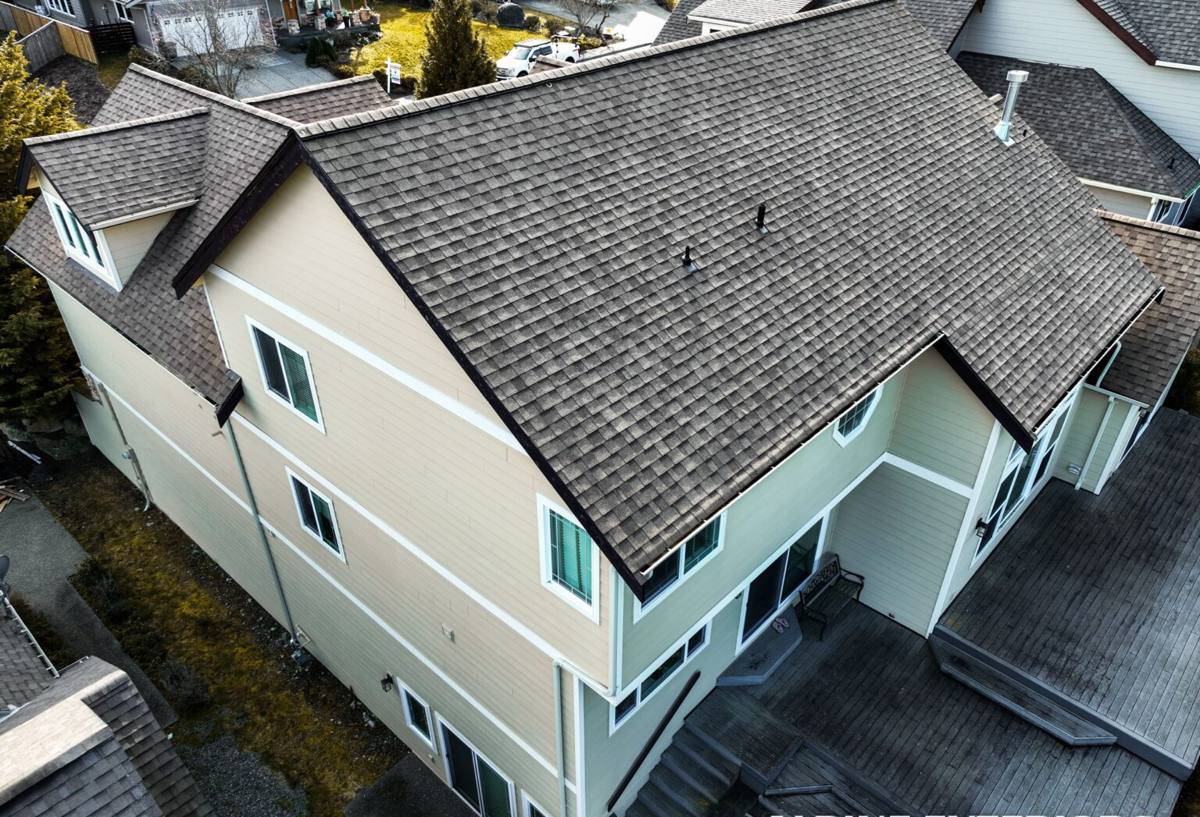
How the Regional Climate Actually Attacks a Deck
Moisture That Never Fully Dries Out
Salt-laden marine air and near-constant winter dampness mean wood surfaces in this part of Washington rarely get a long enough dry stretch to fully release moisture between rain events. That constant damp-dry cycling is what breaks down wood fiber and finish coatings faster than sun exposure alone ever would.
Moss and Organic Buildup
A shaded deck, or one under overhanging trees, will grow moss on the boards themselves and in the gaps between them. Moss isn't just cosmetic — it holds water against the wood surface long after the rain has stopped, which is exactly the condition that drives rot in decking boards and the framing underneath.
Hidden Corrosion at Fasteners and Connectors
Nails, screws, and joist hangers that aren't rated for wet coastal exposure corrode from the inside out. You often can't see it until a board lifts or a railing post moves, because the failure starts at the fastener head buried in the wood, not on a visible surface.
Signs Your Deck Needs Repair, Not Just a Cleaning
- Boards that feel spongy, springy, or noticeably softer than the boards around them
- Gaps or cracks that have widened since last season
- Fasteners with rust streaks bleeding out around the screw or nail head
- A railing or post that moves when you lean on it
- Discoloration or a musty smell near the ledger board where the deck attaches to the house
- Persistent moss or algae that comes back within weeks of cleaning
- Standing water that doesn't drain within an hour or two after rain stops
Any one of these on its own might be minor. Two or three together, especially near the ledger board or support posts, usually means the problem has moved past the surface and into the structure.
What a Correct Deck Repair Actually Involves
A repair that only replaces the board you can see is a temporary fix if the framing underneath is compromised. A proper repair in this climate starts below the surface:
1. Structural Assessment First
Before any boards come off, we check the ledger board connection, joists, beams, and posts for soft spots, using moisture readings and physical probing rather than guesswork. This is where most of the actual risk lives — a deck can look fine on top and still have a weakened ledger connection underneath.
2. Isolating the Real Extent of the Damage
Rot rarely stays confined to one board. We check adjacent framing members and fasteners, because wet-climate deterioration tends to spread along a joist or around a connection point rather than staying isolated.
3. Correct Material Matching
Replacement lumber, fasteners, and hardware need to match — or exceed — the corrosion resistance of a properly built coastal-climate deck. Mixing incompatible metals (say, a standard fastener against a treated-lumber connector plate) accelerates corrosion rather than solving it.
4. Rebuilding Drainage and Airflow
A lot of Whatcom County deck failures trace back to poor water shedding — boards installed too tight together, no gap for airflow underneath, or grading that pools water against a post base. A repair that doesn't correct the underlying drainage issue will just fail again on the same timeline.
Repair Approach vs. Full Rebuild: How We Decide
| Situation | Typical Approach | What Drives the Decision |
|---|---|---|
| Isolated soft or cracked boards, framing solid | Board-level spot repair | Structure tests sound; only the decking surface needs attention |
| Rot at one or two joists, ledger board intact | Targeted framing repair | Localized damage caught before it spread |
| Ledger board separation or widespread joist rot | Partial or full rebuild | Structural integrity of the attachment point or frame is compromised |
| Persistent moss, poor drainage, no visible rot yet | Cleaning, sealing, drainage correction | Preventive work is cheaper than waiting for damage to appear |
| Deck over 20-25 years old with recurring issues | Rebuild evaluation | Repeated repairs may cost more over time than starting fresh |
We'll always tell you honestly which category your deck falls into. Broad cost ranges vary a lot depending on square footage, framing access, and how much of the structure is affected — we walk through specifics on site rather than quoting blind.
Our Process for a Laurel-Area Deck Repair
- On-site assessment — we walk the full deck, check moisture levels at the ledger board, posts, and any suspect boards, and look underneath where access allows.
- Honest scope and estimate — you get a clear breakdown of what's failing, what's still sound, and what the repair will actually involve, in plain language.
- Removal of compromised material — damaged boards, framing, or fasteners come out, and we check adjacent material before closing anything back up.
- Rebuild with climate-appropriate materials — corrosion-resistant fasteners, properly rated connectors, and lumber matched to the rest of the structure.
- Drainage and airflow correction — proper board spacing and grading adjustments where standing water or poor runoff contributed to the original damage.
- Finish and seal — a finish suited to sustained damp exposure, not just a coating meant for a drier climate.
Materials and Fasteners: Why the Details Matter Here
In a lot of the country, standard exterior-grade fasteners hold up fine for the life of a deck. In Whatcom County's damp, salt-influenced air, that's not a safe assumption. We use fasteners and structural connectors rated for coastal or wet-service exposure — typically hot-dip galvanized or stainless options depending on the application — because the cost difference up front is small compared to what it costs to reopen a deck a few years later because a standard fastener corroded and let a board lift.
The same logic applies to flashing at the ledger board. That connection point is the single most common source of hidden rot on decks in this climate, because it's where water can get trapped against the house framing if it isn't flashed correctly. Getting that detail right the first time is one of the most important parts of any repair or rebuild we do.
Homeowner Maintenance Checklist Between Repairs
- Clean moss and algae off boards and railings at least once a year, ideally before the wet season sets in
- Keep gutters and downspouts clear so runoff isn't draining directly onto or under the deck
- Check fastener heads periodically for rust streaking or lifting
- Trim back overhanging branches to cut down on shade and leaf litter that trap moisture
- Sweep standing debris out of board gaps so water can actually drain through
- Re-seal or re-stain on the manufacturer's recommended schedule — wet climates shorten the effective life of most finishes
- Have the structure checked every few years, especially at the ledger board and post bases, even if the surface looks fine
Why It Matters to Hire a Crew That Already Works in This Area
Deck repair isn't identical everywhere. A crew that mostly works drier inland climates will sometimes underestimate how aggressively moss, driving rain, and marine air attack fasteners and framing here. Working regularly around Lynden and the surrounding Whatcom County communities means we're not guessing at what holds up — we've seen which fastener grades, finishes, and framing details actually last through a local wet season and which ones fail early. That local familiarity shows up in decisions you might not think to ask about: how tight to space boards, which hardware to spec at the ledger, how aggressive the drainage correction needs to be for a shaded, moss-prone lot versus one that gets more sun and wind.
It also means straightforward, honest scoping. We're not interested in selling a full rebuild when a targeted repair will hold up fine, and we're not going to patch over a ledger board issue just to keep the estimate low. You get a clear read on what your deck actually needs.
Get a Straight Answer About Your Deck
If you're seeing soft boards, recurring moss, or a railing that doesn't feel as solid as it used to, it's worth having it looked at before another wet season adds to the damage. We offer free, no-pressure estimates for homeowners in the Laurel area and throughout Lynden — use the form below to get a straightforward assessment of what your deck needs and what it'll take to fix it right.