 Lynden
 A New Roof Built for Maple Falls Weather
Homes around Maple Falls deal with a specific combination of weather that wears roofs down faster than homeowners expect. Long stretches of driving rain move sideways under poorly flashed edges. Salt-laden air drifts in off Puget Sound and settles on metal fasteners, flashing, and vents. And because this part of Whatcom County stays cool and shaded for much of the year, moss gets a running start every fall and doesn't let go until late spring. None of these things alone will destroy a roof quickly. Together, over ten or fifteen years, they will find every weak seam, every under-nailed shingle, and every place where a previous installer cut a corner.
A new roof installation is the one time to get ahead of all three problems at once — not just replace worn shingles, but rebuild the parts of the roof system that actually determine how it holds up here: the underlayment, the flashing details, the ventilation, and the fastening pattern. We install roofs for Maple Falls-area homes with that full system in mind, not just the shingle brand on top.
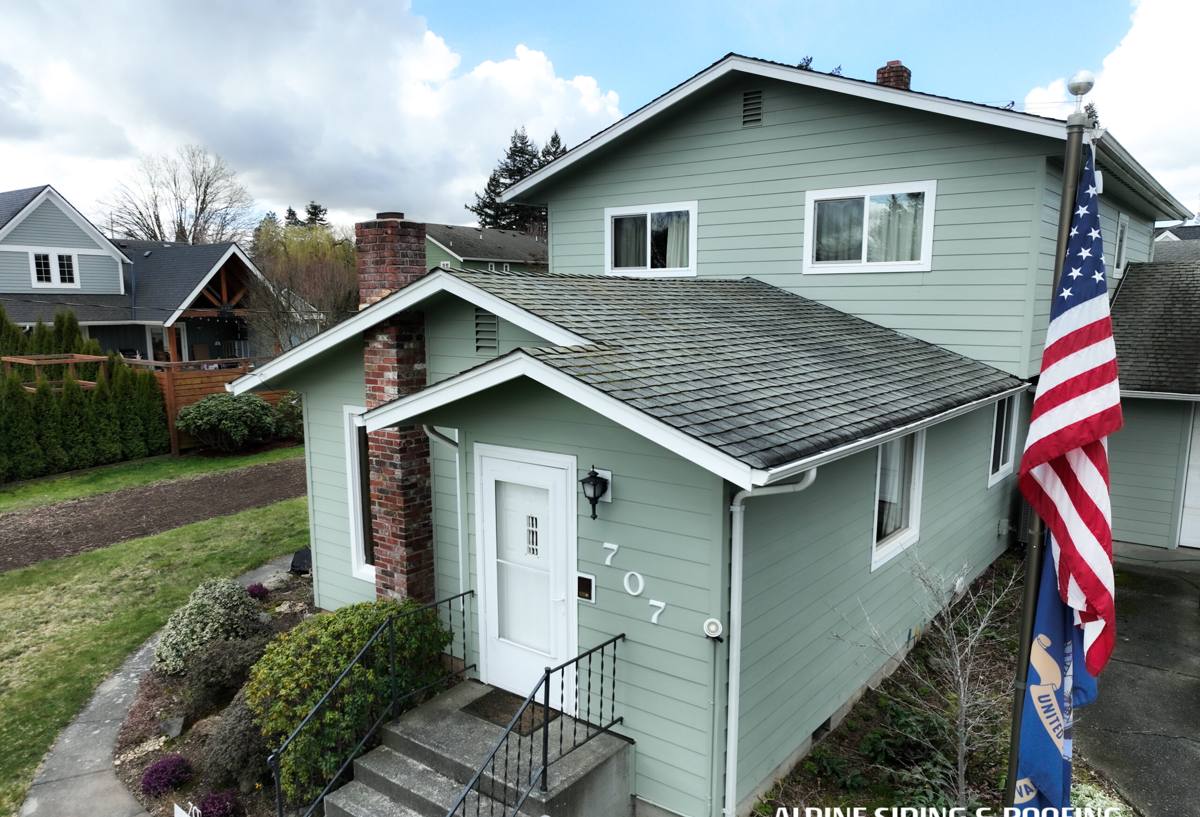
What Local Homes Actually Need From a Roof
Moisture Management First
Driving rain doesn't fall straight down here for much of the year — wind pushes it sideways, which means it finds its way under shingle tabs, around chimneys, and behind step flashing that isn't installed deep enough. A roof built for this area needs ice-and-water shield or a high-quality synthetic underlayment at every vulnerable point: valleys, eaves, around penetrations, and along any low-slope section. This isn't optional upgrade material out here — it's the baseline for a roof that's supposed to last.
Moss Resistance, Not Just Moss Removal
Moss doesn't just look bad. It holds moisture against the roof deck, lifts shingle edges as it grows, and works its way into nail holes over time. A new roof installation is the right moment to address moss at the source — proper shingle selection (some products include algae- and moss-resistant granules), copper or zinc strips at the ridge where appropriate, and enough attic ventilation that the deck itself dries out between rain events instead of staying damp under a shingle mat.
Corrosion-Resistant Hardware
Salt air moving inland off the Sound accelerates corrosion on standard fasteners, flashing, and vent components faster than most homeowners assume, especially on anything facing prevailing weather. We spec fasteners and flashing rated for coastal exposure rather than the cheapest standard-grade hardware, because replacing corroded flashing five years into a twenty-five year shingle warranty is a bad trade.
What a Correct Installation Actually Involves
A roof is only as good as the parts nobody sees once it's finished. Here's what we consider non-negotiable on every installation, whether it's a straightforward gable roof or something with more valleys and penetrations:
- Full tear-off to the deck — never installing new shingles over an old layer, which traps moisture and voids most manufacturer warranties
- Deck inspection and repair of any soft, rotted, or delaminated sheathing before anything new goes down
- Ice-and-water shield at eaves, valleys, and all penetrations, not just where code requires it
- Proper starter strip and drip edge on every edge — the most common place we find rot in older roofs is where these were skipped
- Balanced intake and exhaust ventilation, sized to the attic, not just a ridge vent added without matching soffit intake
- Step flashing and counter-flashing rebuilt at every wall intersection and chimney, not caulked over the old flashing
- Manufacturer-specified nailing pattern and fastener count — under-nailing is a leading cause of wind-related shingle loss
How Our Process Works
1. On-Site Assessment
We walk the roof and the attic, not just the roof. Attic moisture, insulation condition, and ventilation gaps tell us as much about what the new roof needs as the shingle surface does. We check flashing details at every wall, chimney, and skylight, and we look at how water has historically moved across the roof — moss patterns and staining are useful clues.
2. A Written Scope, Not a Verbal Estimate
You get a written scope that specifies underlayment type, flashing approach, ventilation plan, and material — so there's no ambiguity about what's included versus what would be an add-on if we find deck damage once tear-off starts.
3. Tear-Off and Deck Repair
Old roofing comes off down to the deck. Any damaged sheathing gets replaced before we move forward — this is the step that gets skipped by crews trying to save a day of labor, and it's the step that determines how long the new roof actually lasts.
4. Underlayment and Flashing
This is where the roof's actual weather resistance gets built. Ice-and-water shield goes down at the vulnerable points first, synthetic underlayment covers the field, and every flashing detail — valleys, walls, chimneys, vents — gets built correctly rather than patched with sealant.
5. Roofing Material Installation
Shingles, metal, or your chosen material go down per manufacturer spec — correct exposure, correct nailing pattern, correct fastener count. We don't deviate from manufacturer installation instructions to save time, because doing so can void the warranty you're paying for.
6. Final Walkthrough
We walk the finished roof with you, confirm ventilation and flashing details, and make sure gutters and downspouts are clear of installation debris before we consider the job done.
Choosing a Roofing Material for This Climate
There's no single "best" roofing material for Maple Falls — the right choice depends on your roof's slope, your budget, and how much long-term maintenance you're willing to take on. Here's how the common options compare for this specific climate:
| Material | Moss/Moisture Behavior | Maintenance | Typical Lifespan |
|---|---|---|---|
| Architectural asphalt shingle | Good with algae-resistant granules and proper ventilation | Low — periodic moss treatment recommended | 25–30 years |
| Standing seam metal | Excellent — sheds moss and moisture quickly due to smooth surface and slope | Very low | 40–50+ years |
| Wood shake | Poor without diligent upkeep — moisture-retentive by nature | High — regular treatment required | 20–25 years with upkeep |
| Synthetic/composite shingle | Good — resists moisture absorption | Low | 30–50 years depending on product |
We install architectural asphalt and metal roofing most often in this area because both hold up well against the region's rain and moss pressure without demanding constant upkeep from the homeowner. Wood shake can look great, but given the moisture exposure here, we're honest with clients that it requires a real maintenance commitment to last — that's a trade-off worth knowing before you commit, not a reason to rule it out if you're prepared for the upkeep.
Ventilation: The Part That Gets Overlooked
A shingle warranty assumes proper attic ventilation. Without it, heat and moisture build up under the deck, shingles can prematurely age from the underside, and moss and mildew get an easier foothold. Balanced ventilation means enough intake at the soffits to match the exhaust at the ridge — one without the other doesn't work correctly, no matter how much ridge vent gets installed. We size ventilation to the attic during the assessment, not as an afterthought once shingles are already going down.
Why Hiring a Crew That Already Works This Area Matters
Roofing standards written for a national market don't always account for what this part of Whatcom County actually deals with. A crew that installs roofs across Lynden and the surrounding communities knows which flashing details fail first in driving rain, which fastener grades hold up against the salt-tinged air, and how much ventilation a shaded, moss-prone roof actually needs versus what a generic spec sheet suggests. That local pattern recognition is the difference between a roof that looks right on installation day and one that's still performing correctly in year fifteen.
It also means someone is nearby if a question comes up after the job — not a call center, not a crew that installed your roof and then moved three counties away for the next job.
Before You Get Quotes: A Practical Checklist
- Ask whether the quote includes full tear-off or if any layer-over option is being proposed
- Confirm ice-and-water shield coverage at eaves, valleys, and penetrations is included, not optional
- Ask how attic ventilation will be assessed and sized, not just "a ridge vent will be added"
- Get the flashing approach in writing — rebuilt flashing versus resealing old flashing makes a real difference
- Confirm the fastener and hardware grade being used, especially for anything facing prevailing weather
- Ask what happens if deck damage is found during tear-off, and get that pricing in writing up front
- Verify manufacturer installation requirements are being followed, since deviations can void your warranty
What Affects the Cost of a New Roof
Every roof is different, so we don't quote sight-unseen, but the main cost drivers on most Maple Falls-area homes are consistent: roof size and pitch, the number of valleys and penetrations (chimneys, skylights, vent stacks), the condition of the existing deck, the material chosen, and how much ventilation and flashing rework the roof needs. A simple gable roof in good structural condition will always cost less than a steep, cut-up roof with multiple valleys and an aging deck — that's true industry-wide, not specific to us. We'll walk you through exactly where your money is going before any work starts.
If your roof is showing granule loss, moss buildup, curling shingles, or you're just planning ahead before the next wet season sets in, we're happy to take a look. Reach out for a free, no-pressure estimate — we'll assess the roof and attic, explain what we find in plain terms, and give you a written scope so you know exactly what a correct installation involves for your home.