 Lynden
 New-Construction Windows for Laurel Homes
Laurel sits in the flat, low-lying farmland just south of Lynden, close enough to the Nooksack River bottomland and the marine air moving in off Bellingham Bay that window details matter more here than in a lot of inland Whatcom County. If you're building new or adding a room, the windows you choose and how they're installed will decide whether your walls stay dry for the next thirty years or start showing trouble in five. New-construction windows are installed before the siding goes on, with a nailing flange fastened directly to the sheathing and integrated into the weather-resistive barrier. Done right, that's the strongest, most weathertight window installation there is. Done wrong, it's the single most common source of hidden rot we find when we tear into an older Whatcom County wall.
This page covers what we actually do on new-construction window jobs in the Laurel area — the products, the flashing sequence, and why local experience with this climate changes how the work gets done.
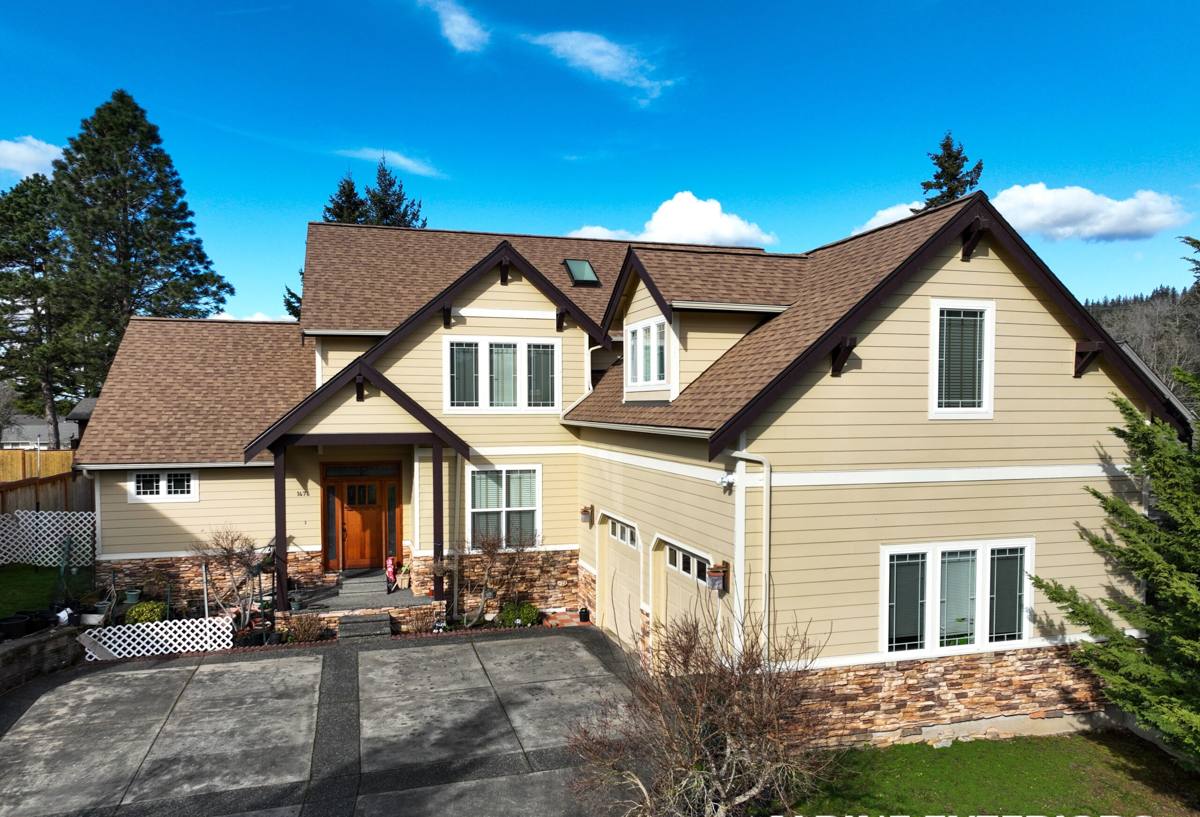
Why Laurel's Climate Is Harder on Windows Than It Looks
Laurel doesn't get storm-battered the way the coast does, but it sits in a wind corridor that funnels marine air up from the bay and across open fields with almost nothing to slow it down. That combination of low-lying moisture, salt-tinged air, and wind-driven rain creates conditions that push water into places a window opening in a drier climate would never see.
- Wind-driven rain: Open farmland gives storms a straight run at the house, so rain doesn't just fall on a window — it's pushed sideways into every seam and gap.
- Salt air: Even well inland of the bay, airborne salt accelerates corrosion on fasteners, hardware, and unprotected metal flashing over time.
- Long moss season: Whatcom County's wet stretch runs long, and moss and algae hold moisture against window trim and sills for weeks at a time if the details aren't shedding water properly.
- Humid, cool summers: Even the "dry" months here don't dry framing lumber out fast, so any water that gets behind a window during construction can sit and cause damage before anyone notices.
None of this means Laurel is a uniquely brutal place to build. It means the margin for error on window flashing and sealing is smaller than homeowners moving here from drier regions might expect.
What a Correct New-Construction Window Install Actually Involves
A window opening is a hole in your weather barrier. Every layer around it has to work together to move water down and out, never in. We follow a shingle-lap sequence — each layer overlaps the one below it, the same way roof shingles do, so water always has a path downhill and out.
The Sequence, Step by Step
- Rough opening prep. We check the opening is square, correctly sized, and that the sheathing and framing are sound before anything goes in. Soft or damp sheathing gets addressed first — installing a good window over bad framing just hides the problem.
- Sill pan flashing. A sloped, sealed sill pan under the window is the single most important detail on this list. If water ever does get past the window, the sill pan carries it back outside instead of into the wall cavity.
- Weather-resistive barrier integration. The house wrap gets cut and lapped so it flows water over the flange, not behind it — a detail that's easy to rush and hard to fix later without pulling siding.
- Window set and fasten. The window goes in plumb, level, and square, fastened per the manufacturer's schedule — skipping fasteners or using the wrong ones is a common warranty-voiding shortcut.
- Flange sealing and side/head flashing. Sides are flashed first, then the head flashing laps over the top, tucked under the house wrap above it so water sheds down and over, never trapped behind the window.
- Interior air sealing. Low-expansion foam or backer rod and sealant around the interior perimeter stops both drafts and interior moisture from reaching the wall cavity.
- Exterior trim and caulk. Trim gets installed with a drainage gap where called for, and exterior caulk joints are tooled properly — caulk is a backup layer here, never the primary seal.
Skip or shortcut any one of these steps and the window can look perfect for years while water quietly works its way into the sheathing and framing behind it.
Choosing Windows and Materials for This Area
Product choice matters less than installation quality, but it's not irrelevant. For new construction in a climate like Laurel's, we generally steer homeowners toward vinyl or fiberglass frames with factory-applied nailing flanges and a documented, tested air-and-water rating. Wood-clad windows can look great, but the exposed wood elements need more upkeep to hold up against long wet seasons and salt-tinged air, and we're upfront with clients about that maintenance trade-off rather than talking them out of a look they want.
What We Look For in a Window for This Climate
- A continuous nailing flange, not a retrofit or block-frame design pretending to be new-construction.
- Corrosion-resistant hardware and fasteners, given the salt exposure this area sees.
- A documented air infiltration and water penetration rating suited to a wind-exposed, rain-heavy site.
- Warm-edge spacer glazing to cut condensation risk during Whatcom County's cool, humid stretches.
- A manufacturer warranty that actually covers the flange and seal system, not just the glass.
Common Window Types by Trade-Off
| Frame Material | Upfront Cost | Maintenance | Best Fit |
|---|---|---|---|
| Vinyl | Lower | Low — no painting or sealing | Most new builds and budget-conscious remodels |
| Fiberglass | Mid-to-higher | Low — very stable, holds paint well | Larger openings, higher-end new construction |
| Wood-clad | Higher | Moderate to high — exposed wood needs upkeep | Homeowners prioritizing a specific interior wood look |
| Aluminum | Mid | Moderate — prone to condensation without thermal break | Rare in residential; mostly commercial or specific styles |
Why Hiring a Crew That Already Works Laurel Matters
Anyone can hang a window. What separates a job that lasts from one that fails quietly is whether the installer understands what this specific site is up against. A crew used to drier, more sheltered lots can do everything "by the book" and still miss details that matter in a wind-exposed, moisture-heavy spot like Laurel — how far to lap the head flashing given the prevailing wind direction, whether a sill pan needs a deeper back dam, or how much drainage gap the trim needs to keep moss and algae from holding water against it.
We work throughout Lynden and the surrounding Whatcom County communities, including Laurel, and we build our flashing details around what this area's rain and wind actually do to a house — not a generic install spec written for a different climate.
New Construction vs. Replacement: Why the Distinction Matters
New-construction windows and replacement (retrofit) windows are not interchangeable, and the difference isn't cosmetic. New-construction windows have a nailing flange and are installed with the sheathing exposed, giving full access to integrate flashing and the weather barrier from scratch. Replacement windows are designed to fit into an existing, already-flashed opening without disturbing the siding around it.
If you're building new in Laurel, you want new-construction windows installed at the framing stage — before siding, before trim. Using a retrofit window on new construction, or vice versa, usually means compromising the flashing detail somewhere, and that's exactly the kind of shortcut that causes problems years down the line.
What to Check Before You Sign Off on a New-Construction Window Job
- Is there a dedicated sill pan flashing under every window, not just caulk at the sill?
- Does the house wrap lap over the top of the head flashing, and under the flange at the sides and bottom?
- Are all manufacturer-specified fasteners installed, in the correct pattern?
- Is interior air sealing done with foam or backer rod, not just a bead of caulk at the trim?
- Does the contractor provide written documentation of the flashing sequence used, in case a warranty question comes up later?
- Are exterior trim details designed to shed water and resist moss buildup, given how long this area stays wet?
Our Process for New-Construction Window Projects in Laurel
We start with a walk-through of the framing while the sheathing is still exposed, so we can flag any framing or sheathing issues before windows go in — it's far cheaper to fix a soft spot now than after siding is up. From there we confirm window sizes, sightlines, and swing or slide direction with you, order the units, and schedule installation to follow our full flashing sequence on every opening, no exceptions for the ones that "probably won't get much rain." Once windows are set, we walk the job with you before trim and siding close everything up, so you can see the flashing work directly rather than take it on faith.
Get a Free Estimate
If you're framing a new home or addition in Laurel and want windows installed to hold up against this area's rain, wind, and salt air, we're glad to walk the site with you and put together a straightforward estimate. There's no pressure and no obligation — just a clear look at what your project needs. Use the form below to get started.