 Lynden
 Building Decks That Hold Up in Sumas
Sumas sits right up against the kind of weather pattern that wears decks down faster than homeowners expect. Between the driving rain that blows in off the lowlands, the damp air that lingers for months at a time, and a moss season that can stretch from October well into spring, an outdoor deck here is under near-constant moisture pressure. A deck built to a generic spec sheet — the kind that works fine in a drier climate — often shows problems within a few years: soft spots in the decking, black streaking on the boards, moss creeping into every joint, and fasteners that start to bleed rust stains into the wood.
A deck built correctly for this part of Whatcom County looks different from the start. It's not about using fancier materials for the sake of it — it's about making choices at the framing, flashing, and material level that account for how much water this deck is actually going to see over its life, and how long that water is going to sit before it dries.
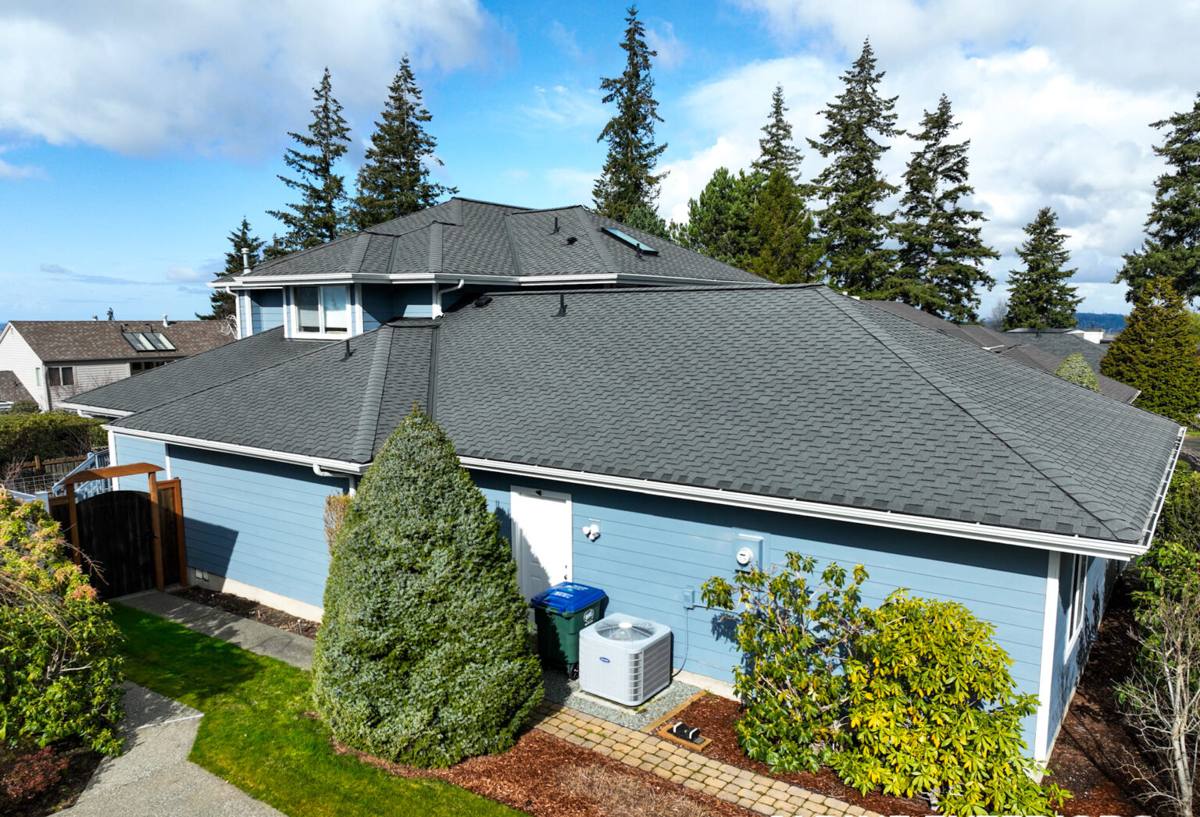
What Local Conditions Actually Do to a Deck
Moisture That Doesn't Let Up
The problem isn't just rain — it's how long things stay wet afterward. Overcast stretches and low winter sun angles mean a shaded deck surface can stay damp for days after a storm passes. That extended wet time is what drives rot in ledger boards, corrosion in fasteners, and moss colonization on any surface that isn't shedding water well.
Moss Season
Moss doesn't just make a deck look neglected — it holds moisture against the wood surface, and on stairs and ramps it turns slick fast. A deck with poor drainage, tight board spacing, or shaded, low-airflow areas underneath will grow moss noticeably faster than one designed with airflow and drainage in mind from the start.
Salt-Laden Air and Metal Fatigue
Coastal-influenced air in this region carries enough salt content to accelerate corrosion in lower-grade fasteners and hardware over time. Galvanized screws that would be fine in a dry inland climate can start showing rust bleed on a Sumas deck well before the wood itself is due for replacement — which is one of the most common "why does my deck look old already" complaints we hear.
What a Correctly Built Deck Needs
Foundation and Framing
Everything starts below the decking boards. Footings need to be sized and set to Whatcom County frost depth requirements, and the framing lumber needs to be rated for ground contact or exterior exposure depending on placement — not just "treated" in a general sense. Ledger board attachment to the house is one of the most common failure points we see on older or DIY decks: without proper flashing, water gets behind the ledger and rots the rim joist it's fastened to, which is a structural problem, not a cosmetic one.
Decking Material
There's no single right answer for every homeowner — it comes down to how much upkeep you want to do versus how much you want to spend up front, and how much sun or shade the deck sits in.
| Material | Moisture & Moss Resistance | Maintenance | Typical Lifespan |
|---|---|---|---|
| Pressure-treated wood | Fair — needs sealing to perform well | Annual cleaning and re-sealing | 15-20 years with upkeep |
| Cedar | Good natural resistance, but surface still needs care | Periodic cleaning, oiling or staining | 20-25 years with upkeep |
| Composite decking | Very good — resists rot, still needs cleaning to prevent moss | Occasional washing, no sealing/staining | 25-30+ years |
| PVC decking | Excellent — fully synthetic, minimal moisture absorption | Low — occasional washing | 30+ years |
We'll walk through the trade-offs honestly during your estimate. Composite and PVC cost more up front but take moss and moisture largely out of the maintenance equation, which matters more here than in a drier climate. Wood costs less initially but only performs as advertised if it's actually maintained on schedule — a plan we'll lay out clearly if you go that direction.
Flashing, Fasteners, and Drainage — Where Decks Actually Fail
Most deck failures we see aren't from bad decking boards — they're from water intrusion at connection points that were never properly sealed. Correct execution means:
- Metal or membrane ledger flashing installed behind the house's siding, not just caulked over the top
- Stainless steel or coated fasteners rated for exterior and coastal-influenced exposure, not generic exterior-grade screws
- Board spacing set to allow water to drain through rather than pool on the surface
- Joist tape or flashing on top of framing members to keep water out of the wood itself
- Grading and drainage planning underneath the deck so water doesn't collect and stay damp in the shade
Skipping any one of these doesn't cause an immediate problem — it causes a problem in year three or four, which is exactly why cutting corners here is so common and so costly to fix later.
Design Choices That Make Sense for Sumas Homes
Covered and Partially Covered Decks
A partial roof or pergola over at least part of the deck cuts down significantly on standing water and moss growth in the covered section, and it gives homeowners usable outdoor space even during the wetter months. It's one of the highest-value additions we recommend for this climate specifically.
Railings and Elevation
Multi-level lots and walkout basements are common around Sumas, which means many decks require guardrails and stair railings to meet current building code. We design railing height, baluster spacing, and stair geometry to code from the start rather than treating it as an afterthought.
Airflow Underneath
Low-clearance decks with poor underside airflow are moss and rot magnets in this climate. Where the lot allows it, we build in enough clearance and skirting ventilation to let air move and moisture escape.
How Our Process Works
- On-site assessment — we look at your lot's grading, sun exposure, drainage, and how the deck will connect to the house before recommending anything.
- Material and design walkthrough — an honest conversation about wood versus composite versus PVC based on your budget and how much maintenance you actually want to do.
- Permitting — we handle the Whatcom County permit process for structural decks so you don't have to navigate it yourself.
- Framing and flashing — the structural work that determines whether the deck lasts 10 years or 30, done to code with proper ledger flashing and hardware.
- Decking, railing, and finish work — installed with attention to drainage and spacing, not just visual fit.
- Final walkthrough — we go over maintenance expectations for the specific material you chose so there are no surprises.
Permits and Code in Whatcom County
Most elevated decks and any deck attached to the structure of your home require a building permit in Whatcom County, along with inspections at key stages like footings and framing. This isn't paperwork for its own sake — it's what confirms the footings are deep enough for frost, the ledger attachment is done safely, and the railings meet current safety requirements. We manage this process as part of the job rather than leaving it to the homeowner.
Keeping Your Deck Ahead of Moss and Moisture
Even a well-built deck needs some seasonal attention in this climate. A simple maintenance rhythm goes a long way:
- Sweep debris and standing leaves off the deck surface regularly, especially in fall
- Wash the deck surface at least once a year to remove early moss growth before it takes hold
- Check and clear gaps between boards so water keeps draining rather than pooling
- Inspect ledger flashing and fastener heads annually for early signs of rust or gaps
- Re-seal or re-stain wood decking on the schedule appropriate to that product — don't wait until it looks bad
- Keep nearby shrubs or trees trimmed back to improve airflow and sun exposure on shaded sections
Why It Matters to Hire a Crew That Works in Sumas
A deck contractor who mostly builds in drier parts of the state may not think twice about ledger flashing details, fastener grade, or underside drainage — because in that climate, those shortcuts don't show up as fast. In Sumas, they show up within a few wet seasons. Working regularly in Whatcom County means we've seen how local moisture, moss, and coastal air affect deck materials and connections over time, and we build accordingly from the first footing rather than learning the hard way on your project.
If you're planning a new deck or replacing one that's showing its age, we're happy to take a look and give you a straightforward assessment. Request a free, no-pressure estimate using the form below — we'll walk your property, talk through material options honestly, and give you a clear picture of what the job involves.