 Lynden
 Siding Installation Built for Sumas Conditions
Sumas sits at the far edge of Whatcom County, where Pacific storm systems roll in off the water, stall against the foothills, and dump rain for days at a time. Add in the salt-laden air that moves through the county's low valleys and the moss season that starts early and lingers late, and you have a climate that is genuinely hard on exterior siding. A siding installation done right here isn't just about appearance — it's about choosing a material and a install method that can shrug off moisture cycling year after year without rotting, delaminating, or feeding mold and moss growth.
We install siding across Whatcom County, including Sumas, and we install exactly one product: James Hardie fiber cement. This page walks through what a correct siding installation looks like for a Sumas home, why the climate here punishes shortcuts, and how our process protects the investment you're making.
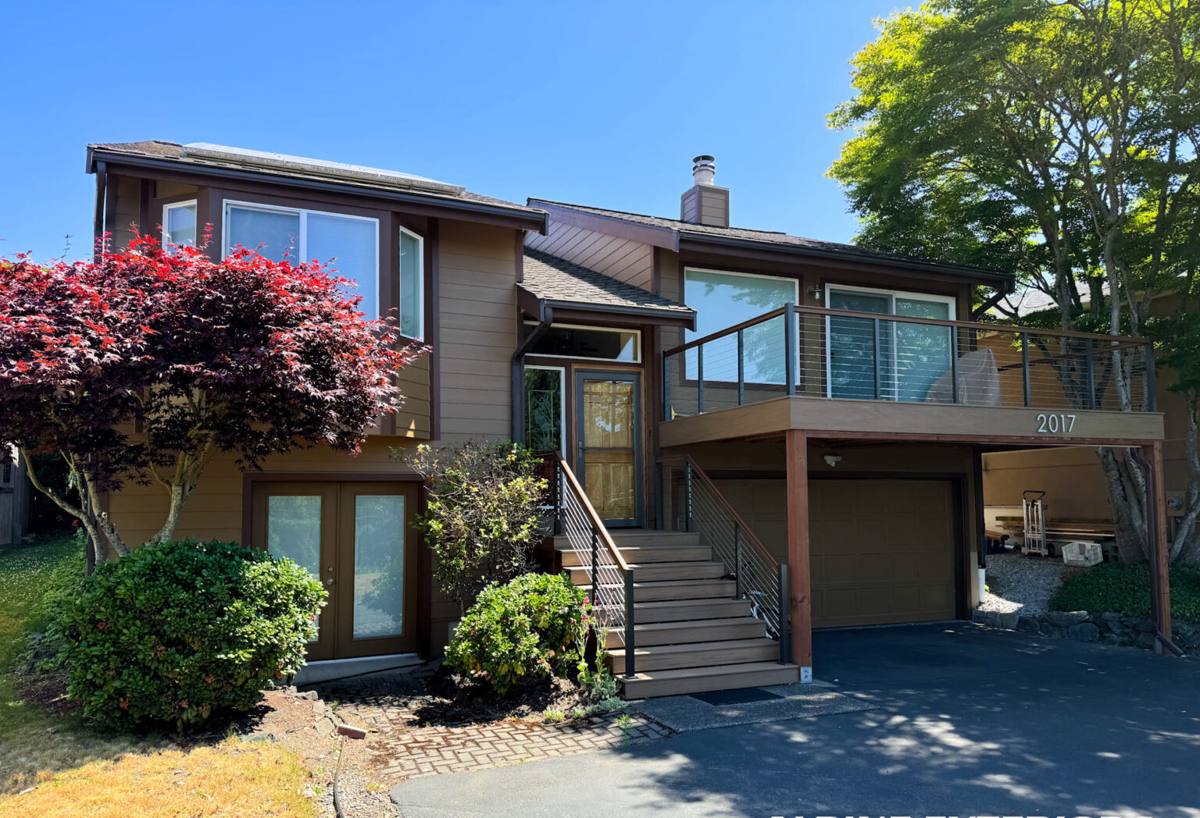
Why Sumas Homes Are Hard on Siding
Homeowners often assume siding failure comes from one big storm. In reality, it's almost always slow, cumulative moisture damage. A few specific conditions make Sumas and the surrounding Nooksack Valley area tougher than average on exterior cladding:
- Driving rain: Wind-driven rain doesn't just wet a wall surface — it pushes water sideways into laps, seams, and fastener points. Siding that isn't detailed correctly at these joints lets water behind the cladding, where it can sit against sheathing for weeks.
- Salt air exposure: Airborne salt accelerates corrosion on fasteners, trim flashing, and any metal components in a siding system. It also speeds up the breakdown of coatings and finishes that aren't engineered for coastal-influenced climates.
- Extended moss season: Cool, damp, shaded conditions for much of the year create ideal moss and algae growth on north-facing walls and anywhere air can't circulate behind the siding. Moss holds moisture directly against the surface it's growing on.
- Slow drying cycles: Even after a wall gets wet, low sun angles and persistent humidity mean it takes longer to dry out here than in drier parts of the state. Materials that absorb water need more time to release it — time they don't always get before the next rain arrives.
None of this is unusual for western Washington. It's simply the baseline a siding installation has to be engineered around, and it's why generic, one-size-fits-all installation practices don't hold up as well here as they do in milder climates.
What a Correct Siding Installation Actually Involves
It Starts Behind the Siding, Not With It
The siding itself is the visible layer, but the water-management system behind it is what actually determines whether a house stays dry. A correct installation includes a weather-resistant barrier installed with proper shingle-lap orientation, flashed and taped seams, and integrated flashing at every window, door, and roofline intersection. Skipping or rushing this layer is the single most common cause of hidden rot behind siding that otherwise looks fine from the curb.
Rainscreen Gap and Drainage
In a climate with this much sustained rainfall, an air gap between the back of the siding and the water-resistant barrier makes a real difference. It lets bulk water that gets past the cladding drain down and out instead of sitting against the wall assembly, and it allows air movement that helps everything dry faster after a storm. This is one of the details that separates a durable install from one that just looks good on installation day.
Fastening and Clearances
Fiber cement siding has manufacturer-specified nailing patterns, fastener types, and minimum clearances from grade, roof lines, and abutting surfaces. Getting these wrong doesn't show up immediately — it shows up two, five, or ten years later as swelling, cracking, or water intrusion at the bottom courses. Correct clearances also matter directly for moss and algae control, since siding installed too close to grade, decks, or roof surfaces stays damp longer.
Joint and Seam Treatment
Every butt joint, corner, and penetration is a place water can find its way in if it isn't sealed and flashed to spec. This includes using the manufacturer's specified caulking and flashing details rather than relying on caulk alone to do the job of proper flashing.
Why We Only Install James Hardie Fiber Cement
We made a deliberate decision not to install vinyl, LP SmartSide, primed spruce, cedar, or other fiber cement brands. That's not a marketing position — it's a standard we hold because of what we've seen these products do, and not do, in exactly this kind of climate.
| Factor | What It Means in Sumas' Climate |
|---|---|
| Non-combustible core | Fiber cement doesn't contribute fuel to a fire the way wood-based products do — relevant given regional wildfire smoke and ember exposure in recent years. |
| Moisture behavior | Engineered fiber cement resists swelling and softening from repeated wet-dry cycling far better than wood-based composite sidings. |
| Factory-applied finish | ColorPlus finish is baked on and warranted separately from the substrate, reducing the repainting cycle that unfinished or field-painted products require. |
| Climate-specific engineering | Hardie's HZ product lines are formulated differently for different moisture zones, which matters in a region that sees this much sustained rainfall. |
| Warranty structure | A transferable, non-prorated product warranty backed by a large manufacturer gives homeowners real recourse, not just a sales promise. |
Vinyl siding is inexpensive and low-maintenance in mild conditions, but it can warp under heat, become brittle in cold snaps, and its seams and J-channels give wind-driven rain more opportunities to get behind the wall. Wood-based composite products like LP SmartSide perform reasonably when installation and maintenance are followed exactly, but their strand-based substrate is more vulnerable to swelling at cut edges and joints if moisture gets in — a real risk in a climate where walls stay damp for extended stretches. Cedar and primed spruce require an ongoing maintenance commitment — refinishing, caulking, and inspection — that most homeowners underestimate until the product starts showing wear years ahead of schedule. We'd rather stand behind one product we trust completely than install several we'd have to caveat.
Our Installation Process for Sumas Homes
- On-site assessment: We look at wall orientation, existing moisture damage, roofline and window flashing conditions, and grade clearances before quoting anything.
- Tear-off and substrate check: Old siding comes off, and sheathing is inspected for rot or damage that needs repair before new siding goes on — this step catches problems a re-side-over-existing approach would hide.
- Water-resistant barrier and flashing: Installed with correct laps and integrated flashing at every penetration and transition.
- Rainscreen furring (where applicable): Creates the drainage and drying gap behind the siding.
- James Hardie panel or lap installation: Installed to manufacturer fastening specs, with correct clearances at grade, roof, and trim.
- Trim, caulking, and final detailing: Joints, corners, and penetrations sealed per spec, not just caulked over.
- Final walkthrough: We go over the finished work with you before calling the job done.
What to Ask Any Contractor Before They Touch Your Siding
- Will you inspect and repair sheathing before installing new siding, or install over whatever is there?
- What weather-resistant barrier and flashing method will you use at windows and rooflines?
- Is a rainscreen gap included, and why or why not for this specific wall?
- What fastening pattern and clearances will you follow, and are they to manufacturer spec?
- What does the warranty actually cover, and is it transferable if you sell the home?
Why Local Experience in Sumas Matters
A crew that regularly works Whatcom County homes already understands how the region's rain patterns, moss growth, and salt-influenced air affect an installation over time — not just on day one, but five and ten years out. That means we're not guessing at clearances, drainage details, or fastening choices based on a spec sheet written for a different climate. It also means we're a known, local point of contact if a warranty question or a follow-up need ever comes up, rather than a name from out of the area you can't easily reach again.
Cost Factors for a Sumas Siding Installation
| Factor | Why It Affects Cost |
|---|---|
| Home size and wall complexity | More corners, gables, and dormers mean more cutting, flashing, and labor time. |
| Existing wall condition | Rotted sheathing or hidden moisture damage found during tear-off adds repair scope. |
| Siding profile chosen | Lap, shingle, and panel profiles differ in material and labor cost. |
| Trim and detail work | Homes with more window and door openings require more precise flashing and trim. |
| Access and site conditions | Steep grades, tight lot lines, or multi-story walls can affect equipment and labor needs. |
We won't give you a number without seeing the home, but we're happy to walk through these factors with you honestly during an estimate so there are no surprises later.
Get an Honest Look at Your Sumas Home
If your siding is showing moss buildup, soft spots, or signs of moisture damage, or if you're planning ahead for a replacement, we're glad to take a look and give you a straight answer about what your home actually needs. Request a free, no-pressure estimate using the form below.