 Lynden
 Why Decks Around Wiser Lake Wear Differently
A deck on a property near Wiser Lake lives a harder life than the square-footage number on a permit would suggest. The ground stays damp longer into the season than it does further inland, the tree cover around the lake keeps shade and moisture sitting on the boards, and Whatcom County's long stretch of driving rain and low winter sun means a deck surface rarely gets a real chance to dry out between storms. Add the moisture-laden air that moves in off the Salish Sea and settles across this part of the county, and you get a slow, steady combination of dampness and organic growth that most decks in drier climates never have to deal with.
None of that means a deck near Wiser Lake can't last. It means the materials, fasteners, and framing details have to be chosen for this specific environment rather than pulled from a generic spec sheet. A deck built the same way you'd build one in eastern Washington will fail here years earlier than it should — usually starting underneath, where nobody's looking, long before it shows on the surface.
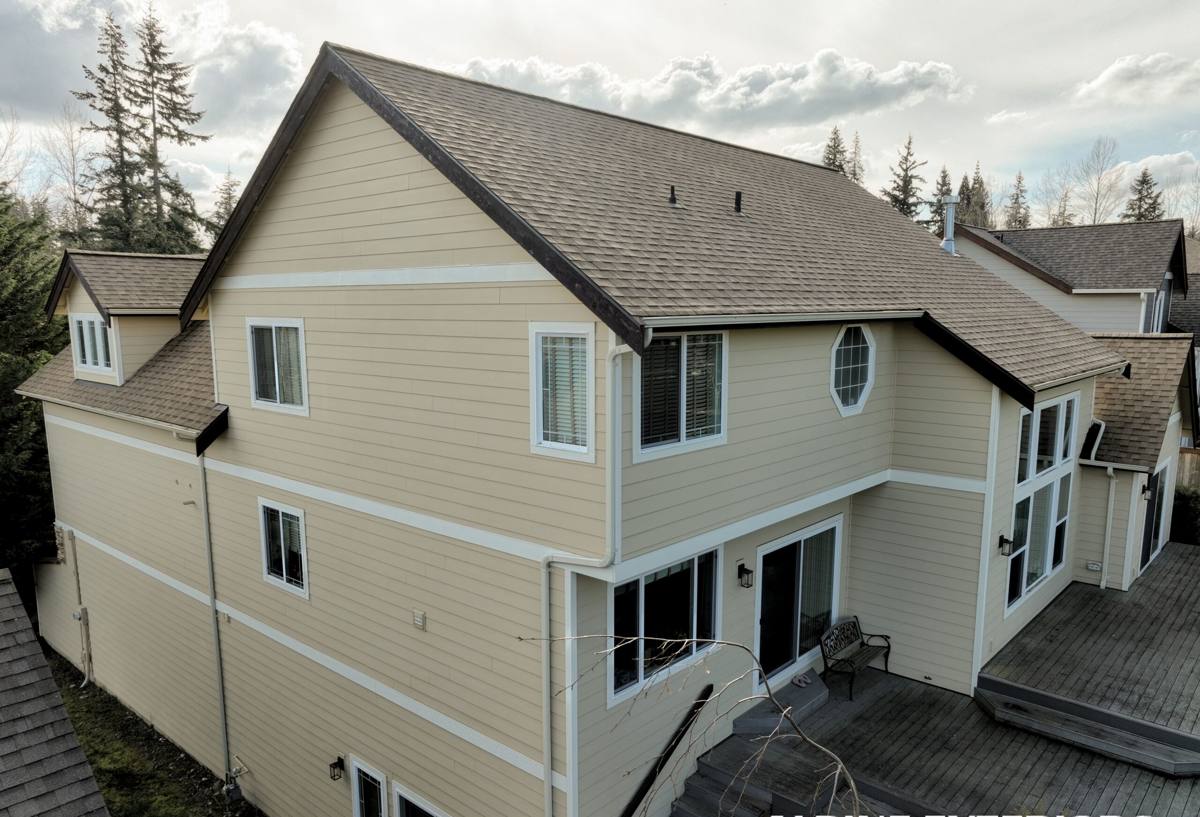
What "Replacement" Actually Means
We use the word carefully. A lot of what gets sold as "deck replacement" is really a resurfacing job — new boards laid over an old, unexamined frame. That approach hides problems instead of solving them. A real replacement means:
- Removing the decking, railings, and any skirting down to the structural frame
- Inspecting the ledger board, joists, beams, and posts for rot, checking, and fastener corrosion
- Replacing or repairing any framing member that's compromised — not just the boards that look bad from the top
- Correcting drainage and flashing details at the house connection
- Rebuilding with new decking, railings, and hardware matched to the site's moisture exposure
If your existing frame turns out to be sound after inspection, we'll tell you — a straight repair or resurface with proper flashing corrections can be the honest answer, and we're not going to sell a full tear-out you don't need. But we don't quote a replacement without opening things up first, because guessing at what's under a lake-adjacent deck is how homeowners end up paying twice.
Signs a Wiser Lake Deck Is Past Repair
Some warning signs are obvious from the surface. Others take a screwdriver and a few minutes underneath. Before you decide between repair and replacement, walk through this list:
- Boards that feel spongy or give slightly underfoot, especially near the house or in shaded corners
- Persistent green or black growth on the decking surface that returns within weeks of cleaning
- A screwdriver that sinks into the ledger board, joists, or posts with light pressure
- Rust streaking below fastener heads or around post bases
- Railings that flex or wobble more than a firm push should cause
- Gaps opening up between the house and the ledger board, or visible daylight where flashing should be tight
- A deck surface that stays wet or slick noticeably longer than the rest of your yard after rain
Any one of these on its own might be a repair. Two or three together, especially involving the frame rather than just the boards, usually means replacement is the more honest recommendation.
Decking Material Options for This Climate
There's no single "best" decking material — there's a best material for how you use the deck, how much upkeep you want to do, and what you're willing to spend up front versus over time. Here's how the common options actually perform in a damp, moss-prone environment like this:
| Material | Moisture Behavior | Maintenance | Typical Lifespan Here |
|---|---|---|---|
| Pressure-treated wood | Absorbs and releases moisture; needs a dry season to fully cycle | Annual cleaning and re-sealing to control moss and graying | 10–15 years with upkeep |
| Cedar | Naturally rot-resistant but still absorbs surface moisture | Periodic oiling; moss cleaning in shaded areas | 15–20 years with upkeep |
| Capped composite | Cap layer sheds surface water; core resists rot better than uncapped composite | Occasional washing; no sealing or staining | 25+ years |
| PVC decking | Fully synthetic, doesn't absorb moisture at all | Lowest maintenance; occasional washing | 25–30+ years |
For a deck that sits in shade for part of the day or catches runoff from the roofline, we lean toward capped composite or PVC — not because wood is a bad product, but because a natural wood deck in this specific moisture pattern demands a maintenance schedule most homeowners don't keep up with. If you love the look and feel of real wood and are willing to stay on top of cleaning and sealing, cedar is a legitimate choice; we'll build it correctly either way.
A Note on Uncapped Composite
Older, uncapped composite decking (common in early-2000s installs) absorbs moisture into its fiber content over time, which is exactly the wrong trait for a shaded, damp site. If you're replacing an uncapped composite deck that's failing, we'll walk you through why the capped versions available now behave completely differently before you decide what to install next.
The Structural Work Nobody Sees
The part of a deck replacement that actually determines how long it lasts is almost entirely invisible once the job is done.
Ledger Board and House Connection
This is where most deck failures start, and it's the detail most likely to get rushed on a lower-quality job. The ledger board needs proper flashing that directs water away from the house wall, not toward it, with a gap or drainage path so moisture doesn't get trapped between the ledger and the siding. On a property with heavy rain exposure, a poorly flashed ledger connection can rot both the deck frame and the wall behind it before anyone notices.
Joists and Framing
We check joist spacing against current code for your decking material and railing loads — older decks were often built to lighter, outdated spans. Joist tape or a comparable protective barrier on top of each joist keeps fasteners from sitting in standing water, which matters a lot more here than in a dry climate.
Posts and Footings
Post bases that sit directly in soil or in standing water at the base are a common failure point on lake-adjacent properties. We set posts on proper footings with post bases that keep the wood end grain elevated and drained, which is one of the cheapest details to get right and one of the most expensive to fix later.
Fasteners and Hardware: Small Parts, Big Consequences
Fasteners and connectors are an easy place to cut cost on a deck job, and they're also the first thing to fail in a damp environment. Standard zinc-coated screws and brackets corrode faster here than in a dry climate, and a corroding fastener doesn't just rust cosmetically — it loses holding strength.
- Stainless steel or hot-dip galvanized fasteners for all structural connections
- Hardware rated for ground contact and treated lumber compatibility (some coatings react with modern treated wood chemicals)
- Coated structural screws matched to the decking manufacturer's warranty requirements, if composite or PVC is used
- Stainless or coated hardware for railing posts and connections, since these take the most repeated stress
This is one of the areas where the cost difference between doing it right and doing it cheap is small in dollars but large in outcome. A few hundred dollars in better fasteners on a typical deck job is nothing compared to a railing post pulling loose in five years.
How the Process Works
- On-site assessment. We look at the existing deck (if there is one), the ledger connection, drainage around the site, and how much sun and shade the location gets through the season.
- Honest scope and quote. You get a clear breakdown of what's being replaced, what materials are recommended and why, and a firm price — not a vague range that grows once we start.
- Permit handling. We pull the required permit through the appropriate jurisdiction for your property and schedule inspections as needed.
- Tear-out and frame inspection. Old decking and railings come off, and we inspect every structural member before anything new goes up.
- Framing and flashing correction. Any compromised framing is replaced, and the ledger/house connection is properly flashed and drained.
- Decking, railings, and hardware installation. Built to spec with the fasteners and connectors appropriate to this climate.
- Final walkthrough. We go over the finished deck with you, including what maintenance (if any) your chosen material needs going forward.
Permits and Local Code
Most deck replacements in Whatcom County that involve structural changes — new footings, a raised height, or a rebuilt ledger connection — require a permit. Decks attached to the house also have to meet current guardrail height, baluster spacing, and stair requirements even if the original deck predates those standards. We handle the permit application and inspection scheduling as part of the job rather than leaving it for the homeowner to sort out, and we won't skip a required permit to save time — it's not worth the risk to your home's resale paperwork or your safety.
Why a Local Wiser Lake Crew Matters
A contractor who already works properties around Wiser Lake and greater Lynden has already seen how the shade patterns, ground moisture, and rain exposure in this specific area affect a deck over time — not in theory, but from having pulled up enough failed decking to know exactly where problems start. That local pattern recognition shows up in small decisions: which corner of a given lot needs extra drainage attention, how much ventilation a low deck needs off the ground, whether a particular shaded exposure calls for composite over wood. It also means a crew that's easy to reach for a warranty question or a follow-up visit, rather than one that's an hour away and moved on to the next county.
If your deck near Wiser Lake is showing its age — soft spots, persistent moss, a wobbly railing, or just enough years on it that you're wondering — we're happy to come take a look. A free, no-pressure estimate gets you a straight answer on whether you're looking at repair or full replacement, with a clear quote either way. The form below gets that started.